
Office: (404) 975-4800

News

Usage-Based Insurance (UBI): What Owner-Operators Need to Know

insurance policy

The world of insurance has dramatically evolved over the last few years. Companies once offered basic plans for a standard rate. Now, they offer a host of customizable options at different prices and programs that give you the chance to save money. For example, some insurance companies now offer mobile apps or devices that plug into your vehicle and monitor your driving habits. If you prove to be a safe driver, you can save on your monthly costs. This new type of insurance could be transformative to those who own and operate small fleets.

Recently, many providers have introduced a new category of insurance called “usage-based insurance,” or UBI for short. Like the previously mentioned program, usage-based insurance uses different mediums to track drivers’ habits. However, UBI generally focuses on the number of miles one has driven or the usage of the covered vehicle and bills accordingly, hence the name usage-based. This type of plan makes it possible for owner-operators to save significantly on liability insurance and only pay monthly instead of in full.

Let’s discuss usage-based insurance in a little more detail to determine if it’s right for you.

What is usage-based insurance?

In today’s world, there has never been a higher demand for the work of a truck driver. However, like many industries, there are moments of delay or total standstill. It’s for these reasons that those who own and operate the world’s fleets need coverage that offers flexibility.

Usage-based insurance is innovative and customer-centric, offering flexibility and a way for owner-operators to get precisely what they need from their coverage—nothing more, nothing less. Unlike most insurance plans requiring upfront payment and charge fees for excess cargo, UBI allows fleet owners to increase their operational efficiency, minimize their monthly spending, and mitigate load and risks by only paying for coverage when needed.

What are the advantages of UBI?

Advantages of usage-based insurance include:

  • You get great discounts and savings. Most insurance companies who offer UBI also offer a 10-25% premium discount for responsible driving. Plus, you may continue to receive this discount every year if you continue to qualify.
  • Employees can be tracked. Typically, with usage-based insurance, the covered vehicle and driver will receive a physical device or mobile app that provides geofencing and alerts you if the vehicle has gone outside of the predefined limits or even exceeds the speed limit.
  • Drivers will gain better driving habits. As previously mentioned, most UBI coverage includes a telematics device that allows you to monitor your drivers. So, if they brake too hard, drive above the speed limit, or use evasive maneuvers, you’ll know. This “eye on the inside” will allow you to address these unsafe driving habits and save money as they improve.
  • Accident investigations are easily handled. If the insured vehicle is involved in a collision, it’s easier for the authorities and claim investigators to pinpoint the cause of the accident, leading to a more accurate claim.

What are the disadvantages of usage-based insurance?

Disadvantages of usage-based insurance include:

  • It doesn’t recognize defensive driving. As mentioned above, telematics devices can monitor one’s driving habits and report them back to the insurance company. However, there are many instances where drivers must use defensive driving skills to avoid an accident. In many cases, these monitors cannot know the difference between reckless driving and protective measures.
  • Privacy risks included. The trackers used with usage-based insurance store a ton of data, including driving information, location, and more. This data is then linked to your name and stored in a database. How this information can be used past the insurance company is vague, especially since they must always be on, or you risk losing your savings.
  • It can be somewhat of a hassle. For companies with a more extensive fleet, the installation process and overall learning curve require a large amount of effort that may or may not be worth the savings.

Is usage-based insurance the right choice?

There are a few things that can help determine if usage-based insurance is right for you and your fleet.

Usage-based insurance may be right for you if:

  • You travel less than 11,500 miles per year.
  • You are a safe and responsible driver.
  • You don’t mind being monitored by your insurance provider.

If you answered ‘yes’ to these three things, then you may want to look into a usage-based insurance plan.


More Like This

Buying vs. Leasing a Semi-Truck: An Owner Operator’s Guide

5 Common Tax Myths Debunked

How Owner/Operators Can Prepare for Tax Season

5 Ways Truck Drivers Can Avoid Heart Disease

pexels-ivan-s-9643169

Spreading Heart-Health Awareness This American Heart Month

Question: What’s the leading cause of death in the United States of America and claims more than 650,000 lives each year? The answer: heart disease. 

Luckily, research and new technology have given medical professionals the tools to know more about the condition, prevent it, and treat it quicker than ever before. Despite the extraordinary progress that’s been made, there’s still more that can be done.

This American Heart Month, we celebrate by sharing information regarding the prevention of heart disease to eradicate the illness further. In this article, we will go over heart disease and discuss the top five ways truck drivers can avoid it.

What are the different types of heart disease?

Heart disease is a general term referring to any condition that affects one’s cardiovascular system. Overall, the disease comes in several variations, and they all can have severe impacts on the body.

Different types of heart disease include:

  • Coronary Artery Disease: Coronary artery disease (also known as coronary heart disease) develops when the blood supply to the heart becomes clogged. It is known as the most common type of heart disease. 
  • Congenital Heart Defects: Those with a congenital heart defect are born with it. There are three main types of defects, including atypical heart valves, septal defects, and atresia.
  • Arrhythmia: An arrhythmia is an irregular heartbeat that occurs when the electrical impulses controlling one’s heartbeat make it beat incorrectly. The variations of arrhythmias include tachycardia, bradycardia, premature contractions, and atrial fibrillation.
  • Dilated Cardiomyopathy: A dilated cardiomyopathy is when the heart chambers become enlarged, and it is often caused by arrhythmias, genetics, past heart attacks, and toxins.   
  • Myocardial Infarction: A myocardial infarction (also known as a heart attack) is caused by an interruption of blood flow to the heart, which in turn causes damage to the muscle.
  • Heart Failure: Heart failure is the slow deterioration of one’s heart due to untreated arrhythmias, coronary artery disease, high blood pressure, and other health conditions.
  • Hypertrophic Cardiomyopathy: This condition affects the heart muscle by thickening the walls of the heart and making regular contractions more difficult, thus affecting the heart’s ability to circulate blood to the body. Hypertrophic cardiomyopathy commonly develops from inherited genetic issues and conditions. 
  • Mitral Valve Regurgitation: Mitral valve regurgitation happens when the heart’s mitral valve does not close properly, and blood flows back into the heart.
  • Mitral Valve Prolapse: A mitral valve prolapse is caused by the heart’s valve flaps not closing correctly and pushing into the left atrium.
  • Aortic Stenosis: An aortic stenosis happens when the pulmonary valve becomes thick or fuses, preventing it from opening correctly making it harder for the heart to pump blood.

5 Ways Truck Drivers Can Avoid Heart Disease

It’s no secret that most truck drivers are forced into a lifestyle that puts them at a greater risk for health conditions, including heart disease. The main factors contributing to this high risk for heart disease are poor sleep, smoking, unhealthy diet, lack of exercise, and high-stress levels.  

Luckily, truck drivers can significantly reduce their risk and live long and prosperous lives by implementing a few healthy habits.

1. Get your rest.

Getting a good night’s sleep is crucial to your well-being, especially your heart health. Unfortunately, a full eight hours is not always possible for America’s truck drivers. However, science has proven that adults who regularly get less than seven hours of sleep per night are at a greater risk for conditions such as heart attack, heart disease, and stroke.

To help truck drivers get the best sleep possible, we recommend:

  1. Parking your rig in a safe and quiet area
  2. Blocking out as much light as possible with curtains or shades
  3. Use an eye mask and earplugs to help block out irritants

2. Quit smoking.

For years, we’ve seen numerous warnings about smoking and the damaging effects it can have on one’s health. A recent study showed that 51% of truck drivers smoke cigarettes, thus increasing their risk for heart disease by four times. Smoking cigarettes also increases the chances of dying from heart disease by three times. Fortunately, there are many ways to help break this unhealthy habit, including nicotine replacement therapy and smoking cessation hypnosis, and all can be done while on the road.

3. Follow a healthy diet.

Working as a truck driver means long hours on the road with few opportunities for a healthy meal. You can make subtle changes to your diet by stocking your rig with healthy snack options.

These options include:

  • Fruit
  • Granola bars
  • Hard-boiled eggs
  • Hummus with veggies or crackers
  • Nuts

When you stop at a fast-food restaurant for a full meal, opt for one of the healthier options, including salads, protein wraps, or sandwiches.

4. Get regular exercise.

A lack of exercise can increase your risk of severe health conditions, including diabetes, weight gain, certain cancers, and heart disease. To avoid these health concerns, try to exercise several times a day for three to 10 minutes. This can be done before you start your day, during your breaks, or after you’ve finished your day. It’s essential not to overexert yourself and to start slow. In the beginning, stretch, squat, and walk your way to health for at least 12 minutes a day.

5. Manage your stress levels.

As many can imagine, stress and anxiety can put a strain on your mind, body, and soul. Those who experience frequent high levels of stress are more likely to experience heart disease.

To reduce stress, try these techniques:

  • Breathing exercises
  • Meditation
  • Visualization
  • Stretching


For more information on American Heart Month and heart disease, visit heart.org!

How is the Microchip Shortage Affecting Truck Prices in 2022?

In 2021, a supply and demand conflict sparked significant issues within the automotive industry. These struggles spilled over into the trucking industry and left many drivers in a state of shock and awe.

The production of heavy-duty trucks has not only faced incredibly high demand but has also grappled with the continuous constraints of the supply chain. All of this has led to less than ideal prices and unlucky drivers. However, those that find themselves in a seller’s position may have the upper hand in this scenario.

In this article, we will discuss how the current heavy-duty truck market has been affected by the microchip shortage that began in 2021 and take a look at how it may impact the months to come.

What caused the microchip shortage?

The current microchip shortage results from several issues that started in 2020 and have carried through into today’s market. Along with the shutdowns of many manufacturing plants and shipping facilities worldwide, makers of semiconductor microchips have faced extremely high demand for several industries outside of automotive

When the world went into lockdown, many automakers canceled their orders for the microchips, while those who made computers, televisions, and other electronics requested more than usual. Once the world began opening up again, automakers put in their orders and competed against the electronics industry in hopes of making and releasing their highly-anticipated 2021 and 2022 models. However, the world’s top microchip producers couldn’t meet the increasing demand due to a series of natural disasters that forced many facilities into yet another shutdown. 

To this day, manufacturers and shippers of the semiconductors are still attempting to restore balance and fulfill orders. However, experts aren’t sure when or if producers will pull it all together.

So, how does all of this affect the pricing of heavy-duty trucks?

How is the microchip shortage impacting truck prices?

The semiconductor shortage and supply chain disruptions have caused heavy-duty truck factories to fall short in terms of meeting consumer demands. For instance, in July of 2021, Class 8 manufacturers built a total of 14,920 units, whereas only a year prior, the factories were able to produce 262,100 units.

These struggles with production have caused prices to rise continuously, leaving large fleets out of luck. With the world’s economy flowing and freight rates at the highest they’ve been in years, the demand for medium and heavy-duty trucks has never been higher. Other transportation industries, including container shipping, are also experiencing steady price increases, which only further impacts the price of new trucks.

Supply and demand have also justifiably increased the price of used vehicles this year. This rise in value has given those in possession of used heavy-duty trucks the upper hand. But those searching for additions to their fleet may find themselves at yet another disadvantage. According to ACT Research, the average value of used Class 8 vehicles is 68% higher than they were in the previous year, and the average miles and ages of the vehicles are up to 5% lower. For example, the price of a three-year-old heavy-duty truck with approximately 400,000 miles on it would quickly sell for six figures, according to an ACT researcher. However, a year ago, the exact vehicle would not have sold for more than $70,000. 

With no practical solution in sight, many in the industry anticipate a continuous increase in prices for both new and used Class 8 vehicles as we move through 2022.

More like this:

Q&A: Trucking Expert Talks Inventory Shortage

Where Did All of the Trucks Go?

How to Retain Your Top Drivers During a Shortage

How the Supply Chain Problem will Impact the Holiday Season

10 Best Supply Chain Jobs in America

For businesses to be successful, they must optimize their processes and reach as many customers as possible in the most cost-effective ways. Without the supply chain, this goal for prosperity would be unachievable. The world’s supply chain works around the clock to ensure the distribution of products, resources, goods, and information to consumers around the globe. To maintain this constant flow of movement, the supply chain must rely on three major components, including logistics, operations, and budget.

As the world continues moving towards the new normal, hardworking professionals are looking for essential careers that are high-paying and offer long-term viability and opportunities for advancement—and there’s no better place to look than the supply chain.

In this article, we will list the top 10 jobs in the supply chain industry and go over what it takes to land these lucrative careers.

How do I qualify for a job in the supply chain?

Jobs within the supply chain are high-paying and relatively easy to obtain with the proper skillset and experience. Top positions, like supervisory and management roles, require a bachelor’s degree and several years of experience within the area you are applying for.

The best degrees for the job include:

  • Business Administration
  • Finance
  • Supply Chain Management
  • Transportation and Logistics

However, some positions only require a high school diploma and industry experience. Starting at entry-level roles, like Production Associate or Inventory Clerk, will allow you to gain the necessary knowledge and progress within your chosen field.

What are the top 10 supply chain jobs in America?

1) Inventory Manager

Average salary: $60,535 per year

Inventory managers primarily track and monitor the facility’s inventory. But they are also responsible for:

  • Creating and implementing organizational systems
  • Noting any supply overages or shortages
  • Creating documentation processes that follow industry standards

2) Transportation Manager

Average salary: $63,508 per year

The job of a transportation manager is to plan and lead all transportation operations. Opportunities for this position can typically be found at companies like Amazon, Ryder, or even smaller logistics and trucking companies. 

Other job opportunities include:

  • Department of Transportation
  • Farming and Agriculture
  • Grocery and Food Services
  • Health and Wellness
  • Manufacturing
  • Retail
  • Travel

3) Facilities Manager

Average salary: $64,084 per year

Facilities managers oversee the maintenance of a company’s equipment, systems, and other physical components within the production and manufacturing departments. This position could grant multiple opportunities since many facilities managers work with more than one location. 

4) Logistician

Average salary: $65,750 per year

Logisticians work under a multitude of titles, including:

  • Logistics Director
  • Operations Manager
  • Production Manager or Production Planner
  • Program Manager
  • Supply Management Specialist

In this position, you will collect and analyze data to coordinate and develop logistics for a company. In some cases, a logistician may oversee the “lifecycle” of a single product.

5) Purchasing Manager

Average salary: $70,396 per year

Purchasing managers (or procurement managers) supervise an organization’s purchasing habits for their materials, products, and services. They work to develop relationships with suppliers and handle negotiations to ensure the best prices for their clients.

Purchasing manager opportunities can be found in industries such as:

  • Construction
  • Food and beverage
  • Government 
  • Health care
  • Hospitality
  • Manufacturing
  • Retail

6) Supply Chain Analyst

Average salary: $71,307 per year

Supply chain analysts work closely with various organizations within the supply chain.

Their primary duties include:

  1. Observing supply chain processes
  2. Locating inefficiencies or potential problems within the supply chain
  3. Improving company operations

7) Logistics Analysts

Average salary: $77,992 per year

Logistics analysts study warehouse data, product delivery, and supply chain operations, then use said data to make recommendations and improvements for logistic processes. This position is typically found in larger companies, specifically those that manufacture consumer goods.

However, you may also find opportunities at logistic companies, membership-based retailers, and other customer-based industries such as:

  • Automotive
  • Electronics
  • Food and beverage
  • Hospitality
  • Manufacturing
  • Package delivery
  • Technology
  • Travel

8) Supply Chain Manager

Average salary: $80,566 per year

Supply chain managers work with external suppliers to negotiate and purchase resources and raw materials. They also analyze processes and company data to identify inefficiencies and improve overall quality throughout the supply chain.

This position is also related to and sometimes paired with titles like: 

  • Logistics manager
  • Operations manager
  • Project manager
  • Purchasing manager

9) Global Commodity Manager

Average salary: $85,898 per year

The job of a global commodity manager is to create and implement strategies that help an organization achieve and maintain efficient and cost-effective operations. These professionals also study market trends and develop forecasts for inventory fluctuations while maintaining relationships with suppliers and monitoring product quality.

10) Sourcing Manager

Average salary: $94,706 per year

Sourcing managers have several jobs, including:

  • Assembling company data
  • Studying and analyzing sourcing processes
  • Researching suppliers and products
  • Balancing cost and quality metrics and finding the best options for clients
  • Tracking and organizing a company’s budget

More Like This:

-> 6 Tips for Starting Your Own Trucking Business

-> Top 10 Truck Driving Jobs

->6 Tips for Financing a Food Truck During a Pandemic

Top 10 States With the Best Roads and Highways

Top 10 States With the Best Roads and Highways

Every day, all across America, truck drivers travel across our country’s roads, highways, and bridges to deliver goods and keep our nation running. For truck drivers, the quality of infrastructure is crucial.

Road quality affects equipment longevity, fuel efficiency, safety, and long-term operating costs. Poor pavement and neglected highways can accelerate tire wear, damage suspension components, increase brake strain, and raise the risk of safety violations.

In extreme cases, rough roads and heavy potholes contribute to cargo damage, insurance claims, and unnecessary downtime.

Today, transportation analysts evaluate states with the best roads and highways using several measurable factors. For trucking businesses, these rankings are more than a curiosity. They highlight where drivers can expect smoother freight corridors and lower maintenance costs.

How We Ranked The Best and Worst Roads By State

We ranked states using publicly available infrastructure datasets that track road quality, bridge condition, congestion, and investment. We focused on measures that translate into real operating impact for trucking: fewer miles on pavement in poor condition, stronger bridge health, and more consistent road maintenance on major freight routes.

Here’s what we used:

  • Pavement condition (urban and rural): State-reported pavement condition and roughness data from the Federal Highway Administration’s Highway Performance Monitoring System (HPMS), which includes nationwide roadway condition and performance reporting.
  • How “Good/Fair/Poor” is defined: The federal performance management framework for pavement condition (used by states and FHWA to compute condition ratings).
  • Bridge condition and deficiency rates: Bridge inventory and condition reporting from the FHWA National Bridge Inventory (NBI).
  • Infrastructure spending and funding context: The FHWA Highway Statistics Series for highway finance and related state-by-state infrastructure funding tables.
  • Urban vs. rural pavement context: Supporting pavement condition context from the Bureau of Transportation Statistics (BTS) and federal reporting on where pavement conditions tend to be worse.

To keep the ranking trucking-relevant, we weighted results toward conditions on higher-volume highways and key corridors (where truck traffic concentrates) rather than relying on subjective “smooth ride” descriptions.

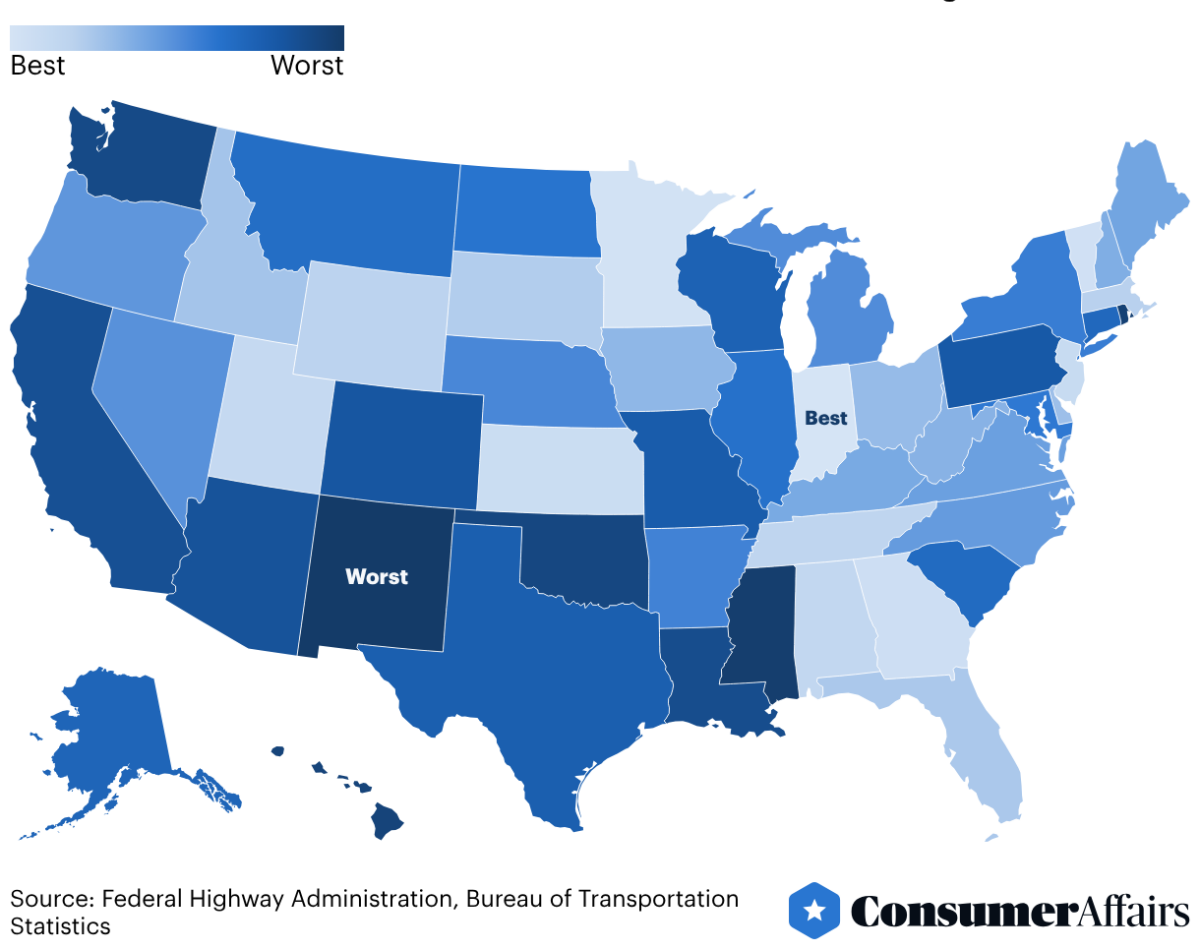
Consumer Affair best highways by state illustration

Source: Consumer Affairs

The Top 10 States With the Best Roads and Highways

The following states consistently rank among the best in the country based on pavement condition data, infrastructure spending, and freight corridor quality.

1. Kansas

Kansas frequently appears among the states with the best roads and highways thanks to strong pavement condition ratings and consistent road funding. The majority of the state’s highways fall into categories considered acceptable or good condition.

Kansas also ranks well in infrastructure performance studies that evaluate pavement quality, road maintenance, and overall highway efficiency.

The state’s central geography makes it one of the most important freight corridors in the country. Major interstate routes such as I-70 and I-35 move heavy commercial truck traffic between western distribution centers and midwestern states’ manufacturing hubs.

Because these routes receive consistent investment in maintenance, long-haul drivers typically encounter fewer potholes and less pavement deterioration than in many other states.

2. Alabama

Alabama has improved dramatically in national road quality following major increases in highway spending through the Rebuild Alabama infrastructure program.

The state raised fuel taxes to generate additional infrastructure dollars, which are used for resurfacing highways, bridge repairs, and modernization projects across the statewide road network.

Major freight corridors, including I-65, I-20, and I-10, support heavy truck traffic moving goods between Gulf Coast ports, southern manufacturing centers, and inland distribution hubs.

These improvements have helped reduce the share of urban roads and rural roads classified in poor condition, improving freight efficiency and driver safety.

An aerial view of the winding road through a high mountain pass, passing through dense forest

3. Kentucky

Kentucky ranks highly among states with the best roads largely because of its position at the intersection of several major freight routes. Interstates I-65, I-75, and I-64 meet in the state, creating one of the busiest trucking crossroads in the eastern United States.

State transportation agencies dedicate a large share of road funding toward pavement resurfacing and bridge maintenance across these corridors. As a result, many of Kentucky’s highways maintain higher quality pavement ratings than the national average.

4. Florida

Florida’s highway system plays a major role in freight movement to and from ports and distribution centers across the southeastern United States. The state allocates billions of dollars for infrastructure to maintain roads and expand highway capacity in rapidly growing urban areas.

Key freight routes such as I-75, I-95, and Florida’s Turnpike connect major ports with inland logistics hubs. These corridors receive significant highway spending to maintain pavement quality and manage increasing traffic volumes.

Although congestion in large city centers can slow travel times, pavement conditions across much of the statewide road network remain stronger than the national average.

5. Idaho

Idaho performs well in infrastructure largely because of steady road maintenance and relatively low traffic congestion. Major freight routes, including I-84 and I-15, connect the Pacific Northwest with inland western markets, carrying agricultural products and industrial goods across long stretches of rural roads.

Because Idaho has fewer dense urban areas, pavement deterioration tends to happen more slowly than in high-traffic states. Transportation agencies are therefore able to focus more resources on preventative resurfacing and maintaining roads before they fall into poor condition.

6. New Hampshire

Despite harsh winters and freeze-thaw cycles that can damage pavement, New Hampshire continues to direct strong road funding toward resurfacing projects and bridge rehabilitation.

A large percentage of the state’s roads remain in good condition compared with the national average, helping maintain dependable freight corridors across northern New England.

For truck drivers driving through snow or mountainous terrain in New Hampshire, these infrastructure investments help preserve safe and predictable highway conditions.

7. Georgia

Georgia is a critical freight hub for the southeastern United States. The state’s highway system supports freight moving through the Port of Savannah and major distribution centers around Atlanta.

Infrastructure programs funded through Special Purpose Local Option Sales Tax (SPLOST) initiatives have directed substantial highway spending toward widening highways, improving interchanges, and resurfacing heavily traveled corridors such as I-75, I-85, and I-20.

While Atlanta experiences some of the worst traffic congestion in the country, many of Georgia’s major freight routes maintain strong pavement ratings and continue to improve through ongoing infrastructure investment.

8. Nevada

Nevada’s highways connect California distribution centers with freight markets across the western United States. The Interstate 80 corridor carries large volumes of long-haul truck traffic between the Sierra Nevada and the Rocky Mountains.

Because the state has relatively low population density, many of Nevada’s rural roads experience less traffic stress than highways in more densely populated states.

Consistent road maintenance and resurfacing projects help maintain quality roads across these corridors.

Aerial view of highway road with moving cars

9. Vermont

Vermont’s highway system faces issues usually related to the mountainous terrain and smaller transportation budgets. Despite those challenges, the state continues to invest in road maintenance and bridge rehabilitation to maintain dependable freight corridors.

While some rural roads still require additional funding to address aging infrastructure, many primary routes maintain pavement conditions considered acceptable under federal standards.

10. Minnesota

Minnesota rounds out the list of states with the best roads and highways for truck drivers. The vast majority of its road network stays in fair or good condition, even though Minnesota maintains one of the larger roadway systems in the country.

For trucking operations, that translates into smoother interstate runs, less vibration-related wear, and fewer surprise maintenance issues when you’re moving loads across long distances on key corridors like I-94, I-35, and I-90.

Minnesota also benefits from ongoing investment aimed at keeping those numbers strong. MnDOT started 2026 by awarding $76.2 million to transportation projects across the state – an encouraging signal for fleets that depend on reliable pavement and predictable drive times.

How Road Quality Impacts Your Trucking Business

The condition of the road network your truck travels on every day directly affects operating costs, equipment lifespan, cost per mile, and overall efficiency for any trucking business.

Tire Wear and Replacement Costs

Rough pavement chews through tires faster, especially on high-mileage freight corridors and neglected rural roads. Potholes and broken seams shorten tread life and push replacement costs up over time.

When a state keeps more lane-miles in poor condition, fleets cycle tires sooner and spend more time dealing with roadside service.

Aerial view semi truck trailer cargo on mountain curve road, Semi truck trailer cargo business logistic transportation on green forest road curve, Semi truck delivery asphalt road green forest tree.

Suspension, Steering, and Alignment Damage

Uneven pavement pounds the suspension and knocks alignment out faster than most drivers expect. Those repeated hits wear out shocks and steering components sooner, increasing shop time and raising maintenance costs. Those repairs also cut into uptime and force schedule changes.

Fuel Efficiency and Operating Costs

Bad surfaces raise fuel use because drivers slow down more, speed up more, and spend more time correcting for rough pavement. Add traffic congestion in busy urban areas, and you burn even more fuel while you idle or crawl.

Over long lanes, those small losses stack up into a real operating cost you feel every month.

Safety Risks and Cargo Protection

Damaged pavement increases crash risk because it reduces stability during braking and steering. It also beats up freight through constant vibration and hard impacts, especially when drivers hit uneven joints at speed. Better road quality helps you protect cargo, reduce incidents, and keep trucks moving predictably.

Conclusion

Understanding which regions offer the best roads can help trucking businesses make smarter operational decisions. Route planning, maintenance scheduling, predictable drive times, and equipment budgeting all benefit from awareness of local infrastructure conditions.

Protecting your truck from unnecessary wear is how you keep your truck on the road and your business profitable.

When rough-road routes and rising maintenance costs put pressure on your budget, Mission Financial Services can help. We provide commercial truck financing options for new and used trucks, as well as repairs, to keep your operation reliable and ready for the next load. Get in touch and start your credit application today.

Trucking Action Plan: What You Need to Know

pexels-quintingellar-2199293

On December 16, 2021, the White House announced a comprehensive plan to recruit new truck drivers to help the supply chain recover from the current shortage while improving current working conditions to promote driver retention. This plan, coined the Trucking Action Plan, has been broken down into a series of steps, and the current administration hopes to institute it over the next 90 days.

Many owner operators have been left wondering what this plan is and how it will affect them and the industry they work for. This article will break it all down and explain what drivers can expect to come their way over the next 90 days.

What exactly is the Trucking Action Plan?

Officials describe the Trucking Action Plan as a way to “lay the foundation for a next-generation trucking workforce that will strengthen U.S. competitiveness and support millions of good driving jobs for years to come.” The plan also follows the lead of the recent infrastructure legislation, which passed in November of 2021 and aimed to address current industry concerns.

The current action plan, which will take effect through a series of steps over the next 30-, 60-, and 90- days, offers six key points, including:

  1. Offering trucking industry jobs that appeal to military veterans.
  2. Supporting pilot programs that train and license new drivers to deliver across state lines.
  3. Offering women more professional industry positions.
  4. Instituting more easy-to-install apprenticeship programs.
  5. Funding/providing assistance to states for improving their CDL processes.
  6. Implement sessions with drivers, carriers, and industry unions to discuss concerns and enhance the workforce.

In addition to the current driver shortage and supply chain struggles, the Trucking Action Plan directly responds to a recent poll from the Consumer Brand Association. This poll found that 90% of respondents feel the trucking capacity should be increased in the new year to assist the supply chain demand, and 80% of respondents think their senators should be responsible for fixing current and future trucking industry issues.

Many respondents also gave suggestions on how to solve the most common issues that the trucking industry faces. They include:

  • Allowing reasonable increases to truck weight limits
  • Creating systems that would send empty trucks to available loads
  • Government funding driver recruitment and training programs
  • Offering flexible hours and service requirements to drivers
  • Government funding for the production of new heavy-duty trucks

What changes can we expect to see in the new year?

In the new year, truck drivers and fleet owners can anticipate quite a few changes in the industry. The main changes will affect the recruitment process for new drivers, but owners/operators can also expect significant changes to the workforce, hoping that driver retention will improve.

Recruitment of More Women and Veterans

During the Trucking Action Plan announcement, White House officials discussed that they intend to focus on the potential labor pool of over 70,000 military veterans when it comes to driver recruitment. Currently, veterans equate to more than 20% of the transportation industry. However, the White House plans to increase that number by working with the Veterans Employment and Training Service (VETS), the Department of Veterans Affairs (VA), and other veterans’ service organizations to match military veterans and their spouses with jobs in the trucking industry. A separate task force will also encourage more women to start careers in the trucking industry. 

Reformed Training Programs

Regarding training for these trucking positions, the DOL is working to establish Registered Apprenticeship programs that would allow new drivers to earn compensation as they go through training. The Department of Transportation (DOT) is also working to improve the CDL process by reducing the time between drivers passing their tests and receiving their licenses. On top of that, the DOT hopes to provide grants to states who improve their licensing process by updating their IT infrastructures. For now, the Federal Motor Carriers Safety Administration (FMCSA) will provide over $30 million to help states expedite their CDL process and send all states a “toolkit” on how to complete specific expedite actions. The White House also announced a new pilot program that will allow truck drivers under 21 years of age to drive on interstate highways.

Improved Driver Experience 

On top of recruiting new drivers, the Trucking Action Plan will aim to support the existing drivers by improving the quality of the jobs within the industry. Currently, America’s truck drivers move over 70% of the nation’s goods, but these same drivers lose up to 40% of their drive time due to delays, which means less income. To lessen these losses, the DOL and DOT plan to construct a compensation study to better understand how long drivers are on the road versus how long they spend waiting on loading and unloading processes. These transportation agencies will also begin regular listening sessions with drivers to use the collected feedback to push regulatory action and improve the overall quality of the various trucking industry positions.

Last updated: 12-21-21


Want more information like this? Check out these articles:

What Truckers Need to Know About the Vaccine Mandate

How Does Prop. 22 Affect App-Based Drivers?

How the Supply Chain Problem Will Affect the Holiday Season

Archives

Sign Me Up!

Stay up to date with the latest news in the commercial trucking industry.

Contact Us
close slider