
Office: (404) 975-4800

Safety

How the Truck Parking Crisis Affects Us All

Picture this: It’s Monday morning, and you’re driving to your workplace. You arrive, only to discover that there are no more available parking spaces. Now what? Do you circle the lot hoping someone will leave and risk being late to work? Do you park in a ‘No Parking’ zone and risk being ticketed or towed?

This scenario is one that many truck drivers face on a daily basis. In fact, truck parking was the fifth largest concern in the American Transportation Research Institute’s (ATRI) 2021 Top Industry Issues poll. The persistent problem has been introduced to legislation over the years, yet there haven’t been many solutions offered to the industry.

The American Trucking Associations (ATA) and the Owner-Operator Independent Drivers Association (OOIDA) recently came together to pressure government agencies to prioritize fixing the parking crisis. The groups explained that the nationwide issue has been a decades-long battle that has affected driver safety, the supply chain, and carriers. In this blog, we’ll break down the top three issues caused by the parking shortage and offer ways truck drivers can combat the problem on their own.

Top 3 issues caused by the parking shortage

The increased shipping demand brought on by the COVID-19 pandemic has led to more trucks on the ground than ever before. The ATA and the OOIDA found that there are approximately 3.5 million truck drivers on the road and only 313,000 parking spaces available nationwide. This shortage has caused three common issues shared by truck drivers.

These issues include:

Safety Concerns

In 2019, a study found that 98% of truck drivers experience difficulty finding safe parking—this is an overwhelming 23% increase from a 2015 report. Trucking organizations have expressed concern for driver safety and well-being, stating: “When drivers are unable to find safe, authorized parking, they are stuck in a no-win situation, forced to either park in unsafe or illegal locations, or violate federal HOS regulations by continuing to search for safer, legal alternatives.”

In a recent letter to the U.S. Department of Transportation, the ATA and OOIDA said 70% of drivers have violated federal Hours of Service (HOS) rules due to limited parking options. With so few parking spots, drivers are frequently forced to park in unsafe and unauthorized locations, including highway shoulders, interstate entries, exit ramps, and abandoned properties. Parking in these locations poses safety risks to all motorists and makes 84% of truck drivers feel unsafe.

This parking shortage also impacts law enforcement officials. When drivers are illegally parked, police officers are faced with three options; they can 1) ignore the problem and risk getting in trouble with their superiors and jeopardize public safety. 2) ask them to relocate their rig, forcing drivers to violate HOS rules or potentially forcing fatigued drivers to risk public safety. 3) ticket the truck driver and cost hardworking individuals time and money.

The moral of the story: When truck parking is not readily available, everyone’s safety is compromised.

Time is money…

The phrase “time is money” has never been more true when it comes to truck driving. Each day, 98% of drivers struggle to find safe and legal parking and waste approximately 56 minutes of available driving time searching for it. This time spent hunting for truck parking can have profound economic impacts. According to a study done by ATRI, the 56 minutes of unproductive drive time equals around $4,600 in lost wages per year. Searching for parking also disrupts fleet productivity, which inevitably leads to supply chain issues and unhappy consumers.

…And money is time

As previously mentioned, law enforcement officers are allowed to ticket drivers of illegally parked semi-trucks. Parking violation fines vary in each state and city, but the total costs can wrack up after the initial fine compounds with potential court costs. And if the driver is ticketed multiple times, their license could be jeopardized. While this personally affects truck drivers, it also cuts into carriers’ profits and can potentially lead to a driver shortage, putting the carrier behind the competition. And if the officer asks the driver to relocate, the carrier could be exposed to fines and penalties from driver protection agencies.

So, the driver, carrier, and anyone else involved in the business feels the impact of the parking shortage.

What can drivers do to avoid parking issues?

While we can’t say for sure when the parking crisis will be resolved, we can prepare truck drivers with knowledge on how to avoid parking troubles.

4 Parking Tips for Drivers

  • Use apps, like Trucker Path. The app allows drivers to find parking on their route.
  • Plan your route from start to finish. It may also help to research all available parking along your route in case your ‘Plan A’ doesn’t work out.
  • Get an early start. Getting on the road before other drivers gives you the advantage when finding parking since your break time will be different from those who got a later start.
  • Avoid unsafe or illegal parking areas. Parking in designated truck parking areas will help keep you and other motorists safe.

More Like This:

Parking Shortage: An Unexpected Problem for Truckers

Top 10 States With the Best Roads and Highways

5 Largest Infrastructure Projects Happening Now

The Dangers of Distracted Driving: How You Can Help

Tips for Avoiding Distracted Driving

It’s officially Distracted Driving Awareness Month. Throughout the month of April, different organizations unite to help drivers safely reach their destinations by encouraging them to remain focused behind the wheel. According to a recent study by the National Highway Transportation Administration (NHTSA), 3,142 people were fatally injured due to distracted driving. 

Distracted driving affects hundreds of people every single day. And what many people don’t know is how it can impact heavy-duty truck drivers. This Distracted Driving Awareness Month, we encourage you to put down your phone, follow the speed limit, and eliminate distractions. In this blog, we will tell you everything you need to know about distracted driving and tips on how to eliminate distractions from your daily commute.

Facts about distracted driving

While answering the phone, eating a quick snack, or jamming to your favorite song may seem harmless, they can have critical consequences when done behind the wheel. When studied, researchers found that reading a text message for five seconds while traveling at a speed of 55 mph is equivalent to driving the length of a football field with your eyes closed.

Need more reasons to eliminate distractions from your drivetime? 

Here are a few facts about distracted driving:

  • A 2020 study done by the NHTSA found that 7% of all fatal crashes in 2019 were caused by or related to distracted driving.
  • Another NHTSA study found that 8% of fatal crashes, 15% of injury crashes, and 14% of all police-reported traffic accidents were distraction-affected crashes. Overall, approximately 400,000 people were injured, and 2,841 people died.
  • The NHTSA reported that 1 out of every 5 people killed by a distracted driver was not in a vehicle (walking, jogging, biking, etc.) at the time of the accident.
  • The CDC found that drivers between 15 and 19 were more likely to drive distracted than drivers 20 years of age and older. And 9% of all teen drivers who died in vehicular accidents were involved in distraction-affected crashes.
  • According to the IIHS, the fatal crash rate is three times greater for teen drivers.
  • The AAA Foundation for Traffic Safety found that driver distraction is the cause of more than 58% of crashes involving teen drivers.
  • A research study from Cambridge Mobile Telematics showed that distracted driving habits occurred in more than 36% of all trips across the United States.

The risks are even higher when a truck driver is distracted at the wheel. In fact, “distracted truck driving is more likely to result in fatalities than other types of automotive accidents.” This is because the weight and force of heavy-duty vehicles are much greater than that of a standard passenger vehicle, making them more dangerous in the event of a collision. That is why truck drivers must do their part in eliminating distractions from their drive.

3 types of distracted driving

Over the years, experts in traffic safety have classified distractions into three main categories: Cognitive, Manual, and Visual. If you’ve ever been driving and started thinking about a conversation you had earlier that day or your mental to-do list, you’ve had a cognitive distraction. By definition, a cognitive distraction is when your thoughts distract you from the task of driving. A manual distraction is when you remove your hands from the steering wheel. For example, eating a sandwich or rummaging through your bag is considered a manual distraction. A visual distraction happens when your eyes are not on the road. For instance, if you apply makeup or search for something in your vehicle, you are driving while visually distracted. 

Using your phone while driving, including texting or reading messages, combines all three categories of distractions. The University of Utah found that those who use their phones while driving are 5.36 times more likely to get into an accident than undistracted drivers. The university also found that those who text and drive are comparable to people who drive with a blood-alcohol concentration of 0.08%. For truckers, texting while driving increases your risk of crashing by 23 times, according to Virginia Technical Transportation Institute.

people-2599458_1280

Tips for avoiding distractions

Now that you have all the information about distracted driving, it’s time to help put an end to it. Putting a stop to distracted driving starts with you.

Here are some tips for remaining focused while driving:

  • Don’t eat and drive. Eating will take your hands off the steering wheel and your attention away from driving. If you’re traveling and want a quick bite to eat, find somewhere safe to park and enjoy your break from driving.
  • Put your phone away. Use ‘Do Not Disturb’ or ‘Driving Mode’ to disable incoming messages, calls, and notifications. Placing your phone in your bag or glove box will also help eliminate your temptation to use it. 
  • Just focus. Avoid multitasking by setting your GPS, picking out your music, and making calls or sending texts before you start driving.
  • Keep your music low. Loud music could prevent you from hearing emergency vehicles and CB warnings.
  • Properly secure your belongings. Items falling throughout the vehicle could distract you from the road ahead. Before you take off, secure loose objects and belongings properly.
  • Get plenty of rest. Being tired could cause you to be unalert or fall asleep behind the wheel.

Observe Distracted Driving Awareness Month

Observe Distracted Driving Awareness Month by:

  • Taking the pledge to end distracted driving.
  • Supporting campaigns developed by the National Highway Traffic Safety Administration and National Safety Council, as well as state, county, and local law enforcement agencies.

Using the hashtag #DistractedDrivingAwarenessMonth when posting on social media this month.


For more articles about driver safety, click here!

5 Ways Truck Drivers Can Avoid Heart Disease

pexels-ivan-s-9643169

Spreading Heart-Health Awareness This American Heart Month

Question: What’s the leading cause of death in the United States of America and claims more than 650,000 lives each year? The answer: heart disease. 

Luckily, research and new technology have given medical professionals the tools to know more about the condition, prevent it, and treat it quicker than ever before. Despite the extraordinary progress that’s been made, there’s still more that can be done.

This American Heart Month, we celebrate by sharing information regarding the prevention of heart disease to eradicate the illness further. In this article, we will go over heart disease and discuss the top five ways truck drivers can avoid it.

What are the different types of heart disease?

Heart disease is a general term referring to any condition that affects one’s cardiovascular system. Overall, the disease comes in several variations, and they all can have severe impacts on the body.

Different types of heart disease include:

  • Coronary Artery Disease: Coronary artery disease (also known as coronary heart disease) develops when the blood supply to the heart becomes clogged. It is known as the most common type of heart disease. 
  • Congenital Heart Defects: Those with a congenital heart defect are born with it. There are three main types of defects, including atypical heart valves, septal defects, and atresia.
  • Arrhythmia: An arrhythmia is an irregular heartbeat that occurs when the electrical impulses controlling one’s heartbeat make it beat incorrectly. The variations of arrhythmias include tachycardia, bradycardia, premature contractions, and atrial fibrillation.
  • Dilated Cardiomyopathy: A dilated cardiomyopathy is when the heart chambers become enlarged, and it is often caused by arrhythmias, genetics, past heart attacks, and toxins.   
  • Myocardial Infarction: A myocardial infarction (also known as a heart attack) is caused by an interruption of blood flow to the heart, which in turn causes damage to the muscle.
  • Heart Failure: Heart failure is the slow deterioration of one’s heart due to untreated arrhythmias, coronary artery disease, high blood pressure, and other health conditions.
  • Hypertrophic Cardiomyopathy: This condition affects the heart muscle by thickening the walls of the heart and making regular contractions more difficult, thus affecting the heart’s ability to circulate blood to the body. Hypertrophic cardiomyopathy commonly develops from inherited genetic issues and conditions. 
  • Mitral Valve Regurgitation: Mitral valve regurgitation happens when the heart’s mitral valve does not close properly, and blood flows back into the heart.
  • Mitral Valve Prolapse: A mitral valve prolapse is caused by the heart’s valve flaps not closing correctly and pushing into the left atrium.
  • Aortic Stenosis: An aortic stenosis happens when the pulmonary valve becomes thick or fuses, preventing it from opening correctly making it harder for the heart to pump blood.

5 Ways Truck Drivers Can Avoid Heart Disease

It’s no secret that most truck drivers are forced into a lifestyle that puts them at a greater risk for health conditions, including heart disease. The main factors contributing to this high risk for heart disease are poor sleep, smoking, unhealthy diet, lack of exercise, and high-stress levels.  

Luckily, truck drivers can significantly reduce their risk and live long and prosperous lives by implementing a few healthy habits.

1. Get your rest.

Getting a good night’s sleep is crucial to your well-being, especially your heart health. Unfortunately, a full eight hours is not always possible for America’s truck drivers. However, science has proven that adults who regularly get less than seven hours of sleep per night are at a greater risk for conditions such as heart attack, heart disease, and stroke.

To help truck drivers get the best sleep possible, we recommend:

  1. Parking your rig in a safe and quiet area
  2. Blocking out as much light as possible with curtains or shades
  3. Use an eye mask and earplugs to help block out irritants

2. Quit smoking.

For years, we’ve seen numerous warnings about smoking and the damaging effects it can have on one’s health. A recent study showed that 51% of truck drivers smoke cigarettes, thus increasing their risk for heart disease by four times. Smoking cigarettes also increases the chances of dying from heart disease by three times. Fortunately, there are many ways to help break this unhealthy habit, including nicotine replacement therapy and smoking cessation hypnosis, and all can be done while on the road.

3. Follow a healthy diet.

Working as a truck driver means long hours on the road with few opportunities for a healthy meal. You can make subtle changes to your diet by stocking your rig with healthy snack options.

These options include:

  • Fruit
  • Granola bars
  • Hard-boiled eggs
  • Hummus with veggies or crackers
  • Nuts

When you stop at a fast-food restaurant for a full meal, opt for one of the healthier options, including salads, protein wraps, or sandwiches.

4. Get regular exercise.

A lack of exercise can increase your risk of severe health conditions, including diabetes, weight gain, certain cancers, and heart disease. To avoid these health concerns, try to exercise several times a day for three to 10 minutes. This can be done before you start your day, during your breaks, or after you’ve finished your day. It’s essential not to overexert yourself and to start slow. In the beginning, stretch, squat, and walk your way to health for at least 12 minutes a day.

5. Manage your stress levels.

As many can imagine, stress and anxiety can put a strain on your mind, body, and soul. Those who experience frequent high levels of stress are more likely to experience heart disease.

To reduce stress, try these techniques:

  • Breathing exercises
  • Meditation
  • Visualization
  • Stretching


For more information on American Heart Month and heart disease, visit heart.org!

Top 10 States With the Best Roads and Highways

Top 10 States With the Best Roads and Highways

Every day, all across America, truck drivers travel across our country’s roads, highways, and bridges to deliver goods and keep our nation running. For truck drivers, the quality of infrastructure is crucial.

Road quality affects equipment longevity, fuel efficiency, safety, and long-term operating costs. Poor pavement and neglected highways can accelerate tire wear, damage suspension components, increase brake strain, and raise the risk of safety violations.

In extreme cases, rough roads and heavy potholes contribute to cargo damage, insurance claims, and unnecessary downtime.

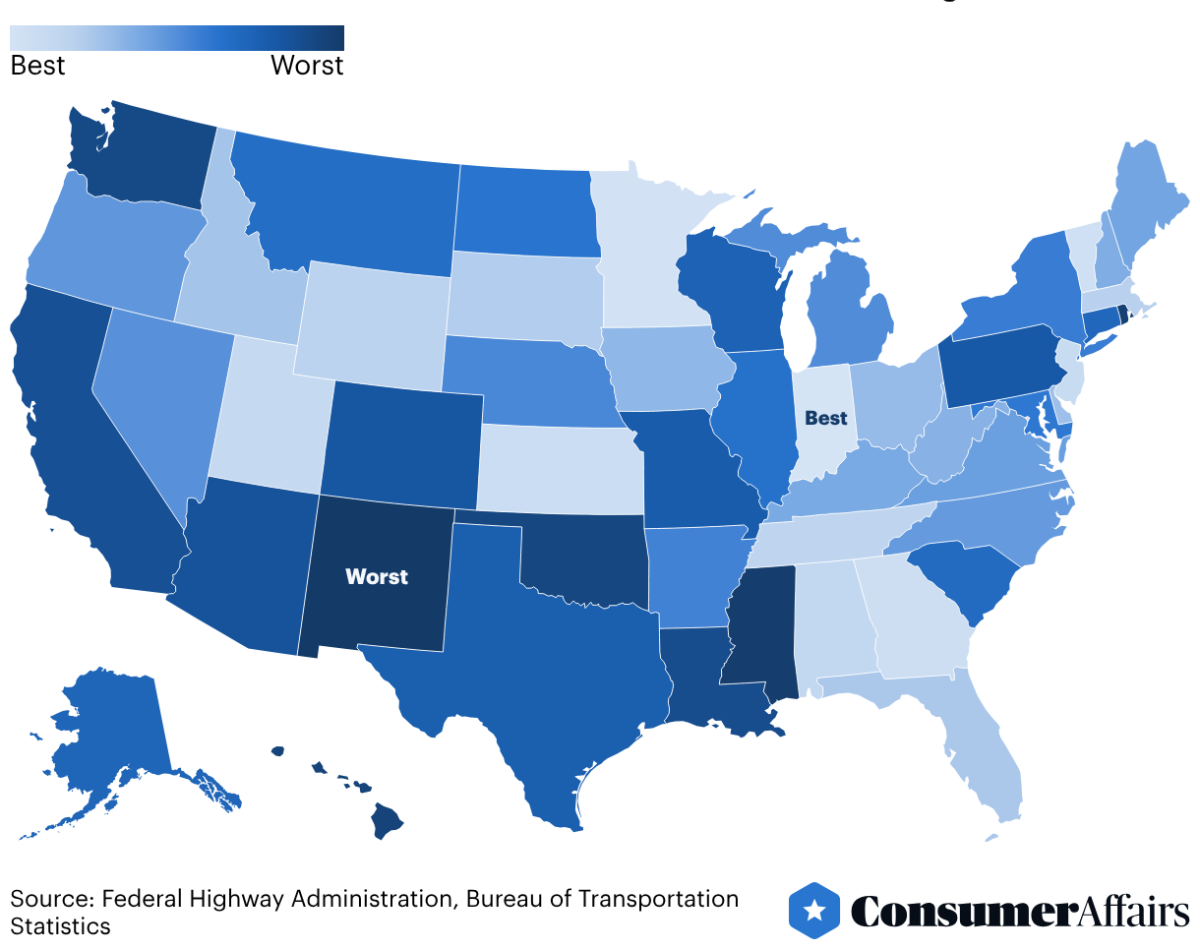
Today, transportation analysts evaluate states with the best roads and highways using several measurable factors. For trucking businesses, these rankings are more than a curiosity. They highlight where drivers can expect smoother freight corridors and lower maintenance costs.

How We Ranked The Best and Worst Roads By State

We ranked states using publicly available infrastructure datasets that track road quality, bridge condition, congestion, and investment. We focused on measures that translate into real operating impact for trucking: fewer miles on pavement in poor condition, stronger bridge health, and more consistent road maintenance on major freight routes.

Here’s what we used:

  • Pavement condition (urban and rural): State-reported pavement condition and roughness data from the Federal Highway Administration’s Highway Performance Monitoring System (HPMS), which includes nationwide roadway condition and performance reporting.
  • How “Good/Fair/Poor” is defined: The federal performance management framework for pavement condition (used by states and FHWA to compute condition ratings).
  • Bridge condition and deficiency rates: Bridge inventory and condition reporting from the FHWA National Bridge Inventory (NBI).
  • Infrastructure spending and funding context: The FHWA Highway Statistics Series for highway finance and related state-by-state infrastructure funding tables.
  • Urban vs. rural pavement context: Supporting pavement condition context from the Bureau of Transportation Statistics (BTS) and federal reporting on where pavement conditions tend to be worse.

To keep the ranking trucking-relevant, we weighted results toward conditions on higher-volume highways and key corridors (where truck traffic concentrates) rather than relying on subjective “smooth ride” descriptions.

Consumer Affair best highways by state illustration

Source: Consumer Affairs

The Top 10 States With the Best Roads and Highways

The following states consistently rank among the best in the country based on pavement condition data, infrastructure spending, and freight corridor quality.

1. Kansas

Kansas frequently appears among the states with the best roads and highways thanks to strong pavement condition ratings and consistent road funding. The majority of the state’s highways fall into categories considered acceptable or good condition.

Kansas also ranks well in infrastructure performance studies that evaluate pavement quality, road maintenance, and overall highway efficiency.

The state’s central geography makes it one of the most important freight corridors in the country. Major interstate routes such as I-70 and I-35 move heavy commercial truck traffic between western distribution centers and midwestern states’ manufacturing hubs.

Because these routes receive consistent investment in maintenance, long-haul drivers typically encounter fewer potholes and less pavement deterioration than in many other states.

2. Alabama

Alabama has improved dramatically in national road quality following major increases in highway spending through the Rebuild Alabama infrastructure program.

The state raised fuel taxes to generate additional infrastructure dollars, which are used for resurfacing highways, bridge repairs, and modernization projects across the statewide road network.

Major freight corridors, including I-65, I-20, and I-10, support heavy truck traffic moving goods between Gulf Coast ports, southern manufacturing centers, and inland distribution hubs.

These improvements have helped reduce the share of urban roads and rural roads classified in poor condition, improving freight efficiency and driver safety.

An aerial view of the winding road through a high mountain pass, passing through dense forest

3. Kentucky

Kentucky ranks highly among states with the best roads largely because of its position at the intersection of several major freight routes. Interstates I-65, I-75, and I-64 meet in the state, creating one of the busiest trucking crossroads in the eastern United States.

State transportation agencies dedicate a large share of road funding toward pavement resurfacing and bridge maintenance across these corridors. As a result, many of Kentucky’s highways maintain higher quality pavement ratings than the national average.

4. Florida

Florida’s highway system plays a major role in freight movement to and from ports and distribution centers across the southeastern United States. The state allocates billions of dollars for infrastructure to maintain roads and expand highway capacity in rapidly growing urban areas.

Key freight routes such as I-75, I-95, and Florida’s Turnpike connect major ports with inland logistics hubs. These corridors receive significant highway spending to maintain pavement quality and manage increasing traffic volumes.

Although congestion in large city centers can slow travel times, pavement conditions across much of the statewide road network remain stronger than the national average.

5. Idaho

Idaho performs well in infrastructure largely because of steady road maintenance and relatively low traffic congestion. Major freight routes, including I-84 and I-15, connect the Pacific Northwest with inland western markets, carrying agricultural products and industrial goods across long stretches of rural roads.

Because Idaho has fewer dense urban areas, pavement deterioration tends to happen more slowly than in high-traffic states. Transportation agencies are therefore able to focus more resources on preventative resurfacing and maintaining roads before they fall into poor condition.

6. New Hampshire

Despite harsh winters and freeze-thaw cycles that can damage pavement, New Hampshire continues to direct strong road funding toward resurfacing projects and bridge rehabilitation.

A large percentage of the state’s roads remain in good condition compared with the national average, helping maintain dependable freight corridors across northern New England.

For truck drivers driving through snow or mountainous terrain in New Hampshire, these infrastructure investments help preserve safe and predictable highway conditions.

7. Georgia

Georgia is a critical freight hub for the southeastern United States. The state’s highway system supports freight moving through the Port of Savannah and major distribution centers around Atlanta.

Infrastructure programs funded through Special Purpose Local Option Sales Tax (SPLOST) initiatives have directed substantial highway spending toward widening highways, improving interchanges, and resurfacing heavily traveled corridors such as I-75, I-85, and I-20.

While Atlanta experiences some of the worst traffic congestion in the country, many of Georgia’s major freight routes maintain strong pavement ratings and continue to improve through ongoing infrastructure investment.

8. Nevada

Nevada’s highways connect California distribution centers with freight markets across the western United States. The Interstate 80 corridor carries large volumes of long-haul truck traffic between the Sierra Nevada and the Rocky Mountains.

Because the state has relatively low population density, many of Nevada’s rural roads experience less traffic stress than highways in more densely populated states.

Consistent road maintenance and resurfacing projects help maintain quality roads across these corridors.

Aerial view of highway road with moving cars

9. Vermont

Vermont’s highway system faces issues usually related to the mountainous terrain and smaller transportation budgets. Despite those challenges, the state continues to invest in road maintenance and bridge rehabilitation to maintain dependable freight corridors.

While some rural roads still require additional funding to address aging infrastructure, many primary routes maintain pavement conditions considered acceptable under federal standards.

10. Minnesota

Minnesota rounds out the list of states with the best roads and highways for truck drivers. The vast majority of its road network stays in fair or good condition, even though Minnesota maintains one of the larger roadway systems in the country.

For trucking operations, that translates into smoother interstate runs, less vibration-related wear, and fewer surprise maintenance issues when you’re moving loads across long distances on key corridors like I-94, I-35, and I-90.

Minnesota also benefits from ongoing investment aimed at keeping those numbers strong. MnDOT started 2026 by awarding $76.2 million to transportation projects across the state – an encouraging signal for fleets that depend on reliable pavement and predictable drive times.

How Road Quality Impacts Your Trucking Business

The condition of the road network your truck travels on every day directly affects operating costs, equipment lifespan, cost per mile, and overall efficiency for any trucking business.

Tire Wear and Replacement Costs

Rough pavement chews through tires faster, especially on high-mileage freight corridors and neglected rural roads. Potholes and broken seams shorten tread life and push replacement costs up over time.

When a state keeps more lane-miles in poor condition, fleets cycle tires sooner and spend more time dealing with roadside service.

Aerial view semi truck trailer cargo on mountain curve road, Semi truck trailer cargo business logistic transportation on green forest road curve, Semi truck delivery asphalt road green forest tree.

Suspension, Steering, and Alignment Damage

Uneven pavement pounds the suspension and knocks alignment out faster than most drivers expect. Those repeated hits wear out shocks and steering components sooner, increasing shop time and raising maintenance costs. Those repairs also cut into uptime and force schedule changes.

Fuel Efficiency and Operating Costs

Bad surfaces raise fuel use because drivers slow down more, speed up more, and spend more time correcting for rough pavement. Add traffic congestion in busy urban areas, and you burn even more fuel while you idle or crawl.

Over long lanes, those small losses stack up into a real operating cost you feel every month.

Safety Risks and Cargo Protection

Damaged pavement increases crash risk because it reduces stability during braking and steering. It also beats up freight through constant vibration and hard impacts, especially when drivers hit uneven joints at speed. Better road quality helps you protect cargo, reduce incidents, and keep trucks moving predictably.

Conclusion

Understanding which regions offer the best roads can help trucking businesses make smarter operational decisions. Route planning, maintenance scheduling, predictable drive times, and equipment budgeting all benefit from awareness of local infrastructure conditions.

Protecting your truck from unnecessary wear is how you keep your truck on the road and your business profitable.

When rough-road routes and rising maintenance costs put pressure on your budget, Mission Financial Services can help. We provide commercial truck financing options for new and used trucks, as well as repairs, to keep your operation reliable and ready for the next load. Get in touch and start your credit application today.

6 Tips for Driving a Semi-Truck in Winter

lex-valishvili-Nwk0ye_Y_As-unsplash

It’s no secret that icy and snow-covered roads can have severe and often unpredictable impacts on traffic conditions. When these winter months roll in, heavy-duty drivers face dangerous and demanding routes, especially when they’re not prepared. Along with winterizing your truck, refreshing your wintery driving skills is crucial for surviving the frozen season. 

When drivers are faced with a winter storm, icy roads, or other frosty conditions, it’s always better to play it safe. Things like taking your vehicle to a trusted mechanic for a thorough check-up or building an emergency kit can genuinely be a lifesaver. However, there are other ways to stay safe while driving your semi this winter. 

In this article, we’ll go over our top 6 tips and tricks for driving a semi-truck safely in the winter.

1. Drive cautiously

When driving on ice- or snow-covered roads, it’s essential to take your time and drive cautiously. If you’re out of practice when it comes to driving in the winter, move slowly and pay attention to the capabilities of your vehicle. For instance, if your semi rides low, it won’t handle snow accumulation well, so it’s best to take it slow to prevent build-up. It’s vital to execute control and deliberate actions when navigating wintery road conditions. Sharp curves, rushed acceleration, and fast braking all result in decreased traction, leading to an accident. Stay alert and maintain a consistent speed while leaving enough distance between you and the vehicle in front of you. The safe amount of space will also help you when you need to use your brake. 

2. Stock up on essentials

With inclement weather being so unpredictable, you must always have the essentials with you. This way, if you get stranded in the middle of these harsh climatic conditions, you will be prepared and safe.

Your emergency kit should include:

  • Tire chains
  • Spare fuel
  • An extra fuel filter and wrench
  • Coolant, washer fluid, and oil
  • Vinegar
  • A flare gun
  • Flares
  • A flashlight and extra batteries
  • A CB radio (if one is not already in your cab)
  • A first aid kit
  • Blankets
  • Hats, scarves, and gloves
  • Snow boots
  • Snow shovel
  • Canned food and bottled water

We also recommend a few bags of cat litter. This unique emergency item can be used as a safe and eco-friendly way to regain traction if your tires get stuck on a patch of ice. Simply throw some litter under your tires, slowly engage your accelerator, and wait for your tires to do the rest.

3. Use your signals

This may seem like a no-brainer, but using your signals can be the difference between a safe ride and a preventable accident. The general rule of thumb is three blinks before changing lanes, but when the weather outside is frightful, stay safe and use five blinks before moving over. It would help if you also used your signals before turning. To give those driving behind you plenty of notice, be sure to activate your signal before you begin slowing down for your turn.

If the weather is too extreme for your comfort level, use your four-way hazard signals and move to the passing lane to allow those around you to pass. Hopefully, doing so will encourage other drivers to exercise caution and prevent a pileup from happening.

4. Let your truck warm up

When the temperatures drop below freezing, it can be hard on your semi’s heavy-duty diesel engine. So, it’s essential to allow your truck time to warm up before taking off on your route. This will prevent your engine from refusing to turn over and promote longevity past the winter months. 

Pro Tip: While your rig warms up, turn on your defroster and let your windshield unfreeze itself. Two birds, one stone. 

5. Be cognizant

As well as driving cautiously, you as a driver should be extra cognizant of those around you while driving through frosty weather. For example, water coming off another vehicle’s tires could indicate just how treacherous the roadways are. If there is a lot of water, the roads are wet, but the streets are freezing over if there is less spray. You should also pay close attention to the streets for black ice.

6. Check your tires, fuel, and lights

Perhaps the most crucial tip happens before you hit the road: check your tires, fuel, and lights. Regardless of the season, truck drivers should be inspecting their tires regularly. However, as the weather grows colder, your tires will need to be examined even more than usual. If your tires are underinflated, damaged, or worn out, it could lead to troubles on the road, such as low traction.

Checking your fuel is another crucial step to staying safe. By keeping your fuel tank filled, you will give extra weight to your rig, which will ultimately help your tires retain traction and stay on the road.

Once you stop for the day, be sure to check and clean your headlights, taillights, and license plate since they will more than likely be covered in a mixture of dirt and snow. For semi-trucks, your lights need to be as visible as possible, meaning your lights need to be clean and functioning correctly.


Want more information like this? Check out these articles:

Tips for Preparing Your Semi-Truck for Summer

How to Stay Safe in Harsh Winter Conditions

7 Crucial Tips for Truck Tire Maintenance and Repair

Older Drivers: How to Stay Safe Behind the Wheel

Taking a break from work

It’s officially the first week of December, which means it’s Older Driver Safety Awareness Week! This national celebration was initiated in 2009 by the American Occupational Therapy Association to start a conversation around older driver safety. According to the CDC, there are currently 45 million motorists over the age of 65. In one year alone, approximately 250,000 of those older drivers were involved in vehicular accidents that resulted in severe injuries, and another 7,700 tragically died in traffic accidents. 

This week of awareness sheds light on those driving for personal reasons as well as our nation’s truck drivers. When long hours on the road are combined with harsh winter weather or age-related medical conditions, heavy-duty hauling can be dangerous to you and those around you. For these reasons, it is vital to recognize when the risks of driving outweigh the benefits and to learn different ways to stay safe in the meantime.

6 Safety Tips for Older Drivers

Older drivers are not only twice as likely to suffer from medical conditions that impair their driving skills, but they are also at a higher risk of getting injured or even dying in a car accident. However, these numbers don’t mean that those 65 and older have to fear getting behind the wheel; they just need to drive more cautiously, practice good judgment, and follow the CDC’s tips for older driver safety.

These CDC safety tips include: 

1. Obey all traffic laws. 

Follow speed limits and traffic signs, wear your seatbelt, and never drive under the influence. This is important for drivers of ALL ages.

2. Only drive under favorable conditions. 

If feasible, only operate your vehicle during the daytime and when the weather is decent. 

3. Keep an open line of communication with your doctor. 

Discuss any medical concerns or issues with your healthcare provider and determine if they could have an adverse effect on your driving. In terms of medication, determine if any potential side effects, such as dizziness or drowsiness, could interfere with your driving.

4. Have your vision and hearing checked at least once a year.

If either is impaired, be sure to obtain the proper prescription for your eyewear or hearing aids. It is imperative that you wear your glasses at all times when operating your semi truck.

5. Plan your route in detail. 

Before hitting the road, make sure you know exactly where you are going, what alternative routes there are, and where rest stops are along the way. It is always a good idea to have an up-to-date map with you as well. 

6. Adapt your truck to fit your needs. 

If allowed and/or feasible, add installable features or adaptive devices to your vehicle to help with proper vehicle maintenance.

By following these tips and regularly assessing your driving habits for any concerning shifts, you can continue driving safely and avoid at-fault accidents. However, if you notice any changes in your reflexes, vision, hearing, or physical or mental well-being, it’s essential that you stop driving and talk with your doctor. 

Click here to learn more about medical conditions that may affect your driving.

Observe Older Driver Safety Awareness Week

This week celebrates the role that transportation plays for older drivers and their communities. To celebrate Older Driver Safety Awareness Week, reach out to your favorite, experienced driver and start a dialogue about their safety and others. Drivers can observe this week by following the top six safety tips as recommended by the CDC.


Pro tip: Use the hashtag #OlderDriverSafetyAwarenessWeek when posting on social media this week!

Archives

Sign Me Up!

Stay up to date with the latest news in the commercial trucking industry.

Contact Us
close slider