

Office: (404) 975-4800

bellawebdev

Semi Truck Driver Gifts

Top Semi-Truck Driver Gift Ideas for Every Budget

Semi-Truck Driver Gifts for Every Budget

Truck drivers appreciate gifts that make life on the road easier. That’s why the best truck driver gifts are durable and designed around the realities of a truck driver’s life.

Long hours behind the wheel, limited access to quality food, and constant time inside a cab mean that every item needs to serve a real purpose.

If you are shopping for a semi-truck driver, the goal is simple. Choose something that improves comfort, supports safety, helps with organization, or adds convenience during long drives.

Below, we break down the best gift ideas by budget so you can find the perfect gift for your favorite truck driver, whether you are shopping for Christmas, a birthday, or just want to recognize their hard work.

Budget-Friendly Gifts For Truck Drivers

You don’t need a large budget to find meaningful gifts for truck drivers. Many of the perfect gift items are affordable and focus on daily comfort, safety, and convenience.

Compression Socks

Compression socks are one of the most underrated but effective truck driver gifts. Most truck drivers spend long periods sitting, which can lead to poor circulation, swelling, and fatigue.

Compression socks are clinically proven to improve circulation and reduce the risk of blood clots during long periods of sitting. For long-haul truckers, this makes them more than a comfort item. They are a simple way to support long-term health while spending hours behind the wheel.

For a driver who spends hours in the driver’s seat, this small upgrade can make a noticeable difference.

Work Gloves or Driving Gloves

Gloves are a simple but highly practical gift idea for truck drivers. Driving gloves improve grip on the wheel, especially during long drives or extreme weather.

Work gloves are equally important. Many truckers handle freight, check equipment, and move around loading docks. A durable pair protects hands from wear and tear while improving safety during daily tasks.

Headlamp

A headlamp is one of those essential items that drivers do not always think to buy but end up using constantly.

From pre-trip inspections to roadside checks in a low-light setting, a headlamp allows drivers to work hands-free while maintaining visibility. This improves both efficiency and safety, especially during early mornings or late-night stops.

Insulated Tumbler

An insulated tumbler is one of the best gifts you can give. Hydration is critical during long drives, and having access to coffee or cold water throughout the day adds real convenience.

A high-quality tumbler keeps drinks at the right temperature for hours and reduces the need for frequent truck stop purchases. It’s a simple upgrade that helps drivers stay focused, maintain energy, and keep moving efficiently, especially on tight routes.

Multi-Tool Extractor

A multi-tool extractor is a smart, practical gift that combines everyday usefulness with serious peace of mind. Compact enough to keep within arm’s reach, it gives drivers a versatile tool for all kinds of on-the-road situations.

Whether it’s handling an unexpected roadside task or providing added security in a tough situation, this tool earns its spot in any cab.

Phone Mount

A high-quality phone mount helps drivers follow navigation safely without taking their eyes off the road. It keeps devices stable despite vibration from long drives and ensures directions are visible at all times. This improves efficiency and helps keep drivers safe.

Gift Cards

Gift cards are one of the most flexible gift ideas. They allow drivers to choose what they need, whether it is food, fuel, or supplies. Because many truck drivers are constantly moving between locations, a prepaid card can be more useful than a physical item.

Small Storage or Organizer Items

Organization is a constant challenge inside a cab. Compact tools like a seat-mounted organizer, compact lock box, dash organizer, or document holder help drivers save space and keep everything within reach.

From paperwork to cab accessories and valuable items, these small upgrades improve efficiency and reduce clutter.

For example, a front-seat organizer can hold registration documents, maps, chargers, and flashlights, while a compact lock box gives drivers a secure place to store cash or personal items. These small additions make daily routines smoother and reduce time spent searching for essentials.

Mid-Range Semi-Truck Driver Gift Ideas

Mid-range gifts offer more noticeable upgrades. These items go beyond basic essentials and start to significantly improve daily comfort and performance.

Polarized Sunglasses

Polarized sunglasses protect a driver’s eyes from harsh sunlight and reduce glare on the road. This improves visibility, reduces fatigue, and helps drivers stay focused during long daytime trips. Over time, this contributes to better safety and a more comfortable driving experience.

Hands-Free Bluetooth Headset

A Bluetooth headset is one of the most practical tools for communication. Drivers can stay connected with dispatch, clients, or family without taking their hands off the wheel. It supports both convenience and compliance with safety regulations.

Anti-Sleep Alarm

Fatigue is one of the biggest risks in trucking. An anti-sleep alarm monitors alertness and warns the driver before fatigue becomes dangerous. For drivers who handle long hours and overnight shifts, this device can be a true game-changer.

Portable Food Warmer or Electric Lunch Box

Access to quality food is a challenge for many drivers. Many truck drivers rely on fast food because they are constantly moving through unfamiliar areas.

Over time, that habit can lead to higher costs and poor nutrition. Having a way to prepare or reheat meals inside the cab gives drivers more control over what they eat and how much they spend each week.

A portable food warmer allows drivers to heat home-cooked meals on the road. This improves nutrition, helps them save money, and reduces reliance on unhealthy options.

Cooler or Portable Mini Fridge

A cooler or mini fridge gives drivers control over their food and drink options. They can store cold drinks and avoid unnecessary stops, which adds convenience and cost savings during long trips.

It also allows drivers to store items like fruit and prepared meals, reducing the need to rely on whatever is available at the next truck stop. That level of control adds both convenience and consistency to a driver’s routine.

pexels-cottonbro-7541988

Seat Cushion

A good seat cushion, especially a gel foam seat cushion, helps absorb constant road vibration, which can take a toll on the lower back.

For drivers spending long hours in the driver’s seat, this helps maintain posture and reduces discomfort. Over time, it can also help prevent back issues.

Personalized Gift Items

Personalized items can still be a thoughtful gift when they serve a purpose. Custom gear or personalized tools, like a custom-engraved insulated tumbler with the driver’s name or a seat-mounted organizer with labeled compartments, are both practical and fun.

The key is to combine things your truck driver loves with practicality, so the item fits into a truck driver’s life.

Premium Semi-Truck Driver Gifts

Premium gifts focus on major upgrades that improve the quality of life inside the semi-truck. These are higher-cost items but deliver long-term value.

Memory Foam Mattress

A memory foam mattress designed for a sleeper berth can completely transform rest quality. For drivers who spend nights on the road, better sleep leads to improved focus and safer driving. A good night’s rest is one of the most important factors in a driver’s performance.

Memory Foam Pillow or Sleep Bundle

A sleep bundle combines comfort items like a pillow and a heated blanket. This setup helps drivers adapt to changing temperatures and rest better.

Ergonomic Seat Upgrade

An ergonomic seat upgrade is one of the most impactful improvements you can make. These seat upgrades support posture, reduce strain, and improve circulation during long drives. For drivers dealing with constant vibration and extended sitting, this upgrade can significantly improve daily comfort.

GPS or Heads-Up Driving Display

A dedicated truck GPS or heads-up display helps drivers avoid low bridges, restricted routes, and last-minute reroutes that waste time and fuel. For a newer driver or someone running unfamiliar lanes, that kind of visibility reduces stress and helps keep deliveries on schedule.

Dash Cam

If a driver gets into an accident or faces a disputed claim, recorded footage can make the difference between a quick resolution and a costly delay.

For owner-operators, especially, that can protect both income and reputation. In situations involving insurance claims or liability disputes, having clear footage can speed up resolution and prevent unnecessary financial loss or downtime.

Look for models with wide-angle coverage, clear night recording, and loop storage so the system runs continuously without manual resets.

Portable Oven or Cooking Setup

A portable oven, slow cooker, or powered lunch box gives drivers control over what they eat. That means real meals and fewer unhealthy quick fixes.

It helps drivers save money over time. Buying food on the road adds up quickly, while even simple home-prepped meals can stretch much further across a week of driving.

You can also pair cooking equipment with smaller kitchen add-ons like a portable coffee maker or electric lunch box. These items help drivers prepare meals and drinks without relying on truck stop options, making daily routines more consistent and cost-effective.

Conclusion

When choosing gifts for truck drivers, it helps to focus on durability and real-world use. The best items are the ones that get used daily and solve a problem drivers face on the road.

When you choose something that improves comfort or simplifies daily routines, you give more than just a gift. You provide something that helps drivers perform better every day.

For many drivers and small fleets, support also means having access to the resources needed to keep their trucks running.

Whether it is repairs or equipment upgrades, Mission Financial Services provides financing solutions designed for owner-operators and small fleet owners. Start your credit application today and let us help you stay running to the best of your ability.


Truck

Top 3 Best Commercial Truck Financing Reviews

Truck


Are you in the market for new commercial vehicles, but don’t want to make hasty financing decisions? If you’re looking for the best commercial truck financing reviews, this article is for you!

We’re going to discuss the top 3 commercial truck financing options. This way, you can make the best decision for your business. Let’s explore the pros and cons of each option, as well as expected application processes, rates, and customer service.

Whether you’re a small business owner or a fleet manager, we’ve got you covered. Sit back, and read on, to find the perfect financing solution for your commercial trucks.

3 Best Commercial Truck Financing Reviews For You

We’ve selected the top 3 options that you should consider in your financing journey. These key players were ranked using the criteria outlined below.

Here’s how we reviewed the best commercial truck financing companies:

  • Financing options: Not all truck finance companies offer the same financing options. Some only provide repair loans, while others offer direct loans. The more financing options, the better!
  • Application process: Nobody wants to sift through hours of paperwork. The easier the application process is, the easier it is for you to finance your fleet.
  • Rates: Lower rates are highly sought after. This means less cash out of your pocket when you have to repay your loan.
  • Customer service: Commercial fleet financing can be complicated and daunting. Having superb customer service helps ensure you get the loan you deserve.

If you intend on financing a semi truck, you’ll want it to be as comfortable as possible. Read these articles to make the most of your journeys:

1. Mission Financial Services

On the Road to FINANCIAL INDEPENDENCE

As the best option for overall commercial fleet financing, we have Mission Financial Services. This company is a well-known choice for semi-truck owner-operators, as well as fleet services, seeking commercial fleet financing.

Mission Financial Services aims to streamline the semi-truck financing process. When it comes to financing anything of commercial use other than construction equipment, this company is your best bet.

They also strive to help owner-operators finance new trucks, repairs, or upgrades. Although this company will assess your credit report, note that credit score is not a determining factor in approving your loan.

Financing Options

Mission Financial Services provides professional commercial vehicle financing. They offer a wide variety of commercial and semi-truck loans, including:

  • First-time buyer loans.
  • An approved lender for 1000’s of Dealerships nationwide
  • Private party purchases
  • Truck repair loans.
  • Operating Capital.
  • Lease Purchase Buy-Outs.

Application Process

The application process at Mission Financial Services is as seamless as it gets. There are a few steps you’ll need to take to complete your loan application. We’ve outlined these below:

  • Determine eligibility: As with any loan application, your eligibility will need to be assessed. Mission Financial Services will consider your overall credit report and down payment, as well as your truck’s age and how long you’ve had a commercial driver’s license.
  • Gather documentation: The necessary documents you’ll need include bank statements, a CDL, references, cell phone contracts, and proof of insurance. Having the required documentation will help to streamline your application process.

White paper silver pen

  • Apply: Lastly, submit your documentation to Mission Financial Services. If all is in order, your new truck will be right around the corner.

Rates

Mission Financial Service offers affordable industry rates. The rates largely depend on the type of truck loan that you need. Chat with one of the friendly representatives at Mission Financial Services to determine the specific rates you’ll be liable for.

Customer Service

Mission Financial Services is known for top-tier customer service. Many customers praise their speedy application process and enthusiastic administration team. This team helps truck owners and fleet managers navigate the application process and find semi-truck loans suitable for their needs.

Summary

Applying for a commercial truck loan with Mission Financial Services is a breeze. The online application process is quick and easy, and you can complete it from your home or office.

The friendly and knowledgeable customer service team has received high praise from past customers. This team has been able to consistently help customers find the right loan deals. There are several loan options available, which makes it easy for customers to find the best fit for their needs.

2. Calfund

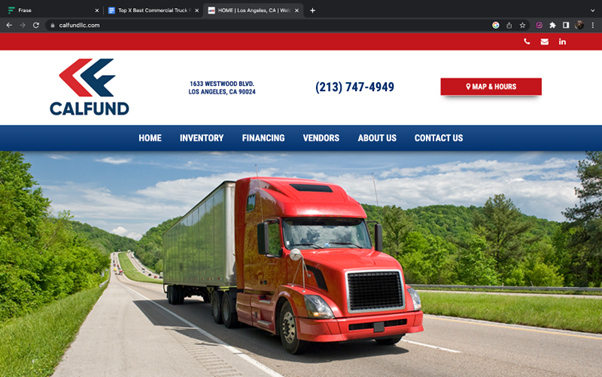
Screenshot

Next on our list of best commercial truck loan options is Calfund. Since 2002, Calfund has been a direct lender that provides titled equipment financing. They aim to help transportation industry customers and dealerships pursue new business opportunities through funding.

Financing Options

Whether you’re looking to acquire your first semi-truck or finance upgrades, consider looking at Calfund’s financing options.

Calfund will also assist with any maintenance or customization that could be necessar at a later stage. This financing option is available to even those with a C or D credit score. This makes it easier to receive a loan if your credit score isn’t the best.

Application Process

To apply for a semi-truck loan with Calfund, simply visit their website. All you need to apply for a quick, direct loan are key details about your vehicle and the down payment.

Rates

Since Calfund offers direct loans, their rates are higher than the industry standard. Some clients have found Calfund’s interest rates to be too high. With higher rates, fleet managers and truck owners take longer to repay loans.

Operator

Customer Service

Clients looking for a commercial truck loan have found Calfund’s customer service to be up to scratch. Customers can receive assistance through direct calls, emails, and an easy-to-navigate website. To reach Calfund, consider an immediate call. This seems to be the best way to get in touch with a friendly loan manager.

Summary

Calfund offers commercial truck loans to even those with subpar credit scores. This is a good opportunity for those looking to finance businesses that they may not be able to otherwise. Calfund’s application process is simple, and their customer service is accessible.

As Calfund is a direct lender, its rates tend to be higher than other companies in the industry. Higher rates mean that loans will take longer to repay.

3. Dakota Financial


Website screenshot


Dakota Financial is one of the oldest commercial truck financing companies around. They have over 20 years of experience in the industry and has served over 10 000 companies.

They offer great national funding programs to their clients, specifically those with prior bankruptcies, tax liens, judgments, repossessions, or slow pays.

Financing Options

This company offers commercial loans that range from smaller to relatively large amounts. Unlike bank truck loans, customers can be approved despite low credit scores. Dakota Financial’s options are geared to assist customers who have a past of bankruptcy, tax liens, or judgments.

Dakota Financial offers a custom loan solution for startups and companies with no credit record.

Application Process

This option does not offer a quick or easy online application process. Customers wishing to apply for a loan with Dakota Financial must contact the company via telephone or email to start the application process.

Customer Service

Dakota Financial has good customer service. Past customers have been happy with the capabilities of the team, and most have been satisfied with the level of assistance they received. This makes Dakota Financial a good option for individuals or companies who feel they will need extensive support.

handshake

Summary

Dakota Financial has been in the truck-loan industry for many years. This company is a reliable, well-known fleet financing option. Their customer service is  accessible and helpful. However, if you’re looking for the easiest application process, note that you’ll need to jump through a few more hoops with Dakota Financial.

Applying online is quick and easy, while starting an application process over the phone or by email might be a bit more staggered.

Final Thoughts

We’ve discussed the best commercial truck financing reviews for you. Each of these companies is a key player in the industry and is sure to help you finance your semi truck dreams.

Whether you’ve got one truck, or a small fleet, a loan can help you take your business to new heights. If you’re eager to start the financing process today, follow this link. Mission Financial Services promises a range of financing options, easy application processes, competitive rates, and great customer service.

5 Things Owner/Operators Should Do to Achieve Success

Professional middle aged truck driver in casual clothes driving truck vehicle going for a long transportation route.

Trucking is an expansive and flourishing occupation—and it’s one of the industries that hasn’t slowed down during the current COVID-19 crisis. Companies and essential businesses turned to trucking, heavily relying on owners/operators to deliver their much-needed products across the nation. With this level of productivity and increased activity comes the question of success. What is now deemed “successful” in the trucking industry?

For some people, success is defined by what they have. For truck drivers, success is determined by their quality of work and the professional milestones they meet. But if you’re new to owning and operating your own business, figuring out how to measure success outside of just numbers can seem overwhelming. There’s so much more to success than sheer quantity or numerical values. In this article, we’ll break down the top five things you should do if you’re aiming for success in the trucking industry.

1. Be Positive

Trucking can be a strenuous job, but if you approach your career with set goals and a positive attitude, you’re more likely to beat out the competition and thrive as a business owner. It’s essential to consider your needs and desires to establish your short-term and long-term goals. Write out your goals and treat them as stepping stones to your future. Another tip for success: Try starting your day with “I get to” instead of “I have to.” When you work as an optimist, you can be 20 to 40% more successful than pessimists.

2. Health Matters

Successful business owners know a healthy body leads to a healthy mind, which leads to a healthy business. Researchers at the University of Georgia asked a group of people who make upward of $100,000 per year what helps them find success in their work. At least 75% credited their focus and drive to physical fitness. If your health is compromised by an unhealthy diet or lack of exercise, you’re almost guaranteed to spend more time in a doctor’s office and less time running and growing your business. An unhealthy lifestyle also leads to poor leadership skills and personal qualities, like tiredness and irritability. By staying on top of your health, you’ll be more energized, focused, and capable of taking your trucking business to the next level.

3. Focus Is Key

Business owners become successful by staying focused, committed, and driven. It’s easy to lose focus in the hustle of day-to-day operations; to grow your business, however, try incorporating healthy and productive habits. Each morning, write out your goals for the day then focus on them one at a time. When you focus on too many things at once, you lose up to 40% of your productivity. Working one goal at a time will help you hone in on the day ahead. While on the clock, eliminate distractions and stay committed to your goals. Combine your focus and commitment, and those around you will see you as a driven leader and someone they want to work with.

4. Work Harder and Smarter

Having a business means setting goals, achieving them, then working hard to outdo yourself on your next set of plans. A study from Harvard showed 3% of graduate students had written goals and plans. Ten years later, the 3% were making 10 times more than the 97% who didn’t have written goals. Make your goals achievable, then strive to achieve them. To work smarter, try placing your simple tasks and goals at the start of your day. It’ll give you a sense of accomplishment and help you conquer the more challenging tasks later.

5. Don’t Be Afraid to Fail

Finally, don’t be afraid to fail. It works exactly how it sounds. Things don’t always go according to plan. Some things are past our control, and that’s OK. Successful owners aren’t afraid to leap, even in the face of potential failure. It’s important to lose any fear of judgment and view your losses as learning opportunities. To get to your future, weigh the pros and cons of new options, accept any outcome, then strive for the next best thing.

Now that you have the tools for success, it’s time to get to work.

Interested in learning what it takes to become a successful owner/operator? Check out our post, How to Succeed as an Owner/Operator. For more industry news and content, stay up to date with our blog. Ready to begin your career as a trucker, but need some financial guidance? Visit our website to view our list of services, and contact us with any questions.

How Working from Home is Affecting the Transportation Industry

linkedin-sales-solutions-Be5aVKFv9ho-unsplash

COVID-19 changed just about every aspect of American society, including our work lives. Earlier this year, many offices and places of business transitioned to a remote work structure with a majority of employees working out of their homes. One of the results of this change is some people no longer have a daily commute. The initial lack of commuters on the road drastically impacted traffic patterns and the transportation industry as a whole. While traffic patterns are increasing again, the transition continues to impact truckers—who are now in higher demand. Keep reading to find out exactly how remote work impacts traffic patterns, demand, and the day-to-day lives of owners/operators.

Truckers Have the Roads to Themselves

While some U.S. cities are seeing lower traffic levels—a decrease by up to 63%—trucking continues to be steady. The pandemic increased trucking activity and boosted cargo volumes since the shift in March. For truckers, large chunks of time can be spent battling gruesome traffic, drastically lowering the productivity of the entire supply chain. In 2016, the American Transportation Research Institute determined an estimated $74.5 billion in excess operating costs could be blamed on heavy traffic. This impressive figure speaks to the extent to which traffic determines the effectiveness of the entire supply chain.

Peak traffic hours in the mornings and evenings can almost entirely be contributed to commuters. Without them, those hours don’t bring the same congestion. Trucking companies used to have to completely change their routes in order to avoid high traffic areas. Many companies even planned the locations of their facilities in order to avoid trucks having to cross through metropolitan hubs. With lighter traffic than usual in some areas, many truckers can now take more direct routes and get to their destinations much faster.

Less Traffic Equals Less Liability

Having fewer drivers on the road makes traveling safer for owners/operators. By having fewer cars on the road, there is a smaller margin of error when it comes to accidents and collisions. Busy roads and traffic have been linked to increased rates of reported low-speed accidents. A study conducted by the Department of Transportation in the state of Maryland confirmed a positive correlation in the frequency and severity of collisions in high congestion lanes. When there are more cars on the road, it adds an elevated level of unpredictability. When accidents do occur in heavy traffic, that collision is much more likely to reverberate and cause pile-ups.

Streamlining the Supply Chain

The work-from-home structure also necessitates additional supplies. Since people are in their homes all day, they’re using delivery services more frequently, thus boosting business for truckers. Because of this increase in demand, trucking companies are rapidly adapting to make it all work. As mentioned earlier, many owners/operators are trying to plan routes for more direct travel. Additionally, warehouse reconfiguration allows truckers to spend less time at inventory facilities, and more time getting everyone the supplies they need to thrive from home.

Getting Back to “Normal”

Studies by StreetLight Data note that traffic is returning to its previous levels, particularly in rural areas, at a quicker pace than originally expected. As more motorists return to their daily commute, truckers might see a return to pre-COVID conditions. Fortunately, the transportation industry as a whole has evolved during this period. Even after traffic picks back up, the industry has found new and creative solutions—such as redesigned routes, streamlined loading procedures, and overall supply chain optimization—to make the entire supply chain more efficient and profitable. Additionally, as the disruption continues, more and more people will remain in their homes, amplifying the demand.

While traffic may be starting to increase again, getting up to 90% of the pre-pandemic levels, most metropolitan areas are still reporting lower congestion rates. The advancements made during this new period will have ripple effects that remain far past this period of uncertainty.

Going forward, many companies are discovering that remote work is productive, and as everyone settles into working from home, it might remain that way. If working from home becomes the new standard, the benefits it’s had for the transportation industry can be further capitalized upon in the months, and possibly years, to come.

Mission Financial is your all-in-one resource for trucking financing and industry news. Check out our comprehensive blog for updates on the transportation industry.

Everything You Need to Know About the Fiscal 2021 Transportation Funding Bill

At the end of July, the U.S. House of Representatives passed a package of fiscal year appropriations bills for 2021 with a 217 to 197 vote. The six bills address urgent national priorities and supply funding for federal agencies, including the departments of Commerce, Defense, Energy, Education, Health and Human Services, Housing and Urban Development, Justice, Treasury Labor, and Transportation. The $1.3 trillion bill package still needs to survive the Senate, but the overall goal is to provide funding for “96% of the government for the fiscal year 2021.”

The portion of the package for the Department of Transportation includes a request for a $107.2 billion budget for 2021. This amount will be broken down and allocated to various sub-departments within the DoT. In this article, we’ll go over what you can expect to see in 2021 if the bill passes through the Senate and how it will affect the trucking industry.

DoT Bill Breakdown

For the 2021 fiscal year, the DoT would be allotted $21.1 billion more than it received in 2020.

If the bill passes in the Senate, it will include:

  • $62.9 billion for the Federal Highway Administration
  • $18.1 billion for the Federal Aviation Administration
  • $1.3 billion for the National Highway Transportation Safety Administration
  • $3 billion for the Federal Railroad Administration
  • $18.9 billion for the Federal Transit Administration
  • $1.2 billion for the Maritime Administration

Aside from the $107.2 billion budget, the Department of Transportation hopes to receive an additional $26 billion “to strengthen and make more resilient our nation’s aging infrastructure” in light of the current economic climate. This amount would include National Infrastructure Investments and a budget for the DOT Office of Inspector General, to name just a couple.

To see the budget highlights in its entirety, click here.

What This Means for the Trucking Industry

The trucking industry is rapidly expanding, and there has been an extensive amount of care when it comes to growing and improving the trade. Earlier this year, the DoT announced its plans to add more upgraded truck stops across the nation. And while this may feel like a minor change, it will ultimately provide comfort and be a convenient perk for truckers conquering longer hauls.

The 2021 budget for the DoT would also be used to expand and rehabilitate the communities that serve the trucking industry. House Appropriations Subcommittee on Transportation, Housing and Urban Development, and Related Agencies Chairman David Price said:

“Our nation is facing an infrastructure crisis, with crumbling roads, aging transit and rail systems… Meanwhile, COVID-19 is ravaging communities, revealing and deepening existing disparities… [This bill] continues to build on bipartisan progress in recent fiscal years to increase funding for all modes of transportation—highways, aviation, transit, bike and pedestrian projects, rail, and ports—while improving safety and focusing on resiliency across all programs.”

As mentioned above, a significant plan for improvement is constructing and reconstructing infrastructures. Improving infrastructure in rural areas (where a majority of trucking fatalities occur) can lead to a safer work environment. Bettering foundations in urban areas also has its benefits. It could ultimately lead to less work-based hazards, reduced traffic, and fewer accidents, which leads to greater efficiency and steady economic growth. The increased funding for state and local governments also allows them to improve their local transportation systems and safety; this could boost public relations and enable lower-income communities to rehabilitate their areas. These changes will culminate in growing our nation’s communities and paving the way for more trucking companies to open up, create more jobs, and expand our nation’s economy.

What Can We Anticipate For 2021?

As of right now, the bill isn’t officially passed, and therefore we cannot say for sure what is to come, especially in light of COVID-19. The energy surrounding this bill is hopeful, though. House Appropriations Committee Chairwoman Nita M. Lowey said:

“This bill represents a forward-looking vision to rebuild our nation and strengthen our communities. Together, we can modernize our transportation systems, expand access to safe, affordable housing, and support our most vulnerable neighbors… With this bill, we are laying the foundations for sustained economic growth and expanded opportunity for every American in every corner of our nation.”

If the Senate passes the bill, you can anticipate positive actions for not only the trucking industry but the communities that benefit from it as well. Check out our blog to stay up-to-date on the latest developments for this story. If you want to kickstart your trucking career, contact us today to see how we can help you.

Pros and Cons of Employer-Paid CDL Training

douglas-lopez-WFItslWB89M-unsplash

Believe it or not, it’s both legal and entirely feasible for anyone in the U.S. to receive a Class A Commercial Driver’s License without any help from a private trucking school. This information can be hard to come by, however, as there are dozens of private trucking schools in most states who make a profit by convincing greenhorns the best way into trucking is through their particular programs.

What You Need to Get a CDL

That being said, there’s a lot of information and many steps required for anyone looking to acquire a CDL. As a result, going the lone-wolf route might not be in the best interest of someone looking for step-by-step assistance. If you’re attempting to get the license alone, you’ll have to do a great deal of research in order to learn what’s needed to pass the written test and then pass the truck inspection that’s required for acquiring a CDL in most states, which can be a challenge for some. The process of obtaining a CDL shares similarity with the process of attaining a regular driver’s license, with different requirements to qualify. Federal regulations require you to be at least 18 years of age before attaining a CDL. But, in order to drive a commercial vehicle across state lines (interstate travel), or haul hazardous materials (HazMat), federal regulations require you to be 21 years of age. To apply for a CDL, you must have a Social Security number assigned to you to verify your citizenship, a conventional driver’s license from your local Department of Motor Vehicles, one year of driving experience, and a good driving record.

Depending on the state where you’ll apply for your CDL, it’s possible your DMV has already published a guide to getting your CDL, like this one created by the state of Texas. Make sure to check your DMV web page concerning CDLs to see if it’s published a similar resource for your state.

To make a long story short, the cheapest way to get your CDL will always be to do it yourself, without putting money down on a private program. On the other hand, there are still potential benefits to the other two options available to new drivers, which are to: 1) Attend a private CDL training program, or 2) Participate in Employer-Paid CDL Training.

The Potential Benefits of Private CDL Training Programs

Many CDL training programs have connections in place that can make it easier for recent graduates of the program to get jobs with carriers. There’s also a very high demand for truck drivers in most states, so most individuals who receive a CDL shouldn’t have too much trouble finding employment in general. With that in mind, tuition for driving school can range from $3,000 to $6,000, making it a significantly larger investment than applying for a CDL on your own, and the most expensive way to get into trucking on average. While many students find it relatively easy to get student loans for their CDL program, interest rates in America have been on the rise in recent years, making private programs a pretty large price to pay for the convenience.

Employer-Paid CDL Training

These programs are more difficult to generalize about, as they’re slightly less well-regulated when compared to true-to-form private driving schools and can differ widely when it comes to day-to-day life in training. While you won’t have to put any money down up front in order to get your CDL, in most cases, receiving training from an employer comes with a requirement that you work for that same company for a minimum amount of time, and being terminated from that position or accepting another can come with financial penalties. If you begin, and then fail to complete Employer-Paid CDL training, it’s likely you’ll have to pay whatever amount that company values the cost of training.

The long and short of this is Employer-Paid CDL training can be an inexpensive and efficient way to get into trucking, but it also carries a great deal of risk. Prime Inc. is a huge trucking company in America that trains thousands of drivers every year; recently, it had to pay $28 million to drivers who participated in their paid apprenticeship program as a result of unfair underpayment to new graduates of their program.

Lawsuits like this aren’t overwhelmingly common, but participating in Employer-Paid CDL training programs inherently gives a lot of power to the employer and can make it difficult for new drivers to have a good understanding of what employment could look like with other companies, essentially reducing their access to the financial cushion afforded by the free market. In general, if you’re seriously considering Employer-Paid CDL training, it’s highly advised that you get a hold of someone who’s participated in that same program before you enroll.

How You Can Get Started

If you need private financing for a truck after you’ve finished your CDL program, consider contacting us at Mission Financial, where we can offer you a direct loan at a competitive rate. Make sure to visit our blog to keep up with recent trucking news as well.

Archives

Sign Me Up!

Stay up to date with the latest news in the commercial trucking industry.

Contact Us
close slider