
Office: (404) 975-4800

News

Colleges Begin Launching Commercial Trucking Programs


Choosing a trucking school is the first big step to starting your career as a commercial driver. You want to make sure you pick a school that will prepare you and deliver the proper training for life on the road. This includes proper accreditation, experienced teachers and plenty of practice time behind the wheel. Previously, the only place to get semi-truck driving training was at a trucking school.

However, now it is easier than ever to find proper training thanks to community colleges across the country who are beginning to provide trucking classes at their facilities. Here is what you need to know about how community colleges are changing the way future truckers are being educated.

Community Colleges Offer CDL Classes

Previously, depending on location, students would have to travel to other cities to receive a commercial driver’s license. And because CDL courses typically last four to six weeks, it can add excessive extra cost on top of tuition expenses. Students often have to find lodging and spend extra money for food and necessities while away from home. Now, truckers-in-training can take courses in their area at their local community college. This gives more people access to training at an affordable cost without having to leave their families and homes behind.

Many of these community college programs offer added bonuses to make learning this industry even more attractive to young men and women. Some schools, like North Idaho College, have teamed up with driving schools to offer students a unique experience. In the case of North Idaho College, the partnership is with Spokane driving school Drive509. Because the partnership crosses state lines, students at the community college have the chance to qualify for CLD in both Washington and Idaho. This empowers students to broaden their search during their initial job hunt. As of March 2019, over 300 students have graduated from the four-week course, and many have gone on to earn starting salaries of over $40,000 per year.

Pros of Community College CDL Training Programs

While the addition of commercial trucking programs to community colleges will open doors for new young truckers, there are some pros and cons to consider before choosing which school is right for you. Community college programs are a great way to give more students access to quality training. However, not all courses are created exactly the same.

CDL courses at a community college are often less expensive than traditional trucking schools. And because they are not sponsored by a certain company, students are able to work for any trucking company they choose after graduation. Community college classes also often have more flexible hours. You may be able to choose to make morning, afternoon, or evening classes to work around your existing schedule, and weekend classes are usually offered. Community colleges can also offer truckers some of the same financial aid opportunities they can extend to students with a regular two-year curriculum. This can help you manage expenses and get on the road quicker.

Cons of Community College Commercial Trucking Programs

The flexible schedules of community college training courses may be convenient, but it also means taking longer to graduate than at a traditional trucking school. For instance, if you choose weekend-only classes, it could take many more months to complete the number of necessary classroom and driving hours to qualify for your CDL. While many CDL training schools can guarantee students jobs after graduation, many community colleges cannot make the same promise. However, many community colleges are able to offer job placement assistance, which can help in your search. The final con of community college is that the classes may not be offered all year-round. You may have to wait until the beginning of spring or fall semester to take the needed classes.

Future of the Freight Industry

The future looks bright for the commercial trucking industry. Thanks to more and more community colleges opening their doors to future drivers, it is now easier than ever to get quality training and launch your career. This new variety of schooling choices also allows future truckers to have more options than ever and find a school that is perfect for them. We look forward to seeing how education continues to change the transportation and freight industry. After you complete your CDL training, Mission Financial is here to help with all of your commercial lending needs.

How New Platooning will Make Trucking Safer than Ever


Excitement is building in the commercial trucking industry as people wait for the leader in platooning, Peloton, to announce the release date for its two-truck platooning system, PlatoonPro. In hopes of temporarily satisfying truck enthusiasts, the company released a list of the safety measures they have put in place to make sure their platooning technology will increase safety for truckers and other cars on the road. Here are some of the ways Peloton is ensuring their tech will make driving safer once it is released.

What is Platooning?

Platooning is a new way we are seeing artificial intelligence working in the trucking industry. This technology is a legal, digital way for a fleet of trucks to communicate with one another using a wireless internet connection. When the front truck brakes, the truck behind can automatically brake or slow down to avoid a collision. Reaction time is improved, allowing trucks to follow more closely behind each other compared to manual driving or cruise control.

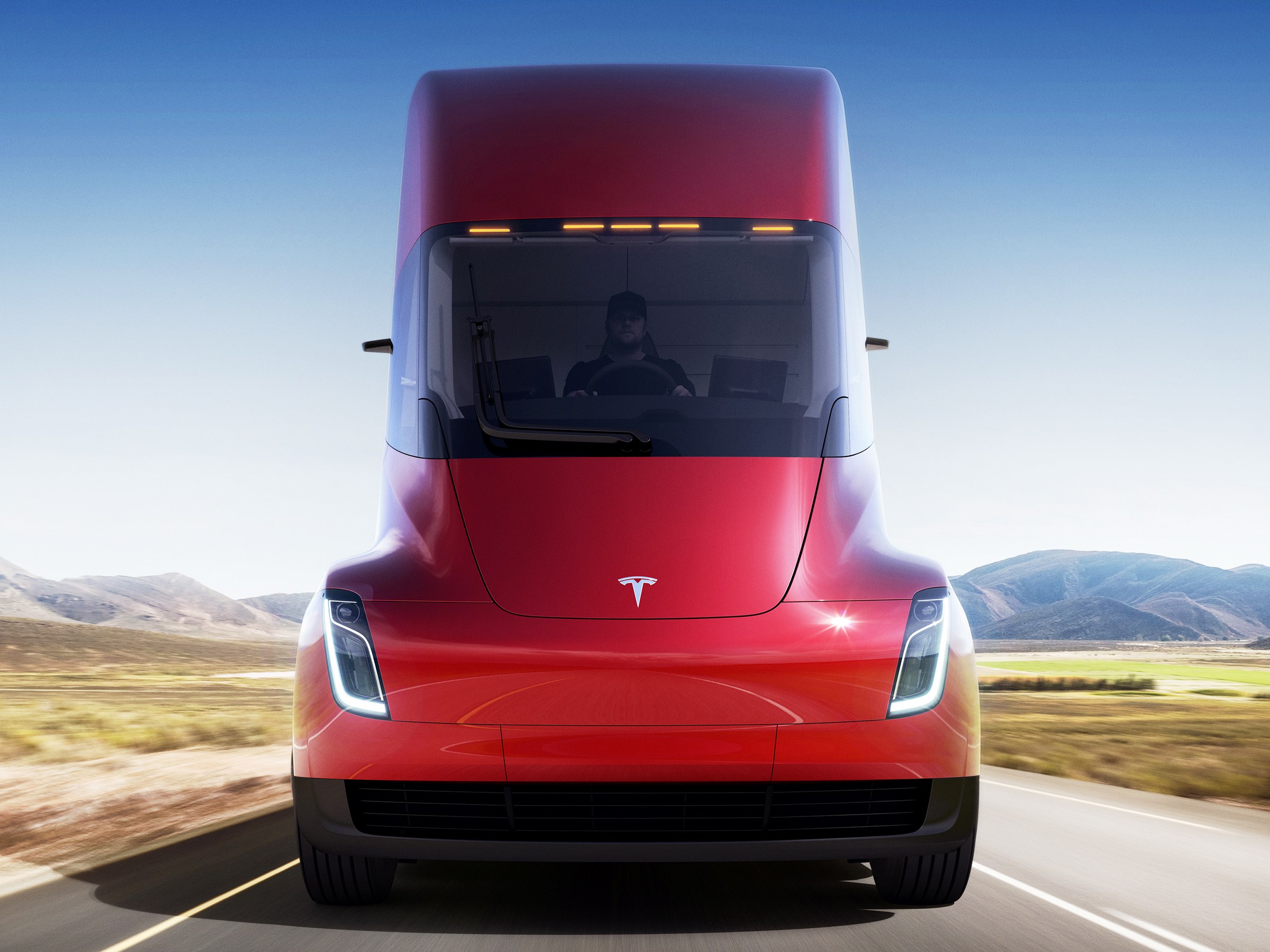
Platooning is spreading rapidly thanks to the technology being adapted by numerous truck manufacturers. Companies now working to equip their trucks with platooning technology include Tesla, Volvo, Daimler Truck North America, and many more.  

Expanding Upon Proven Technology

In their article, Peloton states that its goal is to make platooning safer for truckers than ever before. That means the moment they hit the button to activate the platooning feature of their truck, their risk of collision or accident should decrease dramatically.

From safety systems to air disc brakes, Peloton’s goal is to not disable any preexisting technology when platooning is enabled. Instead, they are building upon these proven safety systems to make platooning even safer. They also plan to hold their trucks to a high standard with strict maintenance and inspection requirements that will ensure all trucks are in working order before hitting the platoon button.

How New Platooning is Increasing Safety

Apart from proven technology already found in commercial vehicles, the new platooning system will also add features not commonly seen behind the wheel of a semi. Features of Peloton’s new system will include:

  • Connected Braking

One of the biggest aspects will be the new vehicle-to-vehicle direct communication. This technology will be possible due to industry-standard digital short-range communications (DSRC.) This will allow two trucks to accelerate, slow down, and brake together. With this technology, truckers will be able to follow closer than ever before without having to worry about reaction delay. This will decrease fuel consumption, allow for more space on the highway, and make driving easier and safer.

  • Platoon ProXimity Dissolve

Platoon ProXimity Dissolve will use camera sensor data and radars to gage traffic conditions in front of the leading truck during a platoon. In case traffic becomes too dense, or if a car cuts in front of the lead truck, the following truck automatically slows down to create more space. This allows all drivers to avoid any situations that may require hard and sudden braking during a platoon.

  • Platoon Dissolve

Platoon Dissolve allows the following driver to manually dissolve the platoon. With the follow-truck system, the driver can slowly increase the gap between the two trucks until there is enough space to safely start controlling the brake and accelerator pedals.

  • Display Awareness Video and Info Display

To help the following trucker have a better understanding of what is going on ahead, PlatoonPro features an Info Display in the dash. This display will provide a live video feed from a forward-facing camera in the lead truck, so following drivers will be able to see changing road conditions, upcoming traffic, ramps or bridges, and any other objects up ahead.

  • Voice Communications

To help promote efficient communication and teamwork between drivers, the new platooning system is equipped with a hands-free driver-to-driver radio that can be activated with a foot pedal. This will help with synchronizing lane changes, upcoming road changes and when to dissolve a platoon.

  • Cybersecurity

Because platooning systems could potentially be hacked or tampered with from outside sources, it is important that these systems have top-notch cybersecurity to keep truckers and surrounding drivers safe. This system has been highly tested to prevent hacking and will immediately dissolve if a system becomes jammed.

Future of Platooning

Platooning is still in its early phases and requires more research before all 50 states will allow it. Only half of the U.S. currently authorizes the technology, but companies like Peloton are embracing industry standard testing. Substantial in-lab and track testing must be done first before moving on to on-road testing in order to maximize safety standards. As more and more companies continue to do this, then more states will continue to change their laws.

How to Apply for a Semi-Truck Loan


Now is a great time to enter the commercial trucking industry. With the demand for drivers higher than ever, you can expect job security, great pay, and plenty of stories to tell from your time on the open road. While trucking is an excellent and prevalent career choice, being the most common career in 29 states across the U.S., it often requires upfront investment to get started. Just like owning a business, truckers have to pay their overhead. This can include purchasing the truck, replacing parts, and taking care of costly repairs.

If finances are holding you back from your new career as a trucker, or if the truck you currently own is in need of updates, financing may be the solution for you. Luckily, companies like Mission Financial are here to help you get the financing you need. Here is what you need to know about financing through Mission Financial.

Commercial Financing Options

Mission Financial offers financing for dealerships as well as owner operators. While we provide loans for new and used trucks, we also offer financing options for other trucking necessities including:

  • Tire Replacements
  • Operating Capital
  • Lease Purchase Buy-Outs
  • Loan Refinancing
  • Truck Repairs
  • Licensing and Permits

Commercial Vehicle and Business Auto Loans  

When applying for commercial vehicle financing, it is important to understand that a business auto loan is much different than an auto loan one would normally get for personal use. Due to the stricter rules surrounding commercial loans, it is more important to make payments on time. The interest rates for business auto loans can also be much higher than other loans. While a personal loan typically has an interest rate of 5 percent or less, interest rates on commercial trucking loans can range between 5-30 percent. These differences will be important to understand and recognize when applying for financing.

How to Apply for a Semi-Truck Loan

Before applying for financing, there are a few things you will need to have ready. Follow these steps to make sure your application process is as smooth as possible.

 1. Determine Eligibility

Before applying, it is important to check to see if you qualify. Qualifying factors include your credit score, how long you have had your CDL, your down payment, and the age of the truck. If you are a first-time owner operator or have a low credit score, you can still qualify for a loan through Mission Financial. In fact, our company specializes in low credit loans. While you may still choose to apply for a loan, it is important to understand your financial state before taking this step.  

2. Gather Needed Info

Even before shopping around for a truck, you will want to get all of your paperwork in order for your financing. This is an important step because when you find the perfect truck, you will need to act fast. If another buyer comes in while you are trying to gather information, you may miss out on the vehicle. Before applying for financing, have the following information on hand:

  • Cell phone contact
  • Current Commercial Driver’s License (CDL)
  • Proof of insurance with at least a $1,000 deductible
  • 6 references or 10 references without active phone bill
  • Bank statements and/or tax returns

Depending on your financial situation or employer, you may also need the following information

  • Co-signer Statement
  • LLC Agreement & Operating Agreement
  • Articles of Incorporation & Corporate Resolution

3. Find Your Truck

Once you have determined eligibility and gathered the necessary information, it is time to find your truck. It will be important to find a truck that meets the hauling requirements of your business.

After you have found the right vehicle, be sure to negotiate the price and get a written quote on the purchase of the truck. Along with the price, the written quote will need to contain the following information:

  • Title and Vehicle Registration
  • Pictures of the truck you wish to finance
  • Original signed credit application
  • Guarantee of Title

4. Get the Right Insurance

It is possible to get pre-approved without insurance. However, providing proof of insurance is highly recommended when applying for a commercial loan. Your insurance needs will be based on the type of business, but most truckers need the following types of insurance:

  • Primary liability coverage
  • Cargo coverage
  • Bobtail coverage for non-trucking use
  • Physical damage coverage

5. Submit Your Documents to Mission Financial

Once you have completed the above steps, it is time to apply for financing through Mission Financial. Having everything you need ready in advance will make the application process go smoothly for all involved parties.

Applying for commercial truck financing can seem like a daunting task. However, with companies like Mission Financial that specialize in semi-truck and business auto loans, we are ready to work with you to get you on the road in no time.

What to Consider When Financing a Truck With Bad Credit


Bad credit can leave people feeling stuck. Without a good credit score, buying a house, a car, or paying for school can feel difficult or even impossible. Additionally, making a big purchase with bad credit can mean you pay more in the long run. In fact, when applying for an auto loan, those with bad credit can end up paying 311 percent more in interest than someone with “very good” credit. And starting a business or buying a freight truck can feel just as intimidating and impossible when your credit is less than perfect. However, this does not have to be the case.

Having bad credit doesn’t mean you cannot jumpstart your career as a truck driver or finance a new truck. With the trucker shortage causing the demand for qualified and capable truck drivers to skyrocket, there are large incentives to get truckers out on the road with or without excellent credit. Here is what you need to know about financing a semi-truck with bad credit.

Use Your Assets as Collateral

Those with good credit can often use their positive history as a way to get a loan. For those without good credit, finding another way to secure the loan may be necessary. One great way to do so is to put up some collateral.

Collateral is anything you own that can be pledged to the loan provider until it is paid in full. These are often an option for people with bad credit, because if the loan is not repaid, the lender knows they can seize the collateral and use the money from it to repay what is owed to them. There are two forms of collateral to keep in mind: Hard and paper collateral. Hard collateral consists of homes, businesses, cars, and anything else that would have to be liquidated to cash in the event that it was seized by the lender.

Paper collateral includes stocks, bonds, and other items that would be easier to convert to cash. It is important to understand the difference between these two types of collateral before applying for a loan. Paper loans are often much easier to liquidate, making them more appealing to a potential lender. If offering some sort of collateral seems like the best course of action for you, consider making a list of your assets that could be used as collateral.

Use Your Commercial Truck as Collateral

Sometimes, you can even use your semi-truck as collateral when applying for a truck loan. You will still have to make monthly payments on the truck, but the financing company will know they can seize the truck and sell it if you are unable to pay. When securing a loan for a commercial truck, it is also important to remember that you will be receiving a business loan. Business loans are different than standard loans, and with that comes unique rules for both you and the loan provider. These rules make it easier for the lender to seize property if they are not receiving payments. This means that while it may be easier to secure a loan with bad credit, there will be faster and harsher consequences if you are unable to abide by the terms.

You May be Eligible for a Grant

Grants can be another great way to secure funding for your new semi-truck. Luckily, there are a variety of grants for truckers to apply for. Depending on your experience level in the field, you may be qualified for different grant options.

Mission Financial Specializes in Bad Credit Financing

Bad credit does not have to stop you from your career goals. When applying for a loan, it is especially helpful to work with a lender that specializes in low credit financing like Mission Financial. Mission Financial Services has been providing commercial auto loans and refinancing options for over 19 years. As a direct lender, we offer loans through dealers as well as direct lending in 48 states.

Mission Financial is proud to be a common-sense lender. This means we analyze more than just your credit score. We examine each applicant’s overall credit, instead of only the number on your credit report. If you are willing to put up collateral and have a history of on-time payments, you are likely to be approved for a loan with Mission Financial.

Cass Freight Index Report Remains Optimistic For 2019


With the start of the new year, the commercial trucking and freight industry faces many obstacles. The trucker deficit continues to increase, and the high tariffs against China are projected to have great implications on exports in many parts of the U.S. However, despite growing concerns and harsh year-over-year comparisons, the Cass Freight Index report for January 2019 remains promising. Here is what you need to know about the Cass Freight Index report’s outlook for trucking in 2019.

What is the Cass Freight Index Report?

The Cass Freight Index report is a monthly publication released by Cass Information Systems. Since 1995, this report has been a highly trusted source of insight into the trucking industry and how it correlates with the wider economy.

The Cass Freight Index is often referenced by news sources and industry professionals. This report is also considered by many logistics executives and analysts to be the “most accurate barometer of freight volumes and market conditions.”

January’s Cass Freight Report Insights

When examining December and January’s data, the untrained eye may see a negative report. From January 2018, this year’s January report is down 0.3 percent. Additionally, January is down 1.2 percent compared to December 2018. Annually, December was also down by 0.8 percent.

January and December were the first two months in the last two years to reap negative numbers. However, the author of the Cass Freight Report, Donald Broughton, states that this is not a cause for concern. Because December 2017 and January 2018 were all time highs for shipment growth, a slight decrease this year simply means that freight flows are stabilizing.

Shipments May Continue to Lower

The author of January’s report also states that shipments may continue to show negative results through the coming months. Broughton explains that this may be the case due to the following factors:

  • Increasingly difficult annual comparisons
  • Transportation infrastructure at or near full capacity
  • Low employment making it difficult to grow the active workforce

The Trucking Industry in 2019

Despite the negative numbers, Broughton ensures there is no need for alarm. In fact, the trucking industry is holding more promise in 2019 than previously expected. The report states that before January, many analysts and industry experts believed there was no way for 2019 to surpass the exponential growth seen in 2018. However, the outlook on 2019 has now changed. While many still don’t believe we will see comparative numbers to 2018 throughout the year, the report anticipates growth at an above-average pace will be seen.

Possible Storm Clouds

The report remains optimistic for 2019 growth. However, it also states that there are two “storm clouds” on the horizon that should not be ignored. When considering the freight industry in 2019, these two international issues should be considered:

Higher tariff threats with China

At the beginning of January, the U.S. had raised tariffs against China by 10 percent. Now, there is a threat of raising these tariffs to 25 percent in the coming months. China is the world’s second largest economy, and the increased tariffs could have real implications on the U.S.A.’s agriculture exports, along with other raw materials. If even higher tariffs are put in place, the freight industry could see a real decrease in volume.

The Decline of WTI Crude

In December, WTI Crude oil reached a low of $42.50 per barrel. This caused the oil to become less profitable, which in turn led to less incentive to drill for this oil. However, at the time of the report, WTI Crude was back up to $51 per barrel, which has led to some optimism on this front. However, there is still uncertainty about the future of crude fracking throughout 2019.

Growing Pains for the Trucking Industry in 2019


The U.S. is suffering a severe shortage of truck drivers. In fact, the industry is now facing a deficit of over 53,000 qualified truck drivers. Over the next decade, the shortage is projected to skyrocket to 898,000. Actions are being taken around every corner to combat this deficit. From recruiting more women to attempting to cater to the needs of millennials, freight companies and large businesses are looking for ways to get more qualified drivers behind the wheel.

However, if the shortage comes to an end, there will be other problems to face. From overcrowded truck stops to strict regulations on hours, there are some challenges the trucking industry needs to face now, so it can continue to grow. Here are a few of the issues the trucking industry must solve to expand smoothly in 2019.

Too Many Trucks on the Road

Gridlock traffic can make even short hauls take far longer than anticipated. Traffic means longer hours for truckers and more gas and labor expenses for freight owners. If that gap closes, that means there will be at least 53,000 more trucks on America’s highways. More trucks could potentially cause more traffic for everyday commuters as well as truckers. And with less truckers interested or willing to drive through the night, more are facing traffic and adding to the congestion. This will be a challenge the trucking industry will have to face if the gap is to close. Better routes, different hours, and altered expectations will have to be put into place to seamlessly add more trucks to the road.

Truck Parking Shortage

Finding a safe place to park your truck and take a rest is already an issue for truckers. Often, rest areas and truck stops are full to capacity, especially in the evening, leaving drivers to park on exit ramps. Some states allow this, but many places have laws against parking on ramps.

Legal or not, according to the president of Jet Express Trucking in Dayton and the former chairman of the American Trucking Associations, Kevin Burch, this is an accident waiting to happen. Especially when trucks park on off ramps from the highway, cars can come speeding around the corner and not see the truck in time. Burch believes that the government should be doing more to provide safe parking for long-haul truckers.

It is mandatory for truckers to take breaks after a certain number of hours, but when taking a rest is putting them at a higher risk than continuing to drive, something needs to change. This problem will only get worse as more truckers are introduced into the industry. More trucks on the road will mean even fewer safe areas to park.

As of now, freight owners are encouraging drivers to plan their driving hours, so they can find available places to park and rest when it is time. Where it is legal to park on the side of exit ramps, truckers are being encouraged to only park on ramps that enter the highway, as to avoid highway traffic.

Time Logging Issues

Finally, the trucking industry has introduced new logging technology that is causing some frustration. Originally, truckers would log their own hours by hand. Since the logging was all on pen and paper, truckers were often caught being dishonest about how many hours they had worked. In fact, log violations were the most frequent form of violation among truckers in 2017.

Due to the high volume of log violations, it became a federal rule in December 2017 that all large trucks be equipped with electronic logging devices. While many believe the electronic systems are a good idea, they do not allow for much flexibility for drivers. They only allow a driver to be on duty for a specific set of hours, require breaks after eight hours, and expect 10 hours of rest time for truckers with a berth.

Truckers would like to see more flexibility to give them the option to pull off the road in heavy traffic and make up the hours when there is less congestion. They would also like to cut the required rest time to eight hours and apply the other two to breaks throughout the shift.

Most rule makers in the trucking industry agree that the electronic logging systems need to stay. However, some are willing to consider modifying the strict rules. Having this issue sorted out in 2019 would allow for less pushback and more room for the industry to grow. It may inspire more people to become truckers, and it will also allow current truckers to work more efficiently and feel more in control of their days.

The transportation industry has plenty of room to grow and solving potential problems now will help make room for more truckers on the road.

Archives

Sign Me Up!

Stay up to date with the latest news in the commercial trucking industry.

Contact Us
close slider