Office: (404) 975-4800

News

A “Thank You” to Truckers: The Unspoken Heroes of the Pandemic

Why America is Thanking Truckers During the Coronavirus
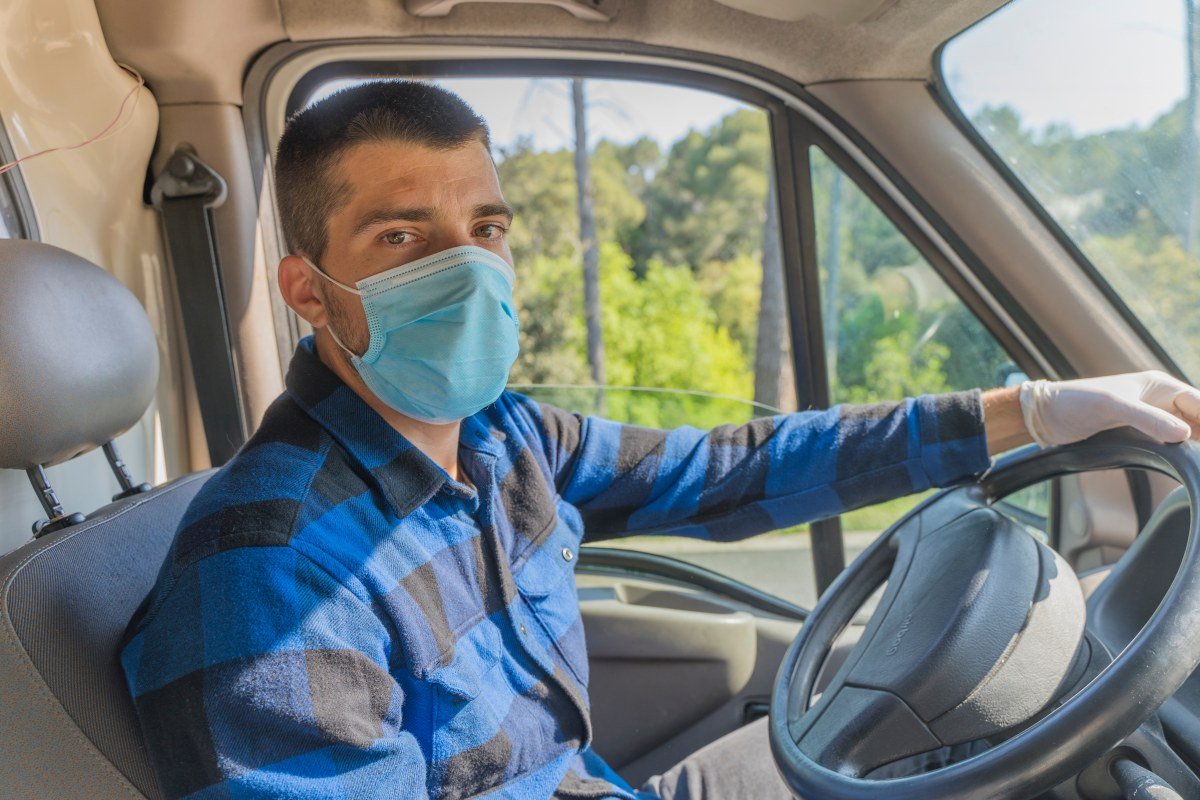
Coronavirus. Courier portrait in protective mask and rubber gloves make delivery service. Delivery service under quarantine, disease outbreak, coronavirus pandemic conditions. Transportation. Heroes.

Truck drivers have been working around the clock to help support the shifting demand for food, medical supplies, and other essential items during the Coronavirus pandemic. The government instruction to stay at home whenever possible, has had a sizable impact on the American economy. One result of so many people staying home, and non-essential businesses being closed, is that demand for certain items like retail products have been in steady decline. This has created an issue of one-way supply-chain flow, meaning that freight companies can easily load and fill 18 wheelers all the way up at manufacturing hubs across America, but don’t have anything to pick up once they arrive at smaller towns and cities. This causes trucks to be half-empty, or totally empty on their return trips, creating huge efficiency losses for shippers and freight companies. This has truckers working longer, harder hours— something that Americans desperately need, are respectful of, and thankful for.

People Everywhere Take Note of Trucker’s Contributions

American citizens have been reaching out all over the country to express their gratitude and support for everything that truck drivers have done to aid the country in this difficult time. Many social media users are using the hashtag “thankatrucker” to reach the drivers on the road with positive words, or offers to repay the truckers for their hard work. While most drivers have experienced increased difficulty on the road as a result of many restaurants and rest stops being closed, there are many establishments that are doing their part to make sure truckers can continue to work in relative comfort. Those that have taken steps to ethically resume operation with COVID-19 in mind are using social media to tell truckers that they’re open for business, and in some cases, hoping to repay truck drivers for all of their hard work with free food and shelter.

The Iowa Motor Truck Association provided 1,000 complimentary boxed lunches for truck drivers last week, at two different weigh stations on I-80. The distribution was set up as a “drive through/drive by” scenario to comply with CDC guidelines, enabling the Truck Association to do some good for truckers at work without risking worsening the pandemic. Texas residents offered free takeaway bar-b-que to truckers in their area, serving dozens until their supplies ran out. On Interstate 40 in Jackson, Tennessee, local residents handed out box lunches with sandwiches to truckers on the road.

What Truckers Do to Keep America Going 

Most people have seen first-hand the impact that the pandemic has had on the supplies at their local grocery. Stockpiling behavior has resulted in an absence of non-perishable food, sanitation items, and toilet paper on many supermarket shelves— leaving some people who didn’t make it to the store in time low on essential supplies. This has greatly changed how the American supply chain functions, as there’s suddenly a huge increase in demand for emergency medical supplies like masks, ventilators, and soap. These items need to be transported from manufacturers to medical treatment centers, while the raw materials required (paper, plastic, and alcohol, for example) need to reach the factory in time for production to resume on track.

The Truck Driver Experience During COVID-19 

This has resulted in huge changes to the trucker way of life. The Department of Transportation has taken a great number of steps to ensure that truckers get to stay on the road, which include allowing drivers delivering essential supplies to stay on the road for longer periods of time. This is great for Americans, but dangerous for truck drivers overall, unfortunately. Many truck drivers don’t feel as if they have a choice in the matter and are very concerned about contracting COVID-19.

In an email, one truck driver stated that the pandemic “has been pretty difficult for [him] as a truck driver because truck stops aren’t stocked with cleaning supplies. Because he comes into contact with people all over the western United States, his anxiety level has been growing since he’s down to his last half-bottle of hand sanitizer.” According to a study by the American Center for Disease Control, 38% of truckers don’t have health insurance, meaning that it’s likely they’ll receive inferior care compared to those who have insurance and potentially suffer significant financial hardship if the contract the virus.

How You Can Help America

The country is still facing a national shortage of truck drivers, making it a perfect time to do your part and become an owner/operator. If you’ve lost your job due to the Coronavirus, it might be worth considering helping America stay afloat by joining the freight industry. Unemployment is at an all time high for recent decades, making it especially important for the labor force to shift towards industries that are thriving in the epidemic.

If you’re interested in getting started as an owner/operator, contact us to get on the road to financial independence. If you’re interested in helping other truck drivers, don’t forget national truck driver appreciation week, and make sure to reach out to the truck drivers in your community— many are in need of food, shelter, or just good conversation. From all of us at Mission Financial, thank you to all the truck drivers at work in Americ
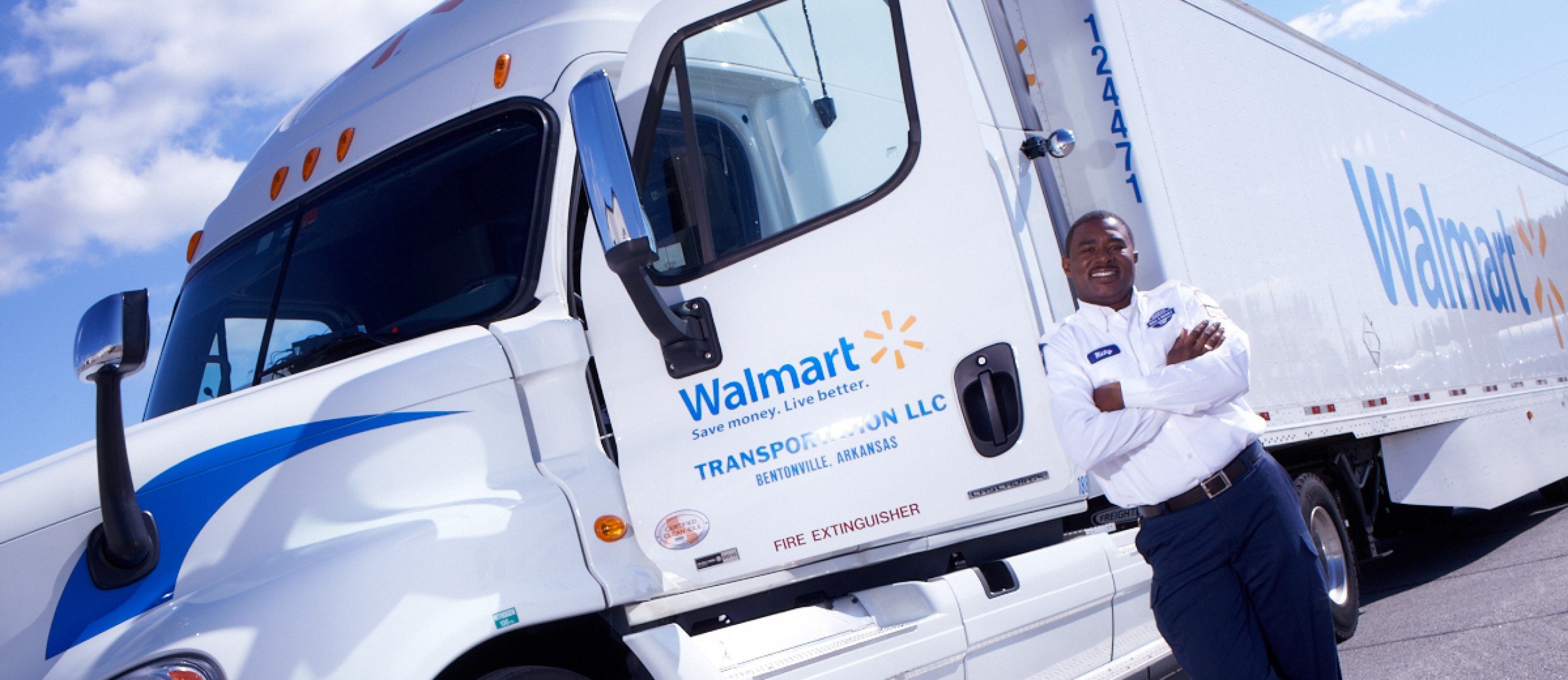

Why Walmart is Hiring a Surge of New Drivers

According to a press release by shopping giant Walmart, the company is expanding their truck driver positions by 500 this year, mainly on the West and East Coast. This is great news for truck drivers in general, but it’s still unclear as to whether increased hiring is a trend we’ll see across the country. The presence of the Coronavirus in the United States has caused a great deal of turbulence in the freight industry over the course of last month, resulting in an increased demand for drivers in some areas, alongside increased complications for the drivers that are managing to stay on the road.

A Surge in Online Shopping

As some economists have predicted, the government instruction for American citizens to stay home whenever possible, and with many states calling for the shutdown of non-essential businesses, Americans have been turning to the internet for their shopping needs. Walmart’s decision to hire more drivers is a direct result of an increase in online orders, according to the retailer, a trend that’s grown persistently in recent years.

The company began dialing up their driver program last year, hiring 1,400 drivers to meet a 3% increase in same-store sales. All of this is good news for truckers, especially because Walmart has taken steps to ensure that their jobs are competitive with other trucking jobs on the market. According to Walmart, their average driver salary is all the way up to $87,500 per year, a result of their all-in rate per mile being close to $0.89. This is a far-and-away a much better deal than the national average salary for truck drivers, which is $43,680 per year. Only 10% of truck drivers earn more than $64,000 per year, making Walmart’s reported salary a bold play for attracting truck drivers. This will surely result in Walmart’s new positions being filled, but it’s difficult to predict whether it will ever make a dent in the national driver shortage America has been facing.

What It’s Like to Drive for Walmart

You can read testimonials from Walmart drivers on their website. One of which describes Robert Sullivan, who’s been driving a truck for twenty years, and working for Walmart for the last two. He describes a breadth of small perks that, for him, really add to his enjoyment of driving for the company. Predictable home time and no-touch freight are some of the best perks of the position, alongside small bonuses like company-paid dry-cleaning services and paid rest breaks, which can make a big difference when it comes to enjoyment on the job. Walmart has recently revamped their onboarding process, making it even more efficient for new drivers to join their fleet.

America Needs More Drivers

There have been reports of large employee demographics being at risk of infection for Coronavirus, which has had a large impact on America’s economic structure. The unemployment rate in America is at a record-breaking 6.5 million at its most recent estimate— nearly double what it was only 25 days ago. There are reports that nearly 2,000 USPS workers have been quarantined over Coronavirus concerns, and it’s impossible to fully understand the scope of the effects Coronavirus has had on any industry.

The world has recognized the importance of truck drivers in keeping local businesses supplied throughout this difficult time, and there has been a lot of good news regarding the country’s efforts to keep more truck drivers on the road. President Trump has relaxed trucking regulations in response to this need, rolling back a law that’s been in place since 1938, which disallows truck drivers for working more than 11 hours per any 14-hour work period. Businesses have been offering free parking and free meals to truckers along the I-80 corridor, and there are reports of truck drivers being cheered upon arriving with their cargo. Before March, the American Trucking Association had issued multiple statements about the incredibly high demand for truck drivers in America, some claiming that there are 48,000 vacant truck driver positions in the country. It’s possible that Walmart’s publicized wage increases may be an indirect result of their inability to staff their trucks by more conventional means.

How You Can Get Started as a Truck Driver

If you’re considering becoming an owner/operator of a semi-truck, now is a great time to do your part and help supply a vital service for the American people. Truck drivers require a Commercial Driver’s License, which is attainable through your local DMV. Check your local Office of Motor Vehicles for their program details. Truck driving becomes increasingly lucrative every single year, but it often takes a significant amount of initial investment to get started. If you need semi-truck financing, contact us, and we’ll help you out, even if you’ve got bad credit or limited driving experience.

How the CARES Act Will Impact Fleets and Owner Operators

harold-mendoza-6xafY_AE1LM-unsplash

On March 27, 2020 President Trump signed the Coronavirus Aid, Relief, and Economic Security Act. The CARES Act, as it’s commonly known, is a $2 trillion bill that offers financial support to unemployed persons, small businesses, and large businesses in particular. But how is this bill going to affect the trucking and transportation industry?

How CARES Affects Owner Operators

For those who would be able to work, but are no longer able due to the coronavirus outbreak, Unemployment Insurance Provisions include an additional $600 per week payment to each recipient for up to four months, and extend benefits to self-employed workers, independent contractors, and those with limited work history. “That means, in trucking terms, any leased or independent owner-operators who loses work can draw the new federal unemployment benefits through the end of July.”

While the wording of the law is designed to be generous, it will depend on whether the government believes that many truck drivers are rendered unable to work while the coronavirus is continuing to spread. In general, truckers are working longer hours than ever, and there’s an increasingly high demand for truckers that are available to move freight. The majority of Americans will receive the $1,200 Economic Impact Payment, regardless of their current employment status.

Another bill helping owner operators, the Families First Coronavirus Response Act (passed prior to the CARES Act) – requires trucking companies to provide two weeks of paid sick leave to employees who contract COVID-19. “They don’t have to test positive for the virus. Rather, if they experience symptoms and are seeking a medical diagnosis, employers are required by the law to provide two weeks of paid sick leave, up to $511 a day, or $5,110 for a two-week period.”

What is the Economic Impact Payment?

According to the CARES Act and well-described by an e-book by ATBS, The Economic Impact Payment is designed as a 2020 refundable tax credit claimed on a taxpayer’s 2020 tax filings. The checks going out are effectively an advanced payment of a tax credit for 2020.The tax credit will be reconciled to the payment received when filing your 2020 tax return. If you file your tax return as a single citizen, your credit will be $1,200. If you are Married Filing Jointly, your credit will be $2,400. Additionally, each Qualifying Dependent Under Age 17 that is on your tax return will net an additional credit of $500. In order to receive the payment, you must be an American citizen or resident alien, you must have a Social Security Number (includes children), and you cannot be eligible to be claimed as a dependent.

For many taxpayers, this credit will make a significant impact on their immediate earnings and help them through the extra expenses that may arise from surviving the pandemic. As mentioned above, Unemployment Insurance has been bolstered, which means that truckers who lost their jobs due to the outbreak will be better able to live their lives with income closer to that of their previous wage before their job was lost.

How the Bill Affects Businesses

The CARES Act brings great news for small and large businesses, offering between $350 – $500 billion to help keep businesses of different sizes afloat. America is currently at over 10% unemployment, so these new provisions have come in just in time, making it easier for businesses of different sizes to continue paying their employees while their storefronts may be closed. For companies with under 500 employees, the federal government is offering tax credits and $350 billion for small businesses to apply for loans that can be partially or fully forgiven. For businesses that employ more than 500 people, a separate $500 billion is available.

How Fleets Should Operate Around the Loans

There are two types of loans available. The first is called the Paycheck Protection program, and it’s a loan available to smaller businesses, that delivers 2.5 times the amount of a business’ monthly payroll. These loans can be fully forgiven, if spent correctly— on payroll, rent, utilities, and Mortgage Interest. This is a great loan option for independent owner-operators, who in effect need to pay their own salaries. Best practice for sole proprietor owner-operators would be to use the loan to pay their own payroll and keep strict documentation so that the loan can be fully forgiven in the future.

The second type of loan is called an Economic Injury Disaster Loan, which offers loans of up to $2 million with a fixed low interest rate of 3.75%, coupled with a longer repayment period of up to 10 years. This loan requires collateral if the requested amount exceeds $25,000. If you’re looking to borrow a small amount of money for your business, Paycheck Protection Program Loans are superior in every way, as they always have the potential to be entirely forgiven, whereas Economic Injury Disaster Loans can only be forgiven for up to the first $10,000 borrowed, for the rest of the amount to be repaid over the loan period.

What Does This Mean For Trucking?

All of this is good news. Many freight companies have been able to continue operation throughout the pandemic, which means that financial losses will likely not exceed their cost of operation. With loans being available for all businesses at competitive interest rates, we shouldn’t see many freight companies going under any time soon. There are plenty of resources available for how to secure a loan for your business. If these new government opportunities aren’t enough, or you don’t apply, you can always look to a private financial service company like Mission Financial to help your business see it through these difficult times.

With the additional income from the Economic Impact Payment, truckers should be able to stay on the road long enough to deliver the vital food and supplies that the country is relying on. With one of the stipulations to loan forgiveness being that businesses need to keep their payroll at maximum capacity, semi-truck drivers working for freight companies as standard W-2 employees shouldn’t be worried about getting laid off any time soon.

Stay informed on the state of trucking in America by browsing our news page, updated frequently so you don’t miss any important updates!

How the Coronavirus is Affecting the Freight Industry

fusion-medical-animation-rnr8D3FNUNY-unsplash

What Truck Drivers Should Expect This Spring As the Coronavirus Spreads 

The infection rate of Coronavirus, also known as COVID-19, is continuing to increase in countries around the world. Some experts claim that America’s trajectory of infection is in-line with Italy’s, which indicates that the overall number of infections will continue to increase into the coming months. Currently, there’s a high level of general alarm for members of the service and restaurant industry, as the White House has delivered specific instruction to the American people to work from home whenever possible, avoid social gatherings, and avoid going outside. The U.S. treasury is considering sending every adult American a check in the mail to help tide them over during these difficult times – and the trucking and freight industry have also seen some recent government intervention.

Government Declares Truckers are Essential to the Economy

There’s been concern for the trucking industry specifically, and a level of attention that generally bodes well for freight companies and owner/operators. The U.S. government has recognized that now more than ever, it is absolutely crucial for semi-truck drivers to be able to stay on-the-job during the outbreak of COVID-19, so that food, medical supplies and equipment, and other necessities can be readily replenished in areas across the country.

President Trump has relaxed trucking regulations in response to this need, rolling back a law that’s been in place since 1938, which disallows truck drivers from working more than 11 hours per any 14 hour work period. After that period, truckers are required by law to take a break for at least 10 hours. This keeps the total number of hours a trucker is allowed to be on the road at 11 hours per day maximum. With this law no longer being in effect, truck drivers are able to manage their own schedules more freely should their carrier companies oblige them, of course. If you’re an independent owner-operator, this puts a lot more of the safety precautions associated with truck driving on your own personal judgement, which makes it vital to operate responsibly during this time.

Truck Drivers and the Risk of Infection

According to an article by Business Insider, truck drivers are in a unique position as to how they should follow the White House guidelines for work moving forward. Truck drivers are not in a position to work from home and are often forced to come into contact with other individuals when they purchase food or enter a rest stop. Truck drivers rely on foodservice employees and custodians around the country to ensure that the services they require to move products across the country are infection-free.

Truck drivers are at increased risk compared to the average American according to a 2014 study that claims up to 38% of truck drivers do not have health insurance. The article also cited studies that found long-haul truckers to smoke cigarettes at a higher rate than most Americans, which has the potential to exacerbate coronavirus symptoms according to Epidemiologist Saskia Popescu, who practices at the Honor Health medical group in Arizona. The FMCSA has estimated that the government’s decision to relax trucking regulations will result in $274 million in savings for the U.S. economy, but it’s difficult to say whether those savings may be offset by semi-truck operators contracting COVID-19 at an increased or decreased rate than the general population.

Businesses are Working to Keep Truckers Safe

Freight companies and companies that manage rest stops have been outspoken in their role of reducing infection. Walmart has been circulating information to their drivers, urging them to take proper steps to keep their hands and cabs clean of infection. Pilot offered in a statement to Overdrive, that they are reinforcing proper cleaning procedures and sanitation methods, saying “Additionally, we have hand sanitizer dispensers for public use near the restrooms at our locations and working closely with our suppliers on inventory contingency plans. We will continue to follow the advice of global and local health authorities as the situation evolves and take preventative measures as necessary.”

If you’re an owner operator running familiar routes, it may be worth investigating whether your favorite dining establishment or rest stop has issued a statement for how they’re planning to adapt to the coronavirus update. Many businesses are moving their business models towards transactions that don’t involve human contact, and those services can be helpful for reducing your own risk of infection when you’re on the road.

What Will Trucking Look Like through the Spring?

There have already been strong movements to keep the trucking industry virile during this time of change in America. It’s vital for freight companies to maintain operation in some degree, so that food service providers, manufacturers, and hospitals can continue to operate at an appropriate efficiency level. One of trucking’s most powerful lobbying groups, the ATA, has recently requested provisions for the industry, and it’s likely that the executive branch will continue to adjust trucking regulations in the short term to keep the industry healthy. There’s currently a national driver shortage in America, which means that truck drivers are one of the few labor areas that could see increased demand during the outbreak

How to Maintain Healthy Driving Practices

Some news outlets have offered advice on how to stay safe during the outbreak, which can be useful resources, but it’s always best to refer directly to the CDC, World Health Organization or your Government’s official correspondence about the Coronavirus when making changes that affect your lifestyle. If you’re lucky enough to be driving an EV vehicle, there’s a good chance you’ll cut down your risk of exposure. Being extra cautious during fuel up times, or finding ways to decrease fuel consumption can be a great way to reduce stress and keep yourself healthy as well. Contact us with any questions you might have regarding how to be successful as an owner-operator, and make sure to browse our news section for the outlook of long-haul trucking in 2020. Thank you to all of you brave, hardworking truckers out on the road!

New Infrastructure Investment May Benefit Trucking Industry

tom-jackson-Rhwj3CPwc6o-unsplash

The President released his proposed federal budget for the 2021 fiscal year on February 10. The proposal titled “A Budget for America’s Future” has allocated $1 trillion of its $4.8 trillion total budget to infrastructure, and a great deal of that should positively impact the trucking industry should it be approved.

$50 million is slated to go towards the Moving America Safely and Efficiently Program, which is described as intending to disburse money to programs aimed at opening up bottlenecks and “adding capacity, deploying effective technologies, and expanding truck parking infrastructure,” according to the budget request. This is good news for truckers, and it’s likely that this change along with others in the bill will help increase America’s highway capacity for truckers and increase overall freight efficiency. The budget requests more than $800 billion for a 10-year reauthorization of surface transport programs by the federal government, which effectively renews and bolsters the FAST Act of 2015— a $305 billion infrastructure bill that’s set to expire in 2020.

What Should We Expect to Change?

In general, it’s difficult to speculate on how much the average owner-operator is going to see in terms of change to their regular truck routes after 2020. For starters, the budget that the Trump Administration proposed isn’t yet set in stone. As with all presidential budget proposals, this document serves as a template for Congress to work from when constructing their own official budget. In a way, this proposal serves as a starting point when it comes to broaching budget changes to the American people, which can help members of Congress identify the sticking points of their constituents.

According to Jay Grimes who is the Owner-Operator Independent Drivers Association Director of Federal Affairs, there are certain aspects of the bill that the President may have proposed as a starting point for negotiation moving forwards. “I don’t think Congress is going to bite on doing a 10-year bill for $810 billion,” Grimes said. “I think the goal is trying to get a five-year new highway bill, which would match the FAST Act length. That’s probably going to be more realistic. The 10-year is a little pie-in-the-sky, I think.”

$810 billion would be a significant increase to infrastructure funding compared to previous legislation, and it’s likely to be a significant talking point when it comes to the final budget that Congress agrees on. The $50 million for Moving America Safely and Efficiently Program is slightly more likely to be brought into the official budget as-is, being a smaller portion of overall spending. There’s no mention as to where funding for the infrastructure changes will come from and whether economic growth alone will easily support the increase in spending levels.

Trucking in 2021 Compared to 2020

There’s been a greater level of national attention to the trucking industry, and that’s set to continue through 2020. Starting in September of 2019, a proportion of truckers became newly eligible for overtime pay, which is especially helpful for owner-operators at the bottom of the pay scale. The President’s pro-infrastructure budget comes at a time when he’s receiving backlash for disallowing the Department of Homeland Security from enrolling or re-enrolling New York residents in Global Entry, which impacts the truckers in the state who carried low-risk shipments across the Canadian and Mexican borders. This issue is still ongoing, and New York intends to sue the DHS over the policy. Trump issued an executive order on February 12 that calls for the protection of GPS services, which presents primarily as a security-based solution, but will again promote spending in the trucking industry. There were GPS disruptions in maritime shipping in the Mediterranean last year, which has prompted concern over such disruptions taking place on domestic soil— something that could cost billions according to a study by the Department of Commerce.

Overall, the budget proposal indicates a greater level of care for truck drivers in America, with more straightforward benefits than the policies that are shaping 2020. With the worries regarding California’s gig economy bill AB 5 finally diminishing in result of a judge’s ruling, and the DoT having overturned trucker-specific work regulations, it seems like truckers might finally get a break when it comes to adjusting to new regulations.

How Does New Infrastructure Affect Truck Drivers?

Semi-Truck driving is a growing industry according to the National Bureau of Labor Statistics, and there are billions of dollars invested in trucking logistics every year, meaning that there’s a lot of money to be made in terms of getting trucks to their destination as efficiently as possible. Infrastructure improvements can result in a reduction of traffic and hazard-based braking, which increases time efficiency and lowers the fuel cost for fixed-distance trips. Much of the Trump administration’s efforts have been devoted to shaping trade in America, with the hopes of increasing interstate trading. This will continually affect the traffic distribution of semi-trailer trucks across America, which means that certain infrastructure bottlenecks may become more noticeable as trade routes continue to be affected.

Truck parking is a relatively inexpensive infrastructure upgrade, and $50 million could go a long way in terms of increasing frequency of truck stops on an owner-operator’s route. This obviously contributes to an increased level of comfort and convenience for truck drivers across America, and freight companies might see the infrastructure changes as a green-light to expand. In general, the freight industry appears to be moving at an upswing, and there aren’t many indicators that the livelihoods of owner-operators won’t increase through 2021.

Stay up to date with the latest infrastructure and trucking developments with our blog! If you’re new to trucking and curious about how to get started as an owner-operator, contact us today.

What You Need to Know About the Drug and Alcohol Clearinghouse

The Drug and Alcohol Clearinghouse has been immensely controversial in recent months. Its goal is to keep the roads safer by holding drivers accountable for their past alcohol and drug-related infractions. Previously, drivers who failed a drug or alcohol test could easily gain employment shortly after with another carrier. This was due to a series of loopholes created by poor recording of these incidents. 

Finally, there is a system in place to prevent this, which will likely improve driver quality and keep our roads safer. Let’s get into the logistics of the Drug and Alcohol Clearinghouse.

What is the Drug and Alcohol Clearinghouse? 

The Drug and Alcohol Clearinghouse is a secure database that provides potential employers with details about the previous drug and alcohol infractions of any candidates. Put into effect January 6 by the Federal Motor Carrier Safety Administration (FMCSA), it will provide records of any commercial driver’s previous violations, so that they can be taken into consideration for a variety of quality standards. This information will not only be available to employers, but it will also be viable for review when it comes to the issuing and renewal of a commercial driver’s license. Law enforcement and substance abuse personnel can also use this information in the event that an infliction requires legal intervention. It also presents information about when a driver is suitable to return to duty. 

Why is This Database Necessary?

Alcohol and drug use are massive safety concerns for both drivers and the general public. There are many recorded incidents of drug and alcohol abuse severely impacting the judgment and performance of drivers and consequentially resulting in tragedy. The DOT authorizes urine tests, but when more detailed tests were conducted, the drug and alcohol issues throughout the trucking community were found to be more severe than we initially thought. While the electronic record-keeping might seem strict upon the first impression, it is an important measure to keep the roads safer. 

Is This Good News for Drivers? 

Privacy is a valuable thing, so it’s understandable that an online logging system might have some skepticism. In reality, this new system will actually benefit drivers in several ways: 

  • Drivers will be able to register and query the database to view their own records for free
  • The Clearinghouse will notify a driver, either by mail or email, any time there is information about him or her added, altered, or deleted
  • Instead of using the driver’s Social Security Number, the Clearinghouse will categorize and store data by birthdate and CDL number

The only drivers who will have any cause for concern with this new database are drivers who are intending on committing drug and alcohol violations in the future. Because the system was only effectively put into place in January, any past inflictions will not be entered into it. The Drug and Alcohol Clearinghouse extends to all commercial vehicle operators, including School Bus Drivers, Limo Drivers, and Construction Equipment Operators. Any employee operating under FMCSA functions must comply with Clearinghouse regulations. 

How Employers Are Being Affected

This new system not only affects drivers, but it also affects carriers and other potential employers. Employers will have to add an extra step to their hiring process and modify the way they maintain safety records. According to the Department of Transportation, 

  • “Employers will conduct pre-employment queries on prospective employees and if drug and alcohol violations are identified, those employees will be prohibited from performing safety-sensitive functions, until successful completion of the return-to-duty (RTD) process;
  • Employers will query the Clearinghouse annually for each driver they currently employ, and if drug and alcohol violations are identified, those employees will be prohibited from performing safety-sensitive functions until successful completion of the RTD process.”

New Technology Continues to Change the Trucking Industry

Previously, drivers with unsafe drug and alcohol histories could easily lie about their records, especially if they crossed state lines to apply for their new position. This database closes up that massive loophole that was posing a safety and efficiency risk for the public and the trucking industry. Overall, drivers have nothing to worry about as long as they’re safe and sober when on-duty. 

To find out more about how technology is changing the trucking industry, check out our blog today!

Archives

Sign Me Up!

Stay up to date with the latest news in the commercial trucking industry.

Contact Us
close slider