Office: (404) 975-4800

News

Truck Driver Sun Damage – The Gritty Reality of Decades on the Road

utah-jack-W7DFo4VQMQs-unsplash

While being a truck driver is one of the highest-paying jobs that doesn’t require a college degree, living the trucker life doesn’t come without challenges. Considering the long hours, and weeks that truckers often spend away from their families, it’s a career path that might not suit everyone equally.

One of the things that many people don’t consider before getting involved in trucking is the effect it might have on your body— your skin to be specific. Reports have surfaced throughout the years that show how dramatic the impact of sun damage can be on a truck driver’s skin..

It’s likely you’ve seen the image that began circulating a couple years ago that showed a truck driver whose face looked very different on his left side compared to his right. The side that faced his window looked almost 10 years older, with heavy wrinkles that had resulted from years and years of damage from the sun.

If you’re a truck driver, there is a significant chance that you’ll have to manage your sun exposure over the course of your career— but just how big of an impact does this exposure have on your overall health?

A Potentially Deadly Illness

In addition to the superficial drawbacks, the trucker tan can cause serious health issues. Ultraviolet (UV) radiation exposure is the leading cause of skin cancer, and it’s easy to get huge doses of UV radiation as a trucker. Research has found skin cancer to be the single most common form of cancer in the United States, with one in five Americans being diagnosed with the condition in their lifetime.

Despite popular belief that the numbers must be higher in southern states, the truth is quite the opposite. Environmental Protection Agency (EPA) data shows that northern states (like Washington, Oregon, and Vermont) have a higher rate of melanoma diagnosis than southern states on the whole. In fact, Texas is one of the states with the lowest number of skin cancer diagnoses per year.

New England Journal of Medicine’s Trucker Photo

To make a point and hopefully give you the incentive to take proper measures to protect yourself from the UV rays, here is the photo mentioned above. It was taken for a New England Journal of Medicine study on dermatoheliosis (aging that results from UV ray exposure). It shows a 69 years old trucker suffering from unilateral dermatoheliosis, the result of his 28 years spent behind the wheel.

Image by New England Journal of Medicine

For U.S. Drivers, the Left Side of the Body Is at Risk

UV exposure in the left arm is five times greater than the right for truck drivers. Exposure on the left side of the face is a staggering 20 times greater than the right. This results in wrinkles, sagging, and brown spots on the left side of the face.

Research also suggests that all types of skin cancer are more prevalent on the left side of the body. About 75% of melanomas are diagnosed on the left side, according to skincancer.net.

Hot or Cold Weather Doesn’t Matter

UV skin damage doesn’t progress only on hot summer days. To understand why that is, it’s important to understand how UV rays function.

There are two types of UV rays: UVA and UVB. The latter causes the skin to tan, but the former, UVA, has much more penetrating power and is the one that causes premature skin aging.

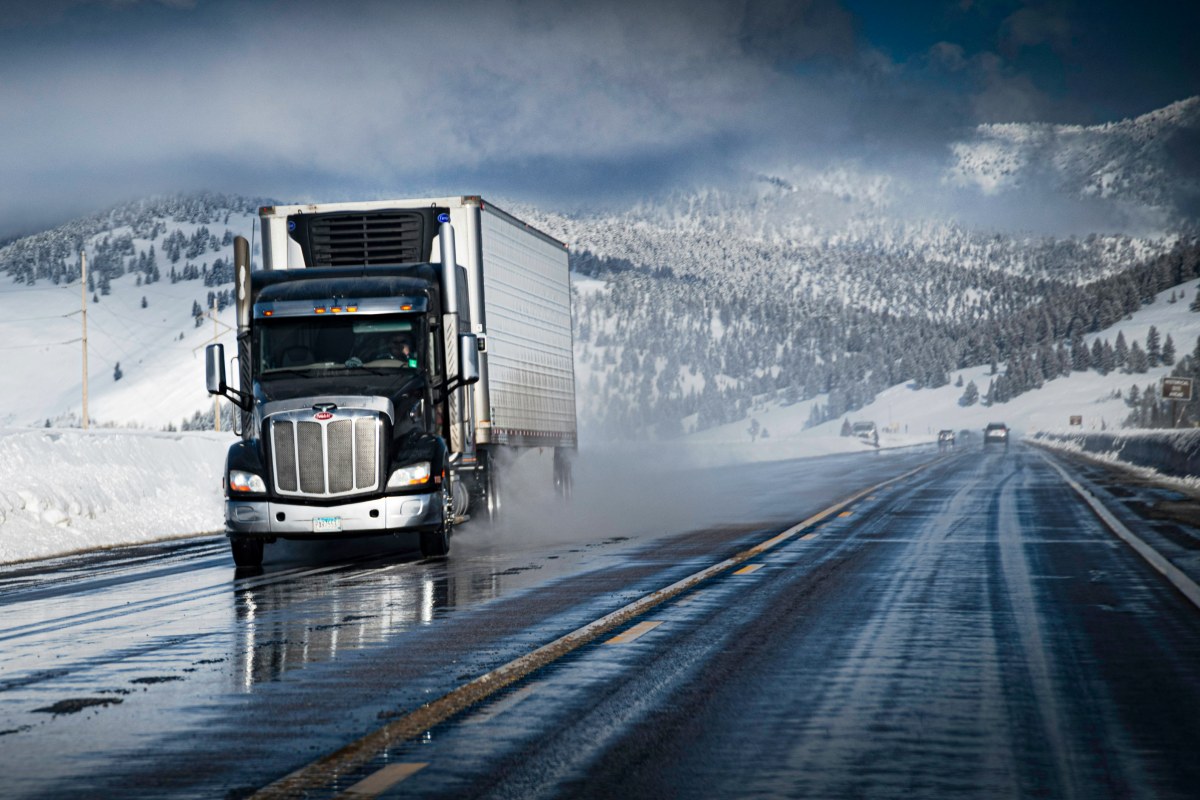
Windows and cloud cover aren’t effective in blocking out UV rays, and when there’s snow on the ground, the UVA rays are reflected by the snow (something skiers should be very familiar with). The information above indicates that drivers need to take measures to protect themselves from permanent skin damage, premature aging, and in the worst case, cancer.

How Do I Avoid UV Radiation Damage as a Truck Driver?

Use Sunscreen

Sunscreen is the go-to way to prevent sun damage to the skin. Sadly, it’s often underutilized by truckers. It’s strongly advised to put a layer of sunscreen on before every trip, whether it is up North or down South. Even though you may not be seeing any significant damage, you risk premature aging and skin cancer in the long run.

Wear Long Sleeve Shirts, Hat, and Sunglasses

When it comes to sun damage, it is all about layers of protection. Wearing clothing that covers more of your body will naturally provide more layers of protection. A long-sleeved shirt is an obvious choice here, but if you do not stand wearing one during the summer, get a sun-protective sleeve for your driving arm.

The same goes for sunglasses – get ones comfortable to wear while offering protection for your eyes.

Keep the Window Up

Many truckers tend to drive with their windows rolled down because it feels refreshing – but it is more dangerous than you thought. It is even more dangerous if you prefer to drive with the arm on the window ledge, as it will be directly exposed to sunlight.

Avoid Driving in Peak Sunlight Hours

If your route allows for driving outside peak hours, we suggest going for it. Peak hours vary from state to state; however, it has generally been taken to be from 10 a.m. to around 2 p.m.

Get Your Windows Tinted

Some types of window films have been proven to offer the same protection as sunscreen. Additionally, tinted windows will keep the temperature lower inside the cab, reduce the glare effect, and provide some additional privacy during sunny days.

However, a disclaimer is in order here: Tinted windows are illegal in some states, so be sure to check the state’s laws before getting your truck windows done. Untinted UV window shields are an alternative option that can be used everywhere, however.

Get Frequent Check-Ups with a Dermatologist

If you’ve been on the road for some time, it’s likely you’ve been affected by UV rays to some degree. The obvious signs are permanent tan lines on your body, tick patches of skin, rapid face aging, freckles, and appearance of moles. Scheduling frequent check-ups at a dermatologist will give you peace of mind and guidance to protect your health and youth.

Final Words

Although trucking has its pros and cons, driver health will always be an issue. Plenty of drivers don’t pay attention to their well-being until it is too late, but that doesn’t have to be your fate. Sun damage is only one of the health issues truckers face every day on the road, and it only takes a little extra effort to increase your quality of life on the job.

Guest post written for Mission Financial by Mile D. from TruckerJobUSA.com


Improving Fulfillment Efficiency During the Pandemic

For over a year now, online shopping has accounted for more retail purchases than those in traditional brick and mortar stores. From even that point of dominance, there are some reports that online shopping surged as much as 248% at the end of May. That’s drastically changed supply chains around America, and it’s one of the reasons why the freight industry in general, which has been given the attention it needs to stay operational throughout the pandemic, has continued to stay so stable, and even grow during a time that other industries have languished.

Where are the Bottlenecks in America’s Supply Chain?

While it’s true that America’s been short on trucking manpower for some time, there are additional reports that overall demand for truckers has decreased, thanks to a shift in supply chain demand. As mentioned in previous articles on our site, global demand for gas and petroleum products has diminished greatly, so much so that tanker traffic is nearing an all time low in the states. This shift has in effect counteracted the global increase in online shopping. Even still, packages from some retailers and geographical locations are still slated to reply months after their expected delivery date. So what gives? 

Warehouses are Still Getting Up to Speed

In some areas, truckers are effectively waiting for warehouses to increase efficiency enough to deal with the new normal level of input and output. Warehouse reconfiguration, the integration of robot technology, and always-on scanning are just some of the ways that warehouses are trying to meet the new demand, but it’s not an instantaneous adjustment.

Semi-Truck Drivers’ Routes Are Less Efficient As a Result

Empty trucks are a big problem all across North America at the moment. There have been reports of  Canadian carriers driving empty trucks to the U.S. to pick up food items to transport back north, said Stephen Laskowski, president of the Canadian Trucking Alliance. Normally, they’d be full of manufactured goods from Canada to deliver to the U.S., but according to Laskowski, the demand has shifted in a way that that simply isn’t feasible. Hiccups like this have a widespread effect on the trucking industry. In one place, driving empty trucks might result in more total miles needing to be driven in one particular area, which can drive up trucker’s average pay per mile (which is an effect we’re starting to see in the majority of States.

Where Truckers Have Been Finding Help

The Federal Motor Carrier Safety Administration (FMCSA) has expanded its national emergency declaration as of the middle of last March in order to provide hours-of-service regulatory relief to commercial vehicle drivers transporting emergency relief supplies in response to the coronavirus pandemic. The “FMCSA is providing additional regulatory relief to our nation’s commercial drivers to get critically important medical supplies, food, and household goods to Americans in need,” FMCSA Acting Administrator Jim Mullen said March 18. “The nation’s truck drivers are on the front lines of this effort and are critical to America’s supply chain. We will continue to support them and use our authority to protect the health and safety of the American people.”

Expansion to the FMCSA’s hours of service include:

  • Medical supplies and equipment related to the testing, diagnosis and treatment of COVID-19
  • Supplies and equipment necessary for community safety, sanitation, and prevention of community transmission of COVID-19 such as masks, gloves, hand sanitizer, soap and disinfectants
  • Food, paper products and other groceries for emergency restocking of distribution centers or stores
  • Immediate precursor raw materials — such as paper, plastic or alcohol—that are required and to be used for the manufacture of essential items
  • Fuel
  • Equipment, supplies and persons needed to establish and manage temporary housing or quarantines

To make sure those drivers who are on the road have a safe place to stop, shop and rest, the National Association of Truck Stop Owners has said its members intend to remain open and continue to serve the professional drivers who are transporting supplies and goods in support of COVID-19 emergency relief. The American supply chain changes in efficiency every single day, but the American government has continued to roll out support for truckers at a rate that’s kept supply chains largely intact, and the trucking industry stable.

If you’re interested in helping important supplies reach American citizens, contact us for more information about how to start financing your new semi-truck.

Will COVID-19 Eliminate the National Driver Shortage?

We’ve been seeing a great level of support across the country for truckers who have been putting their lives on the line to keep essential items on the move throughout the COVID-19 pandemic. The White House has made trucking one of its top priorities, offering truckers more control over their hours in order to meet the increased demand for medical equipment, personal protective gear, and household staples that the pandemic has temporarily placed upon the nation. In the face of unprecedented unemployment in America however, we’ve still seen more and more businesses calling for more people to work moving freight.

The Call Hasn’t Actually Been Answered Yet

Here’s what sounds like great news: the national driver shortage is over temporarily. At first glance, this sentence might seem to indicate that the freight industry has finally succeeded in bringing younger blood into the job, and we’ll finally start seeing more millennials and even Gen Zs piloting their own big-rigs. Unfortunately, that isn’t exactly the case. Yes, it’s true that America is no longer short on truck drivers for the moment, but that’s expected to change once the COVID-19 pandemic subsides, and we’ll be right back where we started— with less truckers on the road than we need.

There Aren’t More Drivers, Supply Chains have Just Changed 

The reason we’re no longer short on drivers, is that the country actually has a lower demand for trucking services than it did in February. It’s impossible not to notice that gas prices have plummeted since sheltering-in-place has become the new normal, and that’s taken a toll on the trucking industry, resulting in tanker and flatbed traffic that’s well below the usual mark. Luckily, certain shipments like those devoted to restocking grocery and home stores have thrived during the crisis so much, that the net result is that the current supply of truck drivers in America currently perfectly aligns with the demand.

What Happens When Supply Chains Normalize 

Industry professionals emphasize that the fundamental problems that contribute to the national driver shortage haven’t been affected by the pandemic. Truckers are all overwhelmingly male, and older than the average American worker. Furthermore, truckers are known for being more prone to unhealthy lifestyle habits, including a higher risk of obesity and tobacco use according to the CDC. So far, we’ve only seen small cultural changes in the system that might change things for the better, and who’s to say whether those things will be enough to counteract some estimates that expect America to be short 105,000 drivers by 2023, and 160,000 drivers in 2028. When the pandemic subsides in America, it’s expected that tanker and flatbed traffic will return to normal, which means that plenty of industry veterans will have to be pulled back onto their usual routes. The result of this is a supply chain that will be short the same number of drivers as it was in February— around 80,000 drivers depending on the estimate.

Short Term Hiccups

There’s been news of older truckers calling it quits for the sake of health. With the high mortality rate of the coronavirus, it’s a perfectly understandable decision, but it’s one that will undoubtedly result in exacerbating the national driver shortage issue.

DMV’s have also been shuttered for some period of time in America, and it’s only recently that some have begun to offer their usual full range of services. While the Federal Motor Carrier Safety Administration has done their part by effectively extending the date of driver’s active CDL’s for a couple of months, it’s been impossible to allow new drivers to apply for a CDL without maintaining social distancing guidelines. As a result, the pipeline of new drivers has effectively been stopped up for the past month and a half.

Here’s the Good News…

Most DMV’s are now open (although often through appointment only) in the majority of American states. Driving tests aren’t available everywhere, but it’s likely that you’ll be able to find one within driving distance through your local DMV website. Also, a national driver shortage won’t necessarily have strong negative ramifications for every member of the industry. A shortage in labor will likely drive the average wage for truck drivers up, a trend we’ve seen not only in the short term, but also in the past couple of years. Additionally, the shortage only indicates that demand isn’t being met, not that the industry isn’t growing on the whole. The National Bureau of Labor Statistics predicts the numbers to increase by 5% through 2028, which is on par with other industries on the whole. So, will COVID-19 eliminate the driver shortage? Likely not. What is true however, is that the shortage isn’t necessarily something that drivers and dealerships need to worry about.

If you’re interested in entering a market that needs your skills, consider contacting us at Mission Financial, where we can get you started in a growing industry that desperately needs more manpower.

Want more news like this?

Read Now!


How the Transportation Supply Chain Has Adapted to Aid in Coronavirus Relief Efforts

pexels-tiger-lily-4484078

The American people have done their part in helping recognize the importance of truckers and their impact on everyone’s quality of life during the coronavirus pandemic. The White House wasted no time making sure that truckers across the country could work the flexible hours required to keep Americans stocked with essential supplies like groceries, fuel, and medical equipment. That was only the beginning of the story, however. While truck drivers have been responsible for critical supplies reaching their required destinations, they’re only one part of a very big puzzle that’s responsible for keeping thousands of Americans safe during the pandemic.

There have been dozens of quick adaptations that have saved American lives, like Ford taking the steps to produce respirators for COVID patients, Lamborghini shifting to start producing personal protective equipment, or 3M’s efforts that have resulted in almost double the output of infection-preventing N95 masks. Here’s how transportation and supply chain operations have shifted their focus to continue helping America.

Increased Demand for PPE

A major aspect of the trucking and freight industry is the production and maintenance of vehicles. Ever since the outbreak, new sales have generally been at a standstill, with so many people uncertain about their own financial futures. This means that global demand for things like axles and driveshafts aren’t particularly high, which prompted one manufacturer— Dana Inc., to pivot their resources to support something more immediately necessary: protective face shields for medical professionals.

Many medical professionals around the world have reported having to use and re-use personal protective equipment that was only designed for single use, creating a huge uptick in demand for products like N95 face masks, which are known to effectively block common germs from entering through the respiratory system. Plastic face shields, which look a lot like frontal visors, are a good stand-in when N95’s can’t be located, and At Dana Inc.’s Maumee, Ohio Advanced Manufacturing Center, they’ve dedicated 10 of their 3-D printers to make parts for face shields while also doing the work to source the other components needed to complete the face shields. The truck manufacturer has been managing to put out around 500 of these masks per week in Maumee, donating them to hospitals in need.

Automotive Companies Joined the Shift

Similar operations have been moving ahead full-steam for popular automakers like Ford and GM, with Ford reporting it shipped over 1 million masks to medical professionals and first responders at the end of April. General Motors have pooled together more than 30 of its engineers, designers, buyers and manufacturing team members to help with product development of the face shields, which includes sourcing materials and equipment, and planning the production process. They expect their plant in Michigan to produce 50,000 masks per day, once the program is fully online.

“The first people we called were those who work with fabric vehicle components,” said Karsten Garbe, GM plant director, Global Pre-Production Operations. “In a few days, the company’s seat belt and interior trim experts became experts in manufacturing face masks.”

Other Challenges Facing the Industry

While the supply of PPE remains critical, it doesn’t do much if the supplies don’t reach high-infection areas in time. Whenever 3M doubles their output of masks, that means that someone’s got to find twice as many trucks to get those masks to the front lines where they can help people. That’s posed some serious hurdles for freight companies. Global Logistics have shifted altogether, as consumers all around the world have started buying different products through different vendors, causing widespread disruption to what we would call the standard supply chain in America. This has challenged logistics companies in a serious way, and has put pressure on freight companies to find personnel capable of adapting to changing circumstances rapidly— a survey conducted across 235 companies found that 79% of the respondents worry about recruiting people able to handle the increasing pace of change within the industry. Further, 37% of respondents mentioned lack of leadership as the biggest hurdle to succeeding in a post-COVID world.

Supply Chain Operations Keep Moving Forward

It’s taken a lot of work to keep supply chains strong enough to get products like N95 masks and face shields to hospitals far, far away from manufacturing plants in places like Michigan and Ohio. When the pandemic first spread to America, UPS’s healthcare division found itself in a unique position to provide support for initiatives that were critical in reducing the virus’ spread. In partnership with the Federal Emergency Management Agency and President Trump’s coronavirus task force, they became one of the key transporters of vital sanitation equipment and kits used to test the virus. The public and private sector have taken huge steps together in creating new logistics tools that help keep truckers on the road as well.

Learn more about the effects of the pandemic on the transportation industry:

  Read Now!  

Long-Term Effects of the Pandemic on the Transportation Industry

The coronavirus pandemic has already had large, quantifiable impacts on the American economy and transportation industry. Sales of personal automobiles dipped strongly in April and have been slowly bouncing back through May.  Heavy-duty truck manufacturing has been on the decline as well. To state the obvious, few people are flying, and there’s still a significantly reduced number who are now renting cars or commuting to work. This has significantly changed cash flow in America. Here’s our take on how the economy is functioning currently, and how we expect things to change in the near future.

Expect to See More Trucks and Vans on the Road

Gas and oil are at a historic low, which makes it more likely that we’ll see a shift in which vehicles yield the best ROI for different industries. With cost of operation becoming less of a factor, it will likely become more feasible for companies large and small to rely on conventional gas vehicles, rather than saddling the cost of new hybrid technologies. The possibility of increased infrastructure spending in America could also mean more trucks and vans on the road to build that infrastructure.

There May be Fewer Vehicle Manufacturers

According to an article by trucks.com, there’s already been existing pressure for the auto and truck manufacturing industry to downsize. Mergers like the one between Fiat Chrysler and Peugeot, and the possible merger between Nissan and Renault could result in less total manufacturers left independent, and less true competition as a result.

The article speculates that a combination of the current economic shock with general changes to consumer behavior and government policies could further encourage consolidation between manufacturers.

Class 8 Sales Might Continue to Dip

April’s Class 8 sales in 2020 were half of what they were last year, but that was at a time when uncertainty was particularly high in America as to what the impact of the pandemic would be on the economy, and many American buyers and business owners were unsure of when they’d see financial support from the government and how much that would be. ACT Research has long forecasted tough times ahead for class 8 sales however, and this will have a strong impact on dealerships. As we’re currently expecting a prolonged period of lower truck sales, it’s expected that some smaller dealerships will lack the capital to adapt their model quickly enough to remain possible.

Logistics Fleets Will Be Everywhere

For almost two months now, much of America has been depending on online retailers to meet their needs, rather than their brick-and-mortar counterparts that haven’t been allowed to operate. Digital logistics operations and e-commerce giants such as Amazon and Instacart have had waves of traffic driven in their direction, and this massive shift that could potentially stick to some degree, creating a need for even more local and last-mile transport providers.

New Programs for New Cars?

In 2006, the cash for clunkers program was hugely successful in keeping the transportation industry healthy in the midst of a general recession. Many are calling for a similar program to be launched in 2020, and some analysts are expecting governments and manufacturers to follow through with something similar.

If such a program were instated, the program could encourage auto plant growth, offer safer and more efficient vehicles to the lower end of the income scale, and take plenty of the country’s worst polluters off the road.

Supply Chains Will Work Differently

Already we’ve seen a huge shift in how global supply chains function in relation to the American people, before COVID-19 was even a factor. The trade war with China has been stop and go for years now,  and recently there’s been rhetoric from the White House indicating that Chinese-American trade might continue to dwindle. This affects the traffic coming in and out of major American port cities and cargo hubs. To make a long story short, there’s going to be more or less work depending on which state you’re based in as a trucker, depending on how things settle.

What All This Means for Trucking

Trucking has continued to be supported by the Federal Government since the beginning of the COVID-19 outbreak. There has already been news of large companies like Walmart hiring truckers at phenomenal rates. Insofar as most freight companies have seen a maintenance in demand for their services, or even an increase in some areas, it’s expected that the price per mile for truckers will remain high, even after the pandemic ends and businesses reopen. The Wall Street Journal reports that PPM for hiring a big rig is up 12% since March 1st, meaning that you won’t have to change jobs to make a little more money in trucking.

In general, these shifts indicate a change in how and where truckers will make a profit, not that profit is set to decrease for truckers on the whole. While there may be rough times for dealerships ahead, there isn’t necessarily much indication that they’ll do much better or worse than other industries will. 

The trucking industry has been doing well in the short term, despite some challenges. Support from the federal government has kept land freight stable, and truckers logging hours. Now is a great time to enter the trucking industry, so make sure you get help from a financial lender to get started.

What Truckers Need to Know About COVID-19

New CDC Resources for Long-Haul Truckers

The Centers for Disease Control has extended a helping hand to workers all around the world who need to prevent becoming infected or spreading infection of the coronavirus, also known as COVID-19. Earlier this week, the CDC released an article titled “What Long-Haul Truck Drivers Need to Know about COVID-19,” which lays out all of the best practices for truckers that are still at work during the pandemic.

Truck Drivers and the Risk of Infection

The CDC notes that many truckers might not believe themselves at particularly high risk of infection, but according to them, that might not always be the case. “As a long-haul truck driver, you spend many hours alone in the cab of your truck,” the article says. “However, there are times when you will be at increased risk of exposure to COVID-19. For long-haul truck drivers, potential sources of exposure include coming in close contact with truck stop attendants, store workers, dock workers, other truck drivers, or others with COVID-19, and touching your nose, mouth or eyes after contacting surfaces touched or handled by a person with COVID-19.”

70 percent of America’s freight travels by semi-truck, which means that it takes a lot of truckers on the job to keep things moving. President Trump acknowledged the 3.5 million truck drivers in America that have stayed on the job during this difficult time. “In the war against the virus, America’s truckers are really the foot soldiers that are carrying us to victory,” President Trump said during an event honoring truckers at the White House last month. “Truckers are playing a critical role in vanquishing the virus, and they will be just as important as we work to get our economic engine roaring.”

There’s a strong psychological element present in practicing good health habits in regards to the virus as well, which is why the CDC article is such a valuable resource in remembering how and why everyone has to make sacrifices to keep others safe. In an article with the Los Angeles Times, one driver said, “We would like to just go in and sit down and take a break, have a meal. For a lot of drivers, it’s a way to unwind,” that the current state of trucking has “a lot of drivers wound up.” With so many restaurants offering carry-out only, and truckers working extra long hours to keep the country supplied, it can be difficult to maintain a healthy work-life balance on the road right now, making extra support from government agencies especially valuable.

Key Takeaways From the CDC for Drivers

The CDC has indicated when truck drivers need to be the most careful when they’re on the road. Among their recommendations for truck drivers are that you notify your employer and stay home if you’re experiencing COVID-19 symptoms, making a plan with your employer and family as to what could happen if you get sick on the road, and how to limit time spent outside the cab in general.

One important resource according to the article, is to use paperless methods for billing and invoicing for fueling, deliveries, and anywhere else possible, to reduce the likelihood that the virus could spread as a result of close contact with other people.

How Employers Can Help Truckers, According to the CDC

A survey and analysis conducted by the driver feedback platform WorkHound found that 27% of drivers wanted to be assured that their companies were taking “extra precautions to ensure that their equipment is safe and sanitized,” and according to the CDC, that’s just the start of how employers should be supporting the workers on the front lines currently. The CDC article mentions that some drivers might be at higher risk for serious illness than others, such as older adults and those with chronic medical conditions. Treating these workers with extra care to ensure that they minimize face-to-face contact can go a long way to prevent these especially susceptible drivers from becoming infected. It’s also critical for employers to help train drivers on proper handwashing practices and other preventative measures that help prevent the spread of many diseases, including COVID-19.

“Consider drafting non-punitive emergency sick leave policies if sick leave is not offered to some or all employees,” the guidelines say. “Employers should not require a positive COVID-19 test result or a healthcare provider’s note for employees who are sick to validate their illness, qualify for sick leave, or to return to work.”

For those who are currently still at work, it’s especially important to stay up to date on the best practices for minimizing the chance of exposure to COVID-19. If you need help staying on the road, contact us at Mission Financial. With us, you can have more control over your work environment.

Archives

Sign Me Up!

Stay up to date with the latest news in the commercial trucking industry.

Contact Us
close slider