

Office: (404) 975-4800

Commercial Financing

How to Get a Used Commercial Vehicle Loan (Even With Bad Credit)

How to Get a Used Commercial Vehicle Loan (Even With Bad Credit)

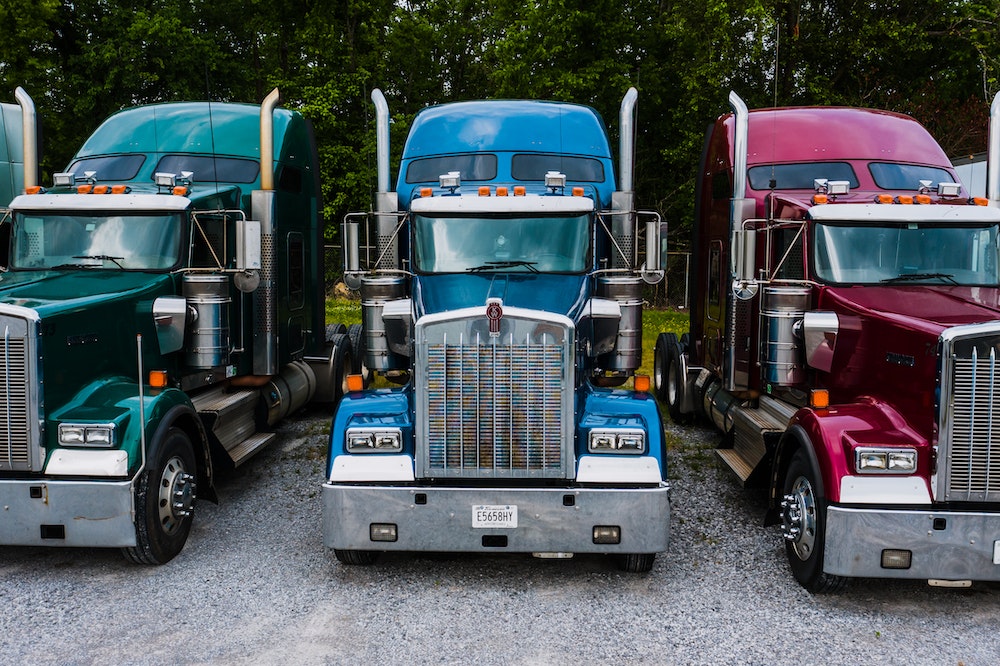
Man walking through a lot of parked semi-trucks while shopping for a used commercial vehicle loan

You can get a used commercial vehicle loan by applying with a lender that finances pre-owned trucks, vans, or specialty vehicles. The lender secures the loan against the vehicle itself. That means approval depends less on years in business and more on your credit, down payment, and the vehicle’s condition.

Most lenders fund approved loans within a few business days.

This guide covers eligibility rules, interest rates, tax benefits, and the steps small business owners need for business vehicle financing.

TL;DR

  • A used commercial vehicle loan finances a pre-owned truck, van, or specialty vehicle instead of a new one.
  • Lenders secure the loan against the vehicle’s title.
  • Your rate depends on your credit score, down payment, and time in business.
  • Many owner-operators and first-time buyers qualify through alternative lenders even when traditional banks turn them down.
  • Once your documents are in, approval typically takes a few business days.

What Is a Used Commercial Vehicle Loan?

A used commercial vehicle loan, or business auto loan, finances a pre-owned box truck, semi-truck, or van for business purposes. You get the funds in a lump sum based on the vehicle’s purchase price. Then you repay the loan plus interest in fixed monthly payments.

The lender holds a lien on the vehicle for the life of the loan. If you default, they can repossess it to recover their money, the same way as with personal auto loans. It’s also why these loans tend to have more accessible approval requirements than unsecured business credit.

Used vs. New Commercial Vehicle Financing

Used and new business vehicle loans work the same way structurally, but the numbers differ. Used trucks have already taken their steepest depreciation hit, so your loan-to-value ratio stays more stable over the loan term. That can mean less risk of owing more than the vehicle is worth.

Used vehicles also cost less upfront, which lowers your total loan amount and monthly payment.

The tradeoff is a shorter remaining service life and a higher chance of needing repairs sooner.

Truck

Loans vs. Leasing: Which Fits Your Business?

A business loan builds equity. Once it’s paid off, the truck is yours outright. You can keep running it, sell it, or trade it in. Leasing usually means lower lease payments. You won’t own the vehicle at the end unless you pick a lease-to-own structure.

Leasing may carry mileage restrictions and penalties, so financing is better for high-mileage vehicle usage.

In our experience, most owner-operators keeping a truck for a few years come out ahead with a loan.

If you like flexibility to upgrade often, leasing can make more sense. Either way, your business use and cash flow should drive the decision, not just the monthly number.

Types of Commercial Vehicles Eligible for Financing

Most lenders that finance commercial vehicles cover a wide range of classes, from light-duty trucks to heavy-duty semis. The same process applies whether you’re buying a full rig or a smaller business auto.

Here’s a quick overview of what typically qualifies.

Vehicle Class Examples
Light-duty Cargo vans, pickup trucks, small box trucks
Medium-duty Box trucks, delivery trucks, flatbeds
Heavy-duty Semi-trucks, tractor-trailers, dump trucks
Specialty Reefer trucks, tow trucks, bucket trucks

When financing older commercial trucks, age and mileage matter too. Many lenders impose vehicle age and mileage limits on used vehicle loans. That often means capping financing at trucks under 5 to 10 years old.

Mission Financial Services offers more flexibility, financing used trucks up to 15 years old for qualified buyers.

Older equipment costs more to maintain, so weigh that against the lower purchase price.

papers

How a Used Commercial Vehicle Loan Is Structured

Three things determine your loan structure: down payment, collateral, and title.

Down payment

Most lenders ask for money down to reduce their risk and lower your monthly payment. Loan amounts typically range from $10,000 to $250,000, depending on the vehicle and your qualifications. A larger down payment can secure better loan terms.

At Mission Financial Services, first-time buyers commonly get financing between $25,000 and $40,000 with a 20-30% down payment.

Some owner-operators qualify for reduced or no money down financing.

Collateral

The vehicle itself secures the loan. This lets lenders offer more flexible terms to borrowers with limited credit history than an unsecured loan would allow.

Title and Ownership

The lender holds the title as lienholder until you pay off the loan. You keep operating the truck the entire time. Once the loan is satisfied, the lien is released and the title transfers fully to you.

Interest Rates and Loan Terms for Second-Hand Commercial Vehicles

Your interest rate depends mainly on your credit score, time in business, and down payment.

Lenders reserve their best terms for an excellent borrower credit history. That holds true at a bank, credit unions, or online lenders. The Consumer Financial Protection Bureau notes that comparing lenders within a short window counts as one credit inquiry. Shopping around won’t hurt your score.

Loan terms for used commercial vehicles commonly run from two to six years.

A shorter term means higher loan payments but less interest paid overall. A longer term frees up monthly cash flow but costs more over the life of the loan.

For a current snapshot of where rates stand, check our post on commercial truck financing rates.

truck in warehouse

Eligibility Requirements for a Commercial Vehicle Loan

Lenders carefully evaluate used commercial vehicle loan applications due to depreciation and mechanical risks. They weigh four main factors before approving you.

  • Credit history: Good credit unlocks better rates and terms, but bad credit doesn’t automatically disqualify you. Lenders weigh both your personal credit score and, once your company has some history, your standing with business credit bureaus.
  • Time in business: Lenders prefer businesses with an established track record and steady revenue. First-time buyers can still qualify by showing relevant experience.
  • CDL and experience: Your commercial driver’s license history helps demonstrate you can operate the vehicle safely. At Mission Financial Services, three or more years of experience typically qualifies you. Newer drivers can often qualify with a larger down payment. See FMCSA’s CDL requirements for the federal standards states must follow.
  • Documentation: Expect to provide a government-issued ID, proof of income or bank statements, and proof of insurance. You’ll also need references, a vehicle spec sheet, and a sales order. Business borrowers without a long credit history may also need a personal guarantee or formation documents like an LLC agreement.

How to Get a Used Commercial Vehicle Loan in 5 Steps

Follow these steps to move from research to approval.

  1. Find your truck. Research vehicles that match your hauling needs so you land the right vehicle for your routes. Check condition relative to age and mileage. Our tips for buying used commercial trucks can help you avoid costly surprises.
  2. Select the seller. Buy from a franchised dealer, a reputable used truck broker, or a private seller who can provide valid documentation.
  3. Inspect the vehicle. Confirm the engine, mileage, and maintenance records before you negotiate a price.
  4. Choose your lender. Compare rates and terms. Options range from SBA loans to specialized commercial vehicle lenders, often more flexible than a regular bank.
  5. Apply and submit documents. Gather your paperwork and complete the application. At Mission Financial Services, most applicants get loan approval within four hours.

Two men reviewing loan paperwork in front of a commercial truck during a vehicle inspection

Tax Benefits of Financing a Used Commercial Vehicle

Business financing instead of a cash purchase can also unlock tax savings. Under Section 179, qualifying used vehicles placed in service in 2026 can be deducted the year you start using them. This applies if you use the vehicle over 50% for business.

Heavy trucks over 14,000 pounds GVWR generally qualify for the full deduction, while some passenger-style SUVs face a lower cap.

Section 179 applies to new and used vehicles alike, as long as they’re new to you and bought fairly. Financing doesn’t disqualify you from the deduction. Always confirm current rules with your tax professional.

Financing Your Next Used Commercial Vehicle

A used commercial vehicle loan is one of the most practical ways to grow your fleet without draining cash reserves.

At Mission Financial Services, we work with owner-operators, first-time buyers, and small fleets that traditional banks often turn away.

We’re a direct lender across the continental U.S. and a preferred lender for dealerships in 28 states, also offering repair loans, operating capital, title loans, and lease purchase buyouts.

Frequently Asked Questions

What credit score do you need for a used commercial vehicle loan?

There’s no universal minimum. Traditional banks want stronger credit. Alternative commercial lenders regularly approve lower scores when your down payment or time in business is solid.

How much down payment do I need for a commercial vehicle loan?

It varies by lender and credit profile. Some programs require money down, while others offer reduced or zero-down options for qualified borrowers.

Do commercial loans require 20% down?

No. Down payments commonly range from 0% to 30% depending on the lender, program, and your credit profile. Many lenders ask for 10% to 20% as a baseline, though some direct lenders offer zero-down options for qualified buyers.

Mission Financial Services typically sees 20% to 30% from first-time buyers, with more flexible terms available case by case.

Can first-time owner-operators qualify for a commercial vehicle loan?

Yes. Lenders look at your credit and relevant experience, including CDL history, rather than years in business.

What is the average interest rate for a commercial vehicle loan?

There’s no single average. Bankrate puts the typical range at 6% to 35% or higher. It depends on your credit, the lender, and the loan type. Well-qualified borrowers can land close to 6%, while bad credit programs often run 20% or more.

How long does approval take?

It varies by lender. Mission Financial Services typically decides within four hours of a completed application. Full funding can take a few extra days.

Is leasing better than financing for a used truck?

It depends on your plans. Financing builds equity toward ownership, while leasing can lower monthly costs if you plan to upgrade vehicles often.

How much is a $70,000 truck payment?

It depends on your down payment, rate, and term. On a $70,000 truck with 20% down ($14,000), you’d finance $56,000. Over 60 months, that lands around $1,083 a month at 6% APR. At 20% APR, expect closer to $1,484 a month. Use these as a starting point, since your actual quote will reflect your credit and the truck’s condition.


Commercial Truck Loans For Veterans (2023 Update)

commercial truck loans for veterans

Are you a veteran looking to start your own business? Have you considered the booming semi-truck industry? With commercial truck loans for veterans, you can realize your entrepreneurial dreams.

In this guide, we’ll explore why veterans should consider a trucking business, how Mission Financial Services can help secure business loans, and the easy steps to apply for a commercial truck loan.

Why Should Veterans Consider A Semi-Truck Venture?

There are many reasons a veteran should consider becoming a small business owner. From management and daily operations, it offers veterans unique challenges that they can tackle. Here are some more reasons why veteran entrepreneurs will love managing a successful business in trucking.

Independence and Flexibility

For many veterans, transitioning back to civilian life or the business world can be challenging. Starting a semi-truck small business can provide a sense of independence and flexibility. You control your schedule, routes, and load types as an owner-operator. You can also earn a higher income than in a traditional job. For veterans who value autonomy and self-sufficiency, owning a semi-truck business can be a great fit!

High Demand

The transportation industry is essential to the economy, and the demand for trucking services is always high. As the economy grows and consumer demand increases, so does the need for goods to be transported.

This creates steady work for semi-truck owners, allowing them to build successful businesses.

With many experienced truck drivers retiring, qualified drivers are still scarce.

As a veteran with experience driving large vehicles, you have an advantage in the trucking industry. You can leverage your skills to grow your small business.

Business Ownership

Starting a veteran owned business allows you to take control of their financial future by becoming their own boss. As veteran business owners, veterans can set schedules, make decisions, and be free to pursue their passions. They can choose their routes and clients, and work on their terms, making it a rewarding and fulfilling experience.

Additionally, owning a business allows veterans to build their legacy and create a company that can be passed down to future generations. This can provide a sense of pride and accomplishment that is hard to find in many careers. By starting a semi-truck business, veterans can significantly impact their own lives and the lives of their loved ones.

Commercial Truck Loans For Veterans With Mission Financial

At Mission Financial Services, we understand the unique needs of veterans entering the trucking industry. Unlike getting a bank truck loan, we offer flexible semi-truck financing options for small business owners with bad or no credit scores. Our team of experts will guide you through the entire business loan process, making it as easy as possible.

Semi-Truck Loan Process (4 Easy Steps To Success)

Securing commercial truck loans for veterans is straightforward. Here are the 4 steps to quickly obtain commercial truck financing for new veteran small business owners:

1. Pre-qualification

Pre-qualification is the first step in securing your first capital business finance loan for veterans with Mission Financial Services. The process is quick and easy and can be done online from the comfort of your home.

To get started, you only need to submit an online credit application with basic personal and business information. This information will determine your eligibility for a loan and give you a better understanding of what kind of small business loan terms you can expect.

The commercial truck financing application will ask for basic details, including your name, address, phone number, email address, and date of birth. Additionally, you’ll be asked to provide information about your business, such as your business name, business structure, and the type of truck you are interested in financing.

At Mission Financial Services, we understand that the pre-qualification process can be intimidating, especially if you have never applied for business loans before. That’s why we have a team of experienced semi-truck financing specialists available to help you through the small business loan process.

2. Loan Options

At Mission Financial Services, we understand that each veteran’s situation is unique. We offer various commercial truck loans tailored to your needs and budget.

Once you’ve completed the pre-qualification process, our experienced loan officers will review your application and match you with the business loan options that best suit your situation.

We offer semi-truck financing with competitive interest rates, flexible payment terms, and no prepayment penalties. Our small business loans and equipment financing include both new and used semi-truck financing, as well as commercial fleet financing.

Whether you’re looking for short-term or long-term semi-truck financing, our team can help you find the perfect financing solution for veteran business owners.

3. Approval

After pre-qualification, you’ll receive a small business loan that meets your business needs and budget. Once you select the option that works best for you, the next step is approval.

At this stage, Mission Financial Services will verify your business and personal information and the semi-truck or trailer you’re looking to finance. They’ll also check your personal credit score and business history to determine your eligibility for the loan amount.

If approved, you’ll be asked to provide any additional required documentation, such as your driver’s license, proof of insurance, and proof of income. Mission Financial’s loan specialists will guide you through the truck loan process and make it as easy as possible.

Once you’ve provided all the necessary documentation, you’ll sign the loan agreement. Congratulations, you’re one step closer to starting your own semi-truck business!

4. Funding

After completing the business loan approval process, you’ll be well on your way to starting your semi-truck business! Once everything is finalized, the loan amount will be paid into your bank account, allowing you to purchase the commercial trucks you need to start your own business.

From there, it’s up to you to put in the hard work and dedication required to make your own business a success. Remember to develop a business plan and to track business expenses and cash flow. You can also go for business training such as veterans business development or small business administration to ensure your business continues to succeed.

Final Thoughts

Congratulations! You can now start your own small business with the help of Mission Financial Services. Take the first step towards your entrepreneurial journey and apply for a truck loan today.

Contact us to learn more about our small business loans and how we can help make your small business dreams a reality.

semi truck financing requirements

Semi-Truck Financing Requirements: What You Need to Qualify

semi truck financing requirements

To finance a semi-truck, most lenders in the trucking industry want a down payment, a CDL, and driving experience. They’ll also ask for proof of insurance and details on the truck.

At Mission Financial, first-time buyers usually put down 20% to 30%. We look for three years of verified driving experience and trucks from model year 2000 or newer. Bad credit doesn’t rule you out. We’ve approved drivers with past bankruptcies and repossessions, as long as they’re more than a year old.

This guide covers each requirement and the paperwork truck buyers need to start a trucking business.

Semi-Truck Financing Requirements at a Glance

This table sums up what we ask for at Mission Financial. Other lenders set their own rules, so compare multiple lenders before you apply.

Requirement What we ask for
Down payment Usually 20% to 30% for first-time buyers
Credit We review your overall credit, not just the score
Driving experience Three years of verified experience. Less may work with a bigger down payment.
Truck age Model year 2000 or newer
Insurance Proof of insurance with at least a $1,000 deductible
Loan term Up to 42 months, or 48 months for 2012 and newer trucks with five years’ experience
Documents Credit application, CDL, bank statements or tax returns, references, spec sheet, and sales order

The Main Requirements to Finance a Semi-Truck

Lenders check six things: your down payment, credit, driving experience, income, the truck, and your insurance. Lenders use each one to judge your risk (the chance you’ll fall behind on loan payments).

Down Payment

First-time buyers with us usually put down 20% to 30% of the truck’s price. That’s typically between $25,000 and $30,000.

If you can’t buy the truck outright, the size of your down payment shapes the rest of the loan.

A bigger down payment lowers your loan amount and gives you a lower monthly payment. It also improves your odds if your credit or experience is thin.

A lower down payment leaves more working capital for fuel, insurance, and repairs.

Before deciding how much cash to put down, work out how much working capital you’ll need until freight payments arrive.

In our experience, a modest down payment with healthy cash reserves beats emptying your account to shrink the loan.

Some lenders advertise zero-down semi-truck financing, but those deals usually need strong credit.

truck in warehouse

Credit History

A good credit score in the high 600s usually gets you better financing options. It’s only part of the picture, though. We’re a common-sense lender, so we look at your overall credit.

On-time payments on your home or car count in your favor. You don’t need to own a home or have prior truck credit.

If you’ve just formed an LLC, lenders will rely on your personal credit. Your business credit won’t have much history yet. Existing debt matters too, since bigger monthly bills leave less room for a truck payment.

The ideal applicant has:

  • No bankruptcies or repossessions in the past year
  • Minimal tax liens or child support issues
  • A steady record of paying bills on time

We review foreclosures case by case.

CDL and Driving Experience

Owner-operators need a current CDL. We look for three years of verified driving experience. Drivers with less experience can still apply. A larger down payment helps, and we review those applications case by case.

You can buy a semi-truck without a CDL if you plan to hire a driver.

Income and Business History

Lenders want proof your trucking business can cover loan payments and operating expenses. We ask for bank statements, tax returns, or both. Banks and credit unions often ask for more, like business tax returns, profit and loss statements, and other financial statements.

We work with first-time owner-operators who don’t have established revenue yet. In that case, your driving record and personal credit count for more.

A simple business plan showing your expected loads and cash flow helps any lender understand your numbers.

Truck Age and Condition

The truck is the collateral, so its age, mileage, and condition shape your loan. Age and mileage also set the purchase price.

Many lenders only finance trucks from the last five to 10 years. We finance trucks as far back as model year 2000, so a new rig isn’t required.

A used truck with higher mileage can mean higher rates and more repairs, though. In our experience, a truck under 10 years old with good service records is the sweet spot. Financing older commercial trucks is possible, but budget for the extra maintenance.

shaking hands

Insurance

You can get pre-approved without insurance, but you’ll need proof of coverage before we fund the loan.

If the truck is your main business asset, you’ll likely need primary liability, physical damage, bobtail, and cargo coverage. For-hire carriers hauling general freight need at least $750,000 in liability coverage (FMCSA). Premiums are a big part of operating expenses, so check what commercial truck insurance costs before budgeting.

Documents You’ll Need to Apply

Having your documents ready speeds up the financing process. Here’s what we ask for:

  • A completed credit application
  • Your current CDL
  • Bank statements, tax returns, or both
  • Six references (or 10 if you don’t have an active phone bill)
  • A spec sheet with the year, make, model, VIN, mileage, engine, transmission, and accessories
  • A complete sales order with the cash price, sales tax, DMV fees, and dealer fees
  • Pictures of the truck
  • Proof of insurance with at least a $1,000 deductible

If your trucking company is an LLC or corporation, add your LLC agreement or articles of incorporation.

Rates, Terms, and Fees to Expect

Commercial truck loans carry higher interest rates than car loans. With us, contract rates run from 18% to 29.95%, depending on your credit and the truck.

Our standard loan term runs up to 42 months. You can stretch it to 48 months with a 2012 or newer truck.

That longer term also needs five years of driving experience and no bankruptcies or repossessions on record.

Watch for hidden fees in any financing agreement. We list ours up front: every contract includes a 16% prepaid finance charge and a $495 loan doc fee.

Your loan agreement lists the full repayment schedule, so read it before you sign.

Here’s a rough idea of monthly payments at 20% APR, before fees:

Amount financed 42 months 48 months
$30,000 About $999 About $913
$40,000 About $1,332 About $1,217

Always compare the APR, not only the advertised rate. FreightWaves reports truck loan APRs in 2026 run from roughly 6% to 35%.

Your credit, the truck’s age, and the loan term all affect your commercial truck financing rates.

Money

Can You Finance a Semi-Truck With Bad Credit?

Yes. Many lenders turn down low scores, but we specialize in bad credit loans for owner-operators with less-than-perfect credit. Collections, charge-offs, and old bankruptcies don’t automatically rule you out. Your rate will likely be higher, though.

To improve your odds with challenged credit:

  • Save for a bigger down payment
  • Pick a newer truck with lower mileage
  • Show on-time payments on your home or car
  • Check your credit score and dispute any errors

Traditional financing through a bank usually needs stronger credit. The Small Business Administration also backs loan programs through partner banks and credit unions. SBA loans can help small business owners secure financing if they have strong credit and a business track record.

Should You Lease or Buy?

Equipment financing builds equity, while leasing costs less upfront. Our loans are for purchases, including lease-purchase buyouts.

A lease frees up cash for business growth. With a standard lease agreement, though, you don’t own the truck at the end.

Comparing leasing vs. buying a semi-truck side by side shows which financing options fit your cash flow.

documents

Final Thoughts

Semi-truck financing requirements vary by lender. Most come down to your down payment, credit, experience, income, truck, and insurance.

Get your documents together before you shop, and you’ll move faster when you find the right truck.

Contact us or start your application to see what you qualify for.

Frequently Asked Questions

How Much Is the Down Payment on a Semi-Truck?

With Mission Financial, first-time buyers usually put down 20% to 30%. That’s typically $25,000 to $30,000.

Can I Finance a Truck With a 500 Credit Score?

It’s possible. We look at your overall credit and payment history, not only the number. In some cases, we can finance scores as low as the 400s.

How Long Can I Finance a Semi-Truck?

Our contracts run up to 42 months. Trucks from 2012 or newer can qualify for 48 months if you have five years of experience. New trucks may have longer financing terms than used trucks.

How Fast Can I Get Approved for Semi-Truck Financing?

We guarantee a response within four hours once we have your application.

how to become a semi truck driver

How To Become A Semi Truck Driver (Top Insights)

how to become a semi truck driver

Have you been wondering how to become a semi-truck driver? Well, you’re in luck. This guide is here to break down all the important information you’ll need on your journey.

You must follow all the initial steps correctly to abide by the Federal Motor Carrier Safety Administration (FMCSA)’s regulations. Failing to do so might cause inconveniences later on and prevent you from getting your Commercial Driver’s License (CDL).

How To Become A Semi Truck Driver

Truck driving is a rewarding career. According to the Bureau of Labor Statistics, you can earn a decent annual salary as a new driver. Your pay will increase as you gain more experience in the trucking industry.
To start your new career as a semi-truck driver on the right foot, follow the steps below.

Step 1: Determine Your Eligibility

Before you get on the path to becoming a semi-truck driver, you must first ensure that you meet all the minimum requirements. Some of these requirements include those listed below.

Age

By law, you must be at least 18 years old to become a truck driver. But, you’ll be under strict restrictions regarding the type of trips you can make at this age. In most states, young drivers between 18 and 21 years can only make local trips within their home state.

You’ll qualify to ride across state lines at 21 years. Most truck companies prefer working with drivers 21 years and above.

Regular Driver’s License

You cannot get a CDL without having a current driver’s license.

So, if you do not have a regular license, get one first. Ensure you pass your home state’s standard driver’s license exam and spend some time behind the wheel of a non-commercial vehicle.

It’ll help you build the courage and confidence you need to drive tractor-trailers when the time comes.

Clean Driving Record

Your chances of joining the trucking industry as a truck driver are higher when you have a clean driving record.

Most companies and driving schools may overlook minor traffic violations like wrong parking. But a history of reckless driving, or driving under the influence (DUI), minimizes your chances of getting trucking jobs.

That’s because driving a combination vehicle, such as a semi-truck, requires responsibility. All stakeholders in transportation, including the Department of Transportation (DOT), must ensure commercial drivers are competent to keep all road users safe.

High School Education

Most truck companies, especially those that employ long-haul truck drivers, require applicants to have a high school diploma.

A GED equivalent works well too. Some driving schools also request these documents for you to join.

It might be a good idea to get your GED if you don’t have a high school diploma. It’ll keep your driving school options open and help you qualify for more employment opportunities.

Drug And Alcohol Tests

Drug testing isn’t necessary for getting a CDL, but it is for being employed as a truck driver.

You should know from the start that drugs and alcohol testing will be frequent throughout your career as a truck driver.

Most employers perform random drug tests from time to time to ensure their drivers are always fit to drive.

drug test

In addition to the above, there are some factors you should take keen note of if you want to become a truck driver. These issues can prevent you from obtaining your CDL in most states. We’ve outlined some below.

  • Medical conditions, like sleep apnea or high blood pressure.
  • Certain prescription medications.
  • Felony convictions for extortion, arson, and kidnapping.

Address these issues before you start your journey to becoming a truck driver. For example, you could get a written waiver from your physician to show the medical conditions won’t interfere with your ability to drive safely.

Once you’ve met all the requirements for becoming a semi-truck driver, you’re ready to begin training.

Step 2: Attend A Professional Truck Driving Program

Finding a high-quality truck driving school or program is essential for your career.

You want to find FMCSA-accredited truck driver training programs to go through your training. This is required by law.

There are several truck driving training options you can choose from to get your CDL training. Some take a few weeks to complete, while others may take a few months.

Different options also charge different amounts to go through their courses. But there are FMCSA-approved programs that offer financial aid to reduce your costs.

The most common types of CDL training you can go through include:

Private Schools

Although tuition costs vary from one school to another, private CDL schools are generally the most expensive CDL training option.

You may have to pay thousands of dollars upfront to complete the training in a few weeks or months. But this depends on the specific school you attend.

truck

Private driving schools are also one of the most flexible options because they run all year round. You can attend and finish your CDL training anytime.

Some reputable private driving schools have partnered with truck companies to offer students a truck driving job placement once they finish training.

Community College Training Programs

Community colleges take longer than private CDL training. They’re also less flexible since they only run a few times annually.

Consider this option if you’d like to get your CDL part-time. It’s the best option if you’re in no hurry to get behind the wheel of any commercial vehicle.

You may have to pay tuition fees for most programs. But there are several funding options to help with the costs, like the federal Pell Grant.

Paid CDL Training Program

If you wish to pay the least money for your CDL training, choose this training option. It’s also known as company-sponsored CDL training or free CDL truck training.

In this program, large trucking companies sponsor students to get their CDL. In turn, students commit to work for the sponsoring company for a while (approximately one year) once they complete their training.

The vast majority of potential truck drivers go for this option for two reasons:

  • There are no upfront costs.
  • It guarantees a truck driving job right after training.

If you choose this option, do your research! Ensure you commit to a company you genuinely want to work for in your career.

truck driving

Paid CDL training is always ongoing. They also take the shortest time. You can have your CDL and start working within a few weeks (around 4 to 6 weeks).

Here are a few factors to consider when selecting a training program:

  • How much money do you wish to spend on training?
  • How much time do you have to spend in training or driving school?
  • How fast would you like to start working as a truck driver?

Step 3: Get Your Commercial Driver’s License (CDL)

CDLs come in different classes. You get class A, B, and C licenses.

Each CDL class allows you to drive a specific type of commercial vehicle, depending on its weight and size.

The more the weight limit you can drive, the more commercial vehicles you’ll be in a position to drive. In addition, the more career options you’ll be able to explore.

For a commercial truck driver, the class A CDL license might be the best option for you. It has minimum restrictions and allows you to drive large trucks internationally. This gives you more versatility in your career.

How To Get A CDL

There are a few steps that all potential semi-truck drivers must follow to get a CDL license. We’ve outlined these steps below.

Submit Your CDL application

Whether you want a class A or class B license, you must fill in and submit your application. You’ll need to provide a few personal documents, such as identification, proof of address, social security number, and a utility bill.

laptop

Pass Various Tests

Next up, you’ll need to pass physical, hearing, and sight CDL tests from a certified Department of Transportation (DOT) physician. You’ll get a DOT medical card indicating that you’re medically fit to be a long-distance driver.

The knowledge test is also important. This includes a written CDL exam that may cover the technicalities of driving a truck and road regulations. Once you’ve passed all the tests, you’ll get your commercial learner’s permit (CLP).

With your learner’s permit, you can practice driving a semi-truck while waiting for your final road test. A qualified commercial driver’s license holder must be with you when doing this.

Ace Your Road Test

Lastly, you’ll need to pass your road skills test. This will test your road skills with a qualified test evaluator. You may have to go through several tests to demonstrate that you can drive large commercial vehicles, like tractor-trailers.

Some tests may include handling common mechanical issues and a basic controls test.

After completing all these steps successfully, you’ll get your CDL. You can then get hired and become a truck driver on the road!

Double Check CDL Requirements

It’s worth noting that CDL requirements vary from one state to another. In most cases, you’ll need further endorsements to drive certain special vehicles like school buses or vehicles transporting hazardous materials.

Always check your state’s Department of Motor Vehicles (DMV) regulations to ensure you meet all the requirements.

driving truck

You may also learn more about endorsements and restrictions from the FMCSA to ensure you’re always on the safe side.

Step 4: Get Hired

Once you have your CDL, you can become a truck driver in any trucking company. If you selected the paid training option, which offers CDL training and a truck driving job in step two, you might skip the job search!

Most schools have truck driving job placement programs. Many trucking companies hire their drivers directly from driving schools.

Step 5: Complete Employee Training And Orientation

Once recruited, you’ll need to complete the in-house training for the recruiting trucking company before you go out on the road.

The goal of such sessions, often known as driver finishing programs, is to introduce you to the company’s vehicles and equipment.

Such programs also cover the truck company’s mode of operation. They may last approximately 3 to 4 weeks.

How To Get Your Own Semi Truck

Because trucks are expensive, the best way to get your own is by getting a loan. There are two main types of loans you can apply for to get enough funds to buy your truck.

Small Business Administration (SBA) loans

The government helps finance small businesses so that they can grow. You can use an SBA- backed loan to get your truck.

These loans have lower rates and longer terms compared to conventional loans. If you’re an experienced owner-operator, they’re a good option.

To apply for an SBA loan:

  • Visit the SBA loans page.
  • Navigate to the ‘find lenders’ section and provide the necessary details to get connected to potential lenders. You’ll see a list of lenders interested in financing your loan.
  • Talk to the lenders to find the best one for you.
  • Apply for the loan, get approved, and buy your truck!

shaking hands

Company lenders

Many companies offer loans for purchasing commercial vehicles, including semi-trucks.

Most of them are flexible and can give you a loan tailored to your needs. Mission Financial Services is the perfect example.

You can get different types of owner-operator loans from company lenders. You can finance your semi-truck if you are a:

  • Driver with limited experience.
  • First-time owner-operator.
  • Owner-operator with bankruptcies or bad credit.
  • Small fleet owner.

Read this guide on commercial vehicle financing to learn more about your financing options.

You might also want to follow this step-by-step guide on how to get a loan for a semi-truck to apply for one today!

Final Thoughts

Becoming a truck driver is straightforward if you follow the steps we’ve laid out.

Once you pass the background check and meet all the initial legal requirements, you’ll get your CDL and can start your semi-truck driving journey.

If you’re interested in financing your semi-truck dreams, contact Mission Financial Services today. This lender can help you to realize your goals, and kickstart your trucking business.

credit score needed to buy semi truck

Credit Score Needed To Buy Semi Truck | All You Need To Know

credit score needed to buy semi truck

So, what is the credit score needed to buy semi trucks?

Your score can play an important role in obtaining financing for your business. However, as we will discuss, this is not always the case. Often, the credit score required will depend on the lender.

Let’s discuss the typical credit score needed to buy semi trucks. We’re also going to look into other factors that can influence your loan approval, such as cash flow and monthly payments.

Read on to equip yourself with all of the credit score information you’ll need on your financing journey.

Credit Score Needed To Buy A Semi Truck

Typically, the credit score needed to buy semi trucks is around 650. Any lender will likely approve your commercial truck loan if your score is 650 or above.

But, what if your credit score is lower? In this case, you’ll be considered a high-risk borrower. You may be required to pay a higher interest rate. You also might have a less favorable commercial vehicle loan.

Some lenders don’t take credit scores into account, although they will almost certainly ask to look at them before approving your loan.

Understanding FICO Scores

To understand the credit score needed to buy semi trucks, you must understand FICO scores. FICO score ranges are a way to categorize credit scores into different levels.

credit card

The FICO score is the most widely used credit score, ranging from 300 to 850. The higher your score, the better your credit history and creditworthiness.

Here is a breakdown of the FICO score ranges in simple terms:

  • 300 – 579: A score in this range is considered ‘very poor’.
  • 580 – 669: A score in this range is considered ‘fair’.
  • 670 – 739: A score in this range is considered ‘good’.
  • 740 – 799: A score in this range is considered ‘very good’.
  • 800 – 850: A score in this range is considered ‘exceptional’.

Statistically speaking, most people tend to score between 600 and 720. This means that most credit applicants fall in the fair to good range. Sometimes, a good credit score is needed to finance a semi-truck.

Semi Truck Financing With Bad Credit

At Mission Financial Services, we understand that not everyone has perfect credit.

For this reason, we don’t consider the credit score needed to buy semi trucks. Having a history of bad credit or bankruptcy does not impact our decision to approve your loan.

If you have poor credit, options like a bad credit loan are available to you. Let’s discuss the steps you can take to finance your semi truck with an imperfect credit score.

1. Complete The Credit Application

The first step in the semi-truck financing process is to complete a credit application. You’ll need to include certain documents in your application. These include pictures of the vehicle you wish to purchase, proof of truck insurance, and potentially a valid driver’s license or commercial driver’s license.

Hands

These documents help lenders to better understand your current situation. From here, they can make an informed decision regarding your loan application.

2. Provide A Spec Sheet

Next up, you’ll need to provide a spec sheet for the semi-truck you wish to purchase. If you’re looking to finance a lease agreement, rather than purchase a semi-truck, you’ll also need to provide a spec sheet.

Spec sheets document detailed information about the vehicle you want to buy, such as the motor carrier number. You can expect to include the following information in your spec sheet:

  • Year: The year the truck was manufactured.
  • Make: The manufacturer of the truck.
  • Model: The specific model of the truck.
  • Vehicle Identification Number (VIN): This is a unique 17-digit number that identifies specific vehicles.
  • Mileage: The current mileage of the commercial vehicle.
  • Engine: The type of engine in the semi-truck.
  • Transmission Type: The type of transmission in the semi-truck.
  • Accessories: Any additional features or equipment on the semi-truck, such as an auxiliary power unit, refrigerated trailer, or GPS.

Providing a detailed spec sheet will help lenders to understand the value of the semi-truck you’re interested in financing. The information on the spec sheet must be accurate and verifiable to help determine your eligibility.

3. Secure A Purchase Order

The final step in the semi-truck financing application process is to provide a purchase order for the new truck.

documents

A purchase order is an agreement between a buyer and a seller. It outlines the details of the sale, including the cash sales price or purchase price and any applicable fees such as sales tax, DMV fees, and dealer fees.

Assessing a purchase order allows the lender to understand the total cost of the new truck. It also helps them ensure that the loan amount is sufficient to cover the purchase.

Other Factors Influencing Semi-Truck Loans

While the credit score needed to buy semi trucks can be important, depending on the lender you choose, other factors can also influence your financing eligibility. Understanding these factors will ensure a smooth and favorable loan application.

1. Driving Experience

Lenders want to ensure that you have the necessary skills and experience to operate a semi-truck safely and efficiently. A proven driving experience record can help boost your case for semi-truck financing.

For example, if you’ve been driving for 10 years, have a clean driving record, and have completed a commercial driver’s training program, this will be viewed favorably by a lender. This is applicable if you will be driving the truck.

2. Annual Revenue Stream

Lenders want to see that you have a stable source of income to make monthly payments. A steady annual revenue stream is important for self-employed individuals or small trucking business owners.

For example, can you demonstrate that your business has been profitable and that have enough cash flow to cover monthly payments? You can do this by providing bank statements. In this case, you’ll probably be viewed favorably by a lender.

report

3. Different Types Of Credit

Different types of credit, such as installment credit, can also help you to look favorable.

Examples of installment credit include a mortgage or business auto loan. Having a mix of different credit types, such as revolving credit and installment credit, shows lenders that you can handle different types of credit responsibly.

4. Co-signer

If the credit score needed to buy semi trucks from your chosen lender is a touch too high, the lender may require a co-signer on your commercial truck loan. A co-signer is someone willing to take on the legal responsibility of repaying the business auto loan if you cannot make the payments. The co-signer can be a family member or friend with a good credit score. Of course, they must be willing to co-sign the loan!

5. Down Payment

A down payment can make you more attractive to lenders. The down payment shows that you have skin in the game and are invested in the purchase. A larger down payment can also help you secure a lower interest rate and better loan terms on your semi-truck financing journey.

It’s important to note that different financing companies may have other requirements and may weigh these factors differently. However, by understanding these factors, you can better prepare yourself for the loan application process and increase your chances of getting commercial fleet financing.

Man in truck

Final Thoughts

The credit score needed to buy semi trucks varies depending on the lender.

If your chosen lender takes credit scores into account, a score of 650 and above is considered suitable for semi-truck financing. Other factors, such as driving experience and an established revenue stream, can boost your loan eligibility.

If you have an imperfect credit score, consider financing your semi truck through Mission Financial Services. We take your current situation into account, rather than your history. Contact us today to kickstart your semi-truck loan process!

commercial truck tire financing

How To Go About Commercial Truck Tire Financing

commercial truck tire financing

If you’re looking for commercial truck tire financing solutions, the goal is simple: keep your truck moving and protect your income. For an owner-operator or small fleet, tire failure can mean missed loads, lost revenue, and expensive roadside repairs.

So, financing tires is not about convenience. It is about business continuity. When a blowout or worn tread forces an unexpected replacement, the cost can quickly reach thousands of dollars per truck.

In 2026, rising tire prices, higher labor costs, and tighter supply chains have pushed the investment even higher. A single tire failure can disrupt your schedule, and multiple failures can shut down your company for days.

How Much Do Commercial Truck Tires Cost Today?

Replacing commercial tire sets is one of the largest maintenance expenses truck operators face. A single tire can cost anywhere from $400 to $900, depending on the type and brand. Different positions on the truck also have different price ranges.

Typical averages include:

  • Steer tires: $600–$900 each
  • Drive tires: $400–$700 each
  • Trailer tires: $300–$600 each

A full replacement across a tractor and trailer can easily exceed thousands of dollars. Many trucks have 18 tires, so the total cost of replacing them all at once can range from $6,000 to $12,000.

Additional expenses often include:

  • Mounting and balancing
  • Disposal of old wheels or tires
  • Service labor

Emergency roadside replacements can push the purchase balance even higher because mobile technicians charge premium service fees.

Some operators reduce long-term costs by using retreads on drive or trailer positions. Retreads are typically cheaper than new tires, but they still require proper installation and maintenance.

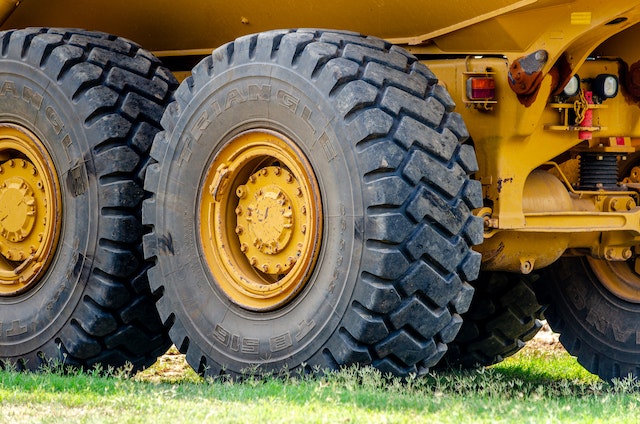
Truck wheels

How Long Do Commercial Truck Tires Last?

The lifespan of commercial tire sets depends on how and where the truck operates. Under typical conditions, steer tires may last around 100,000 miles, while drive tires may reach 200,000 miles or more with proper maintenance.

Trailer tires often last longer because they experience less steering stress.

Several operational factors affect tire life:

  • Load weight and freight type
  • Road conditions and terrain
  • Tire pressure and inflation management
  • Alignment and suspension condition
  • Driving behavior

Frequent inspections are essential for safety, longevity, and preventing sudden tire failure. Monitoring tread depth and maintaining proper inflation can extend tire life significantly.

For many operators, replacing tires becomes a predictable maintenance investment rather than an emergency expense.

When Financing Tires Makes Financial Sense

Tire replacement is sometimes unavoidable. When several tires fail at once, the upfront payment can strain your operating budget. In these situations, commercial truck tire financing may be worth considering.

Financing can make sense when:

  • Multiple tires fail at the same time
  • You experience an unexpected blowout
  • Your business is in a seasonal slowdown
  • You want to protect working capital

Instead of paying a large purchase balance upfront, financing spreads the cost across manageable monthly payments.

This can mean the difference between keeping your truck running and losing revenue while waiting to gather enough cash for repairs.

Commercial Truck Tire Financing Options

Several financing options are available when tire replacement becomes necessary. Each option serves a different financial purpose depending on your budget, credit profile, and operational needs.

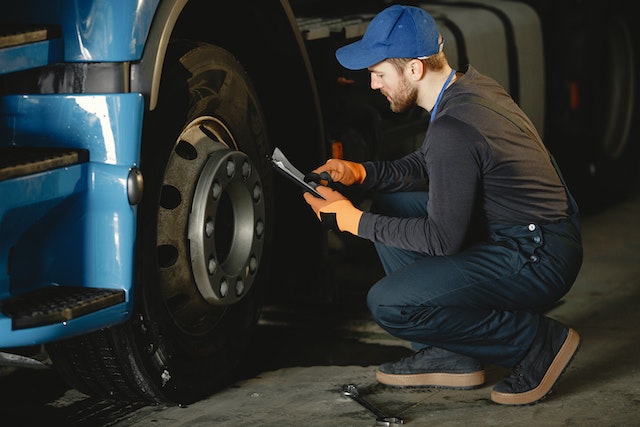
Man crouching at truck

Commercial Vehicle Repair Loans

Commercial vehicle repair loans cover various vehicle repairs – tire problems included. This type of loan allows truck owners to cover repairs immediately and repay the balance over time through scheduled payment plans.

The application process typically includes:

  • A credit application
  • Vehicle information and condition details
  • Business financial documentation, such as bank statements

Lenders review your credit, operating history, and revenue to determine credit approval. Many lenders can issue an instant decision within minutes, allowing drivers to complete repairs quickly and get back on the road.

One advantage of repair loans is flexibility. They can cover more than just commercial tire financing. Many drivers use them for:

  • Brake repairs
  • Suspension issues
  • Transmission services
  • Engine repairs

This allows operators to bundle several maintenance issues into one manageable loan.

Business Line Of Credit

A business line of credit provides a revolving source of financing that can be used for ongoing repairs and maintenance. Instead of taking a new loan every time a repair is needed, the driver can draw funds from a dedicated line of available credit.

This approach is useful for operators who face frequent maintenance costs across their fleet.

Benefits of a business credit line include:

  • Access to funds when needed
  • Flexible repayment terms
  • The ability to reuse the credit after it is repaid

For operators managing multiple trucks, this structure can help maintain steady cash flow while covering maintenance expenses.

Equipment Financing Bundled With Repairs

Sometimes, tire replacement happens at the same time as a truck purchase. In these situations, lenders may allow the driver to include repair costs or accessories within the equipment financing agreement.

Bundling repairs with equipment financing can simplify the payment structure and spread costs across the full financing term. This option is especially helpful when purchasing used trucks that need maintenance before going into service.

Truck wheel

Vendor Tire Credit Cards

A commercial tire credit card is another option offered by some tire retailers. These cards often provide quick credit approval and are accepted by participating tire shops or merchant service providers.

However, many of these cards include promotional balance structures. If the purchase balance is not paid in full within the promotional period, interest may be charged to your account from the purchase date.

Because of this, vendor cards are often best used for smaller auto repair purchases rather than major repairs.

What Lenders Look at When Financing Repairs

When reviewing a commercial truck tire financing application, lenders evaluate several financial indicators.

Key factors include:

  • Credit score and history
  • Time in business
  • Revenue and operating income
  • Existing debt obligations
  • Vehicle condition

Strong financial records and steady income improve your chances of credit approval. However, many lenders still offer flexible financing options for drivers with lower credit scores. Preparing documents before you apply can speed up the approval process.

How Tire Financing Affects Your Monthly Cash Flow

Unexpected repairs can disrupt cash flow for trucking businesses. Paying the full cost of tire replacement upfront may reduce available money for fuel, permits, tolls, and other operating expenses.

Financing spreads that expense across predictable monthly payments. For example, a $4,000 repair might require a manageable minimum monthly payments instead of a single large withdrawal from your business account.

This approach allows operators to maintain operating capital while continuing to generate revenue. And for many drivers, preserving working capital is just as important as controlling repair costs.

pexels-craig-adderley-2449454

Is It Hard to Finance Commercial Truck Tires?

It doesn’t have to be. There are several solutions for financing commercial truck tires on credit.

Approval requirements vary by lender and product. If you have strong credit and steady revenue, you may qualify for lower interest rates and longer repayment terms. If your credit is weaker, you can still have options, but you may see tighter terms, a higher down payment, or a shorter repayment window.

Working with a trucking-focused financier can also make the process smoother because they understand how repairs affect your ability to run loads.

Mission Financial Services, for example, works with owner-operators and small fleets on commercial vehicle financing and repair-related funding. You can handle necessary tire replacements without stalling your operation.

Planning ahead usually leads to better financing outcomes than applying during an emergency breakdown, especially when you need same-day service, and you’re facing roadside premiums.

How to Avoid Emergency Tire Financing

Preventative tire maintenance can significantly reduce the likelihood of emergency tire replacement. Many fleets follow routine inspection schedules to identify issues before they cause downtime.

Effective preventative practices include:

  • Monitoring tread depth regularly
  • Maintaining proper tire pressure
  • Rotating tires based on wear patterns
  • Aligning axles and suspension components

Setting aside a monthly maintenance reserve can also help operators handle replacement costs without relying on emergency financing. Preventative planning helps reduce roadside breakdowns and protects revenue.

Conclusion

There are several financing options for commercial truck tires. The right approach depends on your business goals, cash flow, and maintenance planning strategy.

For many operators, financing is not just about paying for tires. It is a tool for protecting uptime and keeping trucks operating safely.

Planning for tire expenses the right way helps you stay compliant, profitable, and ready for the next load.

If you’re dealing with unexpected tire replacement or other truck repairs, Mission Financial Services can help you secure financing to cover the cost and keep your truck working.

Start your credit application today to explore commercial truck repair financing options designed for owner-operators and small fleets.

Frequently Asked Questions

Can You Finance Commercial Truck Tires?

Yes. Several financing options exist for commercial truck tire financing, including repair loans, credit lines, and vendor financing programs.

How Much Does It Cost to Replace Semi-Truck Tires?

The total cost depends on the number of tires replaced. A full tractor replacement can exceed several thousands of dollars once labor and installation are included.

Are Tire Credit Cards Worth It?

A commercial tire credit card can be useful for smaller repairs. However, drivers should carefully review terms, including deferred interest structures.

Should I Finance Repairs or Pay Cash?

The decision depends on your financial situation. Paying cash avoids interest, while financing protects working capital and may help maintain steady business operations.

Archives

Sign Me Up!

Stay up to date with the latest news in the commercial trucking industry.

Contact Us
close slider