
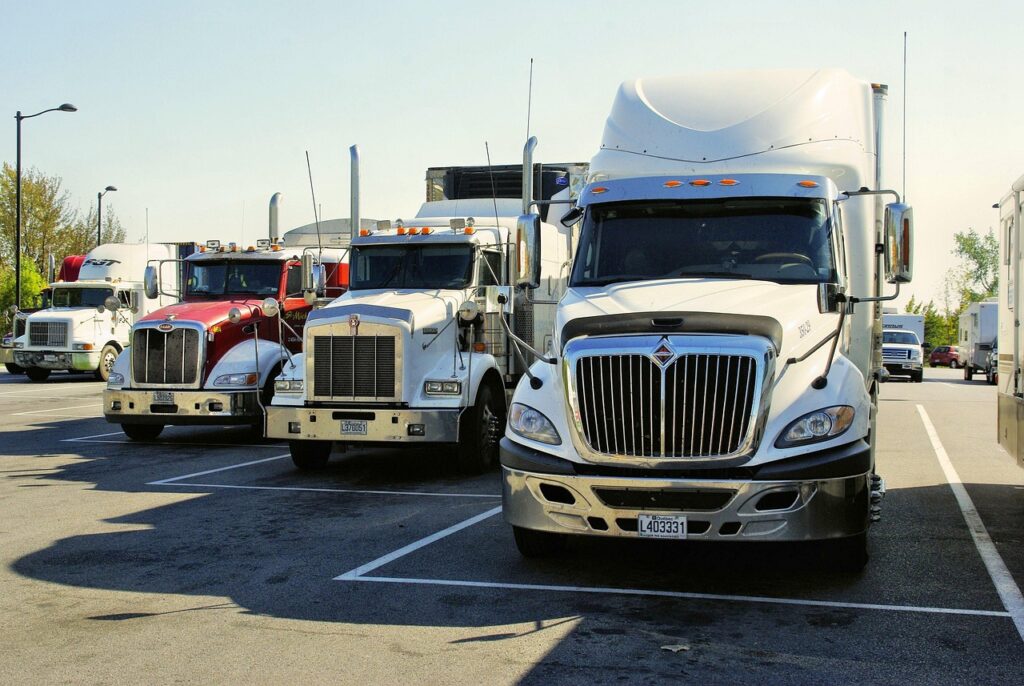
Yes, you can buy and own a semi truck without a commercial driver’s license (CDL). You just can’t drive it on public roads.
Whoever gets behind the wheel needs a valid CDL. That person doesn’t have to be the owner.
Owning a truck you don’t drive is legal, but financing gets tougher. You also take on hiring, insurance, and compliance.
Do You Need a CDL to Buy a Semi Truck?
No. Federal CDL requirements apply to the person driving the truck. Nothing in the licensing requirements stops you from buying or titling one.
Federal regulations set the license classes for commercial motor vehicles. A Class A CDL covers combinations with a gross combination weight rating of 26,001 pounds or more.
That applies when the towed trailer has a GVWR over 10,000 pounds (49 CFR 383.91). Nearly every tractor-trailer on the road falls into this class.
When You Don’t Need a CDL at All
Trucks under the federal weight limit don’t need a CDL. A single truck with a gross vehicle weight rating (GVWR) of 26,000 pounds or less doesn’t need a CDL. The exception is hauling placarded hazardous materials or 16 or more passengers.
That’s why most 26-foot box trucks don’t need one. Check the GVWR on the door sticker before you assume. State requirements can differ for farm vehicles, so check yours too.
A recreational vehicle is a separate case. A motorhome with sleeping and cooking facilities, kept for private use, usually isn’t a commercial vehicle.
Most states don’t require a CDL to drive one. Some ask for a special non-commercial license for heavy RVs.
Federal guidance also lets states extend CDL rules to RV drivers (FMCSA).
Can You Run a Trucking Company Without a CDL?
Yes. Plenty of owners handle dispatch, sales, and billing while hired truck drivers handle the road.
Here’s how it works: You put up the money and run the business side. Your partner or hired driver holds the CDL and runs the loads. You’ll need qualified drivers, and you’ll have to ensure compliance with federal and state rules.
Your Responsibilities as the Owner
If you run under your own authority, you’re the motor carrier, even with just one truck. That makes you responsible for:
- Checking every driver’s CDL, driving record, and DOT medical card
- Tracking when each driver’s CDL expires and when their medical card is due for renewal
- Making sure drivers stay within hours-of-service limits and record them on electronic logging devices (ELDs)
- Running drug and alcohol testing
- Keeping the truck inspected, repaired, and maintained
A weigh station stop can turn into a roadside inspection. Any violations your driver gets go on your carrier’s safety record.
Driver rules have tightened since 2025. The Federal Motor Carrier Safety Administration (FMCSA) now places drivers who fail English proficiency checks out of service.
A February 2026 FMCSA rule also limits non-domiciled CDLs to H-2A, H-2B, and E-2 visa holders. Check both before you hire.
What It Costs to Own a Truck You Don’t Drive
Owning without driving adds payroll, insurance, and registration costs from day one. Count all three in your start-up costs before you buy your first truck.
Driver Pay
Driver pay is your biggest new expense. In 2025, carriers paid 81.8 cents per mile in driver wages, according to the American Transportation Research Institute (ATRI). Benefits added another 21 cents per mile (Transport Topics).
At those averages, a driver running 100,000 miles a year costs you about $102,800.
Insurance
Personal auto insurance won’t cover a commercial vehicle. Most owners need primary liability, physical damage, and cargo coverage.
For-hire carriers hauling general freight in trucks over 10,000 pounds need at least $750,000 in liability coverage.
Insurers will check your driver’s record, since you’re not the one driving. That record, as well as your cargo and routes, affects commercial truck insurance costs.

Operating Authority
To haul freight for pay in interstate commerce, you need a USDOT number and an MC number. Most people just call the first one your DOT number.
FMCSA moved registration to its new Motus system on May 19, 2026.
Getting your MC authority also takes an insurance filing and a process agent (BOC-3) on file.
Can You Finance a Semi Truck Without a CDL?
Yes. You can finance a semi truck without a CDL, but fewer lenders offer it. You’ll also likely need a bigger down payment.
Lenders care most about who’s driving and how the truck will earn. Expect lenders to ask for:
- A named driver with a valid CDL and a clean record
- A larger down payment than a CDL holder would need
- A business plan showing how the truck will earn
- Your credit history and bank statements
- An insurance quote and the truck’s specs
Semi-truck financing requirements vary by lender, so ask for the full list before you apply.
Co-Borrowing With a CDL Holder
A common route is signing the loan with a CDL holder who commits to driving. Both of you are then on the hook for the full debt. If the driver quits or loses their license, you still owe every payment while the truck sits. Your best bet is to line up a backup driver before you sign.
SBA and Bank Loans
If your credit and business history are strong, SBA-backed loans are another option. Expect more paperwork and a longer wait for approval.
When Buying Without a CDL Doesn’t Make Sense
Buying without a CDL is risky if you’re missing experience, cash, or a reliable driver.
- No industry experience: Freight rates, driver turnover, and compliance can sink a new owner fast.
- Thin cash reserves: One big repair or a week without a driver can wipe out a month’s profit.
- No reliable driver: A parked truck earns nothing while the loan payment keeps coming.
In these cases, get some experience or build your cash reserves before you buy.

Conclusion
You can legally buy a semi truck without a CDL. Success depends on a reliable driver, enough cash, and a plan for compliance.
Treat the purchase like starting a trucking business, and budget for driver pay, insurance, and repairs before you sign.
If you’re planning to drive the truck yourself, earning your CDL first gives you the most financing options.
At Mission Financial Services, a current CDL is one of the documents we ask for when you apply. Our semi truck financing works with first-time buyers and owners with less-than-perfect credit.
Once your CDL is in hand, start your credit application to see what you qualify for.
Frequently Asked Questions
Can an LLC own a semi truck without a CDL?
Yes. An LLC can own a semi truck, as long as its drivers hold the right CDL and endorsements. An LLC can also limit your personal liability, though lenders may still ask for a personal guarantee. Limited liability is why many owners choose an LLC as the business structure for a trucking company.
Can I hire a driver after buying a semi truck?
Yes. But lenders and insurers may want your driver named before funding or coverage starts.
What happens if someone drives a semi without a CDL?
It’s illegal, and state laws set the penalties for the driver. The same goes for hauling a load without the endorsement it needs, like hazmat or tanker. Federal rules let FMCSA penalize a carrier that knowingly allows it (49 CFR 383.53). It can also put your insurance coverage at risk.
What credit score do you need to buy a semi truck?
There’s no single minimum. Each lender sets its own. At Mission Financial, we look at your overall credit, not just the score, and we offer bad credit loans.
Should I get a CDL anyway?
If you can, it helps. A CDL opens up more financing options and lets you cover shifts when a driver calls out. Earning your own CDL license takes a knowledge test, a skills test, and entry-level driver training. Test in a truck with air brakes, or your CDL will carry an air brake restriction, which will keep you out of nearly every semi. People often call it an air brake endorsement, but federal rules treat it as a restriction.