Office: (404) 975-4800

Adie Marais

Can I Buy A Semi Truck Without CDL

Can I Buy a Semi Truck Without a CDL? (And Other FAQs)

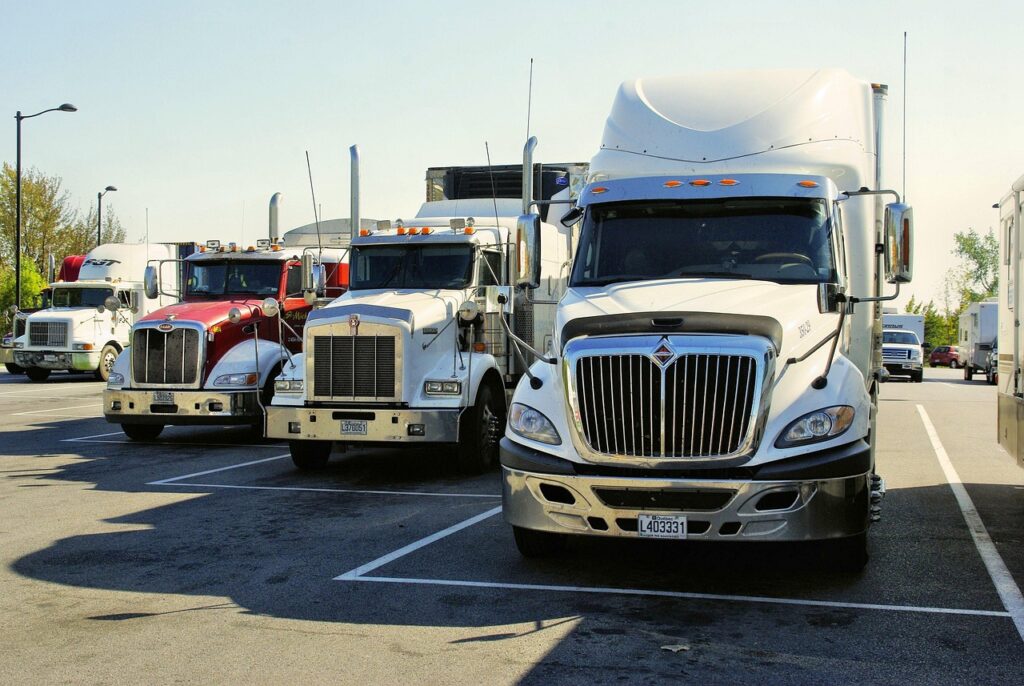
New trucks lined up in a lot, ready for purchase

Yes, you can buy and own a semi truck without a commercial driver’s license (CDL). You just can’t drive it on public roads.

Whoever gets behind the wheel needs a valid CDL. That person doesn’t have to be the owner.

Owning a truck you don’t drive is legal, but financing gets tougher. You also take on hiring, insurance, and compliance.

Do You Need a CDL to Buy a Semi Truck?

No. Federal CDL requirements apply to the person driving the truck. Nothing in the licensing requirements stops you from buying or titling one.

Federal regulations set the license classes for commercial motor vehicles. A Class A CDL covers combinations with a gross combination weight rating of 26,001 pounds or more.

That applies when the towed trailer has a GVWR over 10,000 pounds (49 CFR 383.91). Nearly every tractor-trailer on the road falls into this class.

When You Don’t Need a CDL at All

Trucks under the federal weight limit don’t need a CDL. A single truck with a gross vehicle weight rating (GVWR) of 26,000 pounds or less doesn’t need a CDL. The exception is hauling placarded hazardous materials or 16 or more passengers.

That’s why most 26-foot box trucks don’t need one. Check the GVWR on the door sticker before you assume. State requirements can differ for farm vehicles, so check yours too.

A recreational vehicle is a separate case. A motorhome with sleeping and cooking facilities, kept for private use, usually isn’t a commercial vehicle.

Most states don’t require a CDL to drive one. Some ask for a special non-commercial license for heavy RVs.

Federal guidance also lets states extend CDL rules to RV drivers (FMCSA).

Can You Run a Trucking Company Without a CDL?

Yes. Plenty of owners handle dispatch, sales, and billing while hired truck drivers handle the road.

Here’s how it works: You put up the money and run the business side. Your partner or hired driver holds the CDL and runs the loads. You’ll need qualified drivers, and you’ll have to ensure compliance with federal and state rules.

Your Responsibilities as the Owner

If you run under your own authority, you’re the motor carrier, even with just one truck. That makes you responsible for:

  • Checking every driver’s CDL, driving record, and DOT medical card
  • Tracking when each driver’s CDL expires and when their medical card is due for renewal
  • Making sure drivers stay within hours-of-service limits and record them on electronic logging devices (ELDs)
  • Running drug and alcohol testing
  • Keeping the truck inspected, repaired, and maintained

A weigh station stop can turn into a roadside inspection. Any violations your driver gets go on your carrier’s safety record.

Driver rules have tightened since 2025. The Federal Motor Carrier Safety Administration (FMCSA) now places drivers who fail English proficiency checks out of service.

A February 2026 FMCSA rule also limits non-domiciled CDLs to H-2A, H-2B, and E-2 visa holders. Check both before you hire.

What It Costs to Own a Truck You Don’t Drive

Owning without driving adds payroll, insurance, and registration costs from day one. Count all three in your start-up costs before you buy your first truck.

Driver Pay

Driver pay is your biggest new expense. In 2025, carriers paid 81.8 cents per mile in driver wages, according to the American Transportation Research Institute (ATRI). Benefits added another 21 cents per mile (Transport Topics).

At those averages, a driver running 100,000 miles a year costs you about $102,800.

Insurance

Personal auto insurance won’t cover a commercial vehicle. Most owners need primary liability, physical damage, and cargo coverage.

For-hire carriers hauling general freight in trucks over 10,000 pounds need at least $750,000 in liability coverage.

Insurers will check your driver’s record, since you’re not the one driving. That record, as well as your cargo and routes, affects commercial truck insurance costs.

insurance policy

Operating Authority

To haul freight for pay in interstate commerce, you need a USDOT number and an MC number. Most people just call the first one your DOT number.

FMCSA moved registration to its new Motus system on May 19, 2026.

Getting your MC authority also takes an insurance filing and a process agent (BOC-3) on file.

Can You Finance a Semi Truck Without a CDL?

Yes. You can finance a semi truck without a CDL, but fewer lenders offer it. You’ll also likely need a bigger down payment.

Lenders care most about who’s driving and how the truck will earn. Expect lenders to ask for:

  • A named driver with a valid CDL and a clean record
  • A larger down payment than a CDL holder would need
  • A business plan showing how the truck will earn
  • Your credit history and bank statements
  • An insurance quote and the truck’s specs

Semi-truck financing requirements vary by lender, so ask for the full list before you apply.

Co-Borrowing With a CDL Holder

A common route is signing the loan with a CDL holder who commits to driving. Both of you are then on the hook for the full debt. If the driver quits or loses their license, you still owe every payment while the truck sits. Your best bet is to line up a backup driver before you sign.

SBA and Bank Loans

If your credit and business history are strong, SBA-backed loans are another option. Expect more paperwork and a longer wait for approval.

When Buying Without a CDL Doesn’t Make Sense

Buying without a CDL is risky if you’re missing experience, cash, or a reliable driver.

  • No industry experience: Freight rates, driver turnover, and compliance can sink a new owner fast.
  • Thin cash reserves: One big repair or a week without a driver can wipe out a month’s profit.
  • No reliable driver: A parked truck earns nothing while the loan payment keeps coming.

In these cases, get some experience or build your cash reserves before you buy.

Happy professional truck driver driving his truck and looking at camera.

Conclusion

You can legally buy a semi truck without a CDL. Success depends on a reliable driver, enough cash, and a plan for compliance.

Treat the purchase like starting a trucking business, and budget for driver pay, insurance, and repairs before you sign.

If you’re planning to drive the truck yourself, earning your CDL first gives you the most financing options.

At Mission Financial Services, a current CDL is one of the documents we ask for when you apply. Our semi truck financing works with first-time buyers and owners with less-than-perfect credit.

Once your CDL is in hand, start your credit application to see what you qualify for.

Frequently Asked Questions

Can an LLC own a semi truck without a CDL?

Yes. An LLC can own a semi truck, as long as its drivers hold the right CDL and endorsements. An LLC can also limit your personal liability, though lenders may still ask for a personal guarantee. Limited liability is why many owners choose an LLC as the business structure for a trucking company.

Can I hire a driver after buying a semi truck?

Yes. But lenders and insurers may want your driver named before funding or coverage starts.

What happens if someone drives a semi without a CDL?

It’s illegal, and state laws set the penalties for the driver. The same goes for hauling a load without the endorsement it needs, like hazmat or tanker. Federal rules let FMCSA penalize a carrier that knowingly allows it (49 CFR 383.53). It can also put your insurance coverage at risk.

What credit score do you need to buy a semi truck?

There’s no single minimum. Each lender sets its own. At Mission Financial, we look at your overall credit, not just the score, and we offer bad credit loans.

Should I get a CDL anyway?

If you can, it helps. A CDL opens up more financing options and lets you cover shifts when a driver calls out. Earning your own CDL license takes a knowledge test, a skills test, and entry-level driver training. Test in a truck with air brakes, or your CDL will carry an air brake restriction, which will keep you out of nearly every semi. People often call it an air brake endorsement, but federal rules treat it as a restriction.


documents required for commercial vehicle loan

Documents Required For A Commercial Vehicle Loan (The Ultimate Guide)

documents required for commercial vehicle loan

Are you wondering about the documents required for commercial vehicle loan applications?

With the trucking industry valued at $800 billion in the US, you might want to hop on board! To kickstart your new venture, you may need to take out a commercial vehicle loan. You’ll need to gather and submit certain documents for your loan to be approved.

In this article, we’ll look at the documents required for a commercial vehicle loan and what you can expect when applying for your commercial vehicle loan. Your commercial vehicles are right around the corner!

Documents Required For A Commercial Vehicle Loan

Most documents required for commercial vehicle loans are fairly standard. However, there are extra documents you’ll need to provide that are specific to a commercial loan. The following list includes documents required for a commercial vehicle loan. Each lender has different requirements, so it’s essential to consult them.

Let’s take a look. Your vehicle finance journey starts here!

Personal Details

  • Personal identity: Your identity document is a requirement by law. You can use your driver’s license, passport, or another government-issued identity document. Your document needs to show your photograph and your name.
  • Proof of residence: This is to verify and prove your residency address. It’s also used for security purposes to prevent fraud. You can include your rental agreement or your utility bill as proof.

documents

  • Commercial driver’s license: To finance commercial vehicles, you might need to provide your CDL. This proves that you (or your partner) can drive the vehicle.

Income And Business Details

Proof of income and employment: Your lender will want to see that you can repay your loan. You might need to provide your payslips for three months, six-month bank statements, and an employment contract to prove your income.

  • Proof of business ownership or a business plan: Showing business ownership or a business plan when starting your own trucking business will indicate how the vehicle will benefit you.
  • Down payment: Providing proof of your down payment to your lender is crucial. Some lenders have a minimum amount that you’ll need to provide. How much you put down also determines your repayments.
  • ITR proof: You may need to provide an updated ITR document alongside the documents required for commercial vehicle loans.
  • Loan repayment track: If you have any existing loans, it is a good idea to provide evidence of your repayments.
    Extra Documentation
  • Application form: Each lender has its own loan application form to fill out. Find out from them which document applies to your commercial truck loan application. You’ll probably need to provide two passport-size photographs with your application to finance commercial vehicles.
  • Proof of experience: If you’re a first-time buyer, you’ll need to provide evidence of your experience with commercial vehicles.
  • Vehicle details: If applicable, and you have a vehicle you’d like to buy, providing valuation documents and vehicle details is important.
  • Vehicle insurance: If you have an existing fleet, you can provide details of your insurance to cover accidents and repairs.

papers

Do You Need A Lawyer To Review The Documents?

While having a lawyer review the documents required for a commercial vehicle loan is not always necessary, it can be helpful.

A lawyer can help you to ensure that all the documents are prepared correctly and meet all the legal requirements. They can also help ensure that the loan is structured in a way that will benefit you. It will be helpful to have a lawyer review documents required for a commercial vehicle loan if the loan is complex.

However, as much as having a lawyer can be beneficial to your loan application, it’s an extra expense on top of the loan. So, there’s a tradeoff. Make sure you vet the lender you choose to go to, to ensure they are trustworthy. A company like Mision Financial Services wants the best outcome for both parties and will work to ensure you understand the entire loan process.

Commercial Truck Financing

Commercial truck financing will allow you to purchase trucks for business purposes. These vehicles include semi-trucks, box trucks, and flatbed trucks.

It’s a great option if you’re looking to buy your first vehicle, or add to your fleet. A loan term typically ranges from 24 to 72 months. The interest rates you’re offered will depend on your creditworthiness, the value of the truck, and your lender’s policies.

If you’re looking for commercial truck financing, keep reading to determine if you’re eligible for a loan.

Requirements For A Commercial Truck Loan

To qualify for a commercial vehicle loan, you’ll need to meet specific criteria set out by your lender. Each lender will indicate the documents required for commercial vehicle finance. Typically, lenders consider the following:

  • Creditworthiness: Lenders will check your credit score. A good credit history can improve your chances of getting a loan. Many companies are willing to help those with subpar credit scores.
  • Financial income: Your business or individual finances need to be in check. Lenders want to see if you’ll be able to repay the loan.
  • Experience: The more experience you have in driving a commercial vehicle, the better your chances are. If you own a business – the longer it’s been around, the better!
  • Permanent residence: You’ll need to show permanent residence status in your country of application.
  • Down payment: Every company has a different percentage required for a down payment for your vehicle loan. What you can provide determines your eligibility. Your credit rating may also affect this.
    Understanding loan eligibility requirements with your lender is crucial. The company you choose may require additional information and documentation.

How To Qualify For A Loan

We’ve discussed all of the important information you need to know about requirements. So, how do you qualify for a loan?

Shaking hands

Depending on your credit score, it may take longer to qualify. Below are some factors that you’ll need to take into consideration.

  • Credit score: Try to increase your credit score by paying accounts on time and not missing payments. Luckily, some companies can assist you even if your credit score is low.
  • Business plan: This step is similar to a business loan! If you’re starting your own company, have an effective business plan to help you secure your first commercial truck loan.
  • Income: If your income doesn’t meet your specific loan requirement criteria, you’ll need to increase it to be able to afford loan repayments. You’ll need to show a stable income through six months of bank statements.
  • Experience: If you’re relatively new to the trucking scene, you may need more experience before getting approved for a loan. If this is the case, gaining more experience as a commercial vehicle driver will help.
  • Down payment: Every company has its requirements for a down payment. Having the necessary funds is crucial to getting your loan approved.

Ultimately, you will have to ensure that you meet all the requirements above to qualify for your commercial truck loan. Some cases require extra time, effort, and savings before you can be approved.

How To Apply For A Loan

The application process may differ from company to company. The circumstances surrounding the loan may also impact the time to approval. For example, if the lender requires additional information to process your loan application.

In a nutshell, the application process can be simplified as follows:

  • Choose your lender: Research what each option offers. Choosing a lender specializing in commercial vehicle financing is crucial. These companies are usually more flexible in their terms and will understand your business needs better.

Golden piggy bank

  • Gather your documents: Once you’ve found your ideal lender, it’s time to gather all the documentation required for the application process.
  • Complete the application form: When you’ve gathered all your documents, you can fill out and hand in the application form.
  • Wait for approval: Your lender will review your application and the supporting documents and decide whether to approve the loan. They may also ask for any additional information.
  • Sign the loan contract: Once approved, your lender will provide you with a loan agreement to review and sign. This document will detail the terms of the loan, including the interest rate, the loan amount, and the schedule for monthly repayments.
  • Provide collateral (if required): Some lenders may require collateral, such as a lien on the vehicle, or a personal guarantee, to secure the loan.
  • Receive the loan: Once all the paperwork is complete, the loan will be granted, and you’ll receive the money to purchase your commercial vehicle!

When applying for a commercial vehicle loan, it’s crucial to get as much information as possible from the lender regarding requirements and eligibility. The more you can find out and get done, the smoother the loan application will go.

Final Thoughts

Commercial truck financing is a top choice for those buying their first vehicle or adding to their existing fleet. Ensure that you understand the documents required for commercial vehicle loans. These may be specific to each lender, so do your research!

Gathering these documents will ensure a smooth and quick application process. If you prepare in advance, you’ll be in your new vehicle in no time!

How to start a semi truck business

How To Start A Semi Truck Business | 8 Steps

How to start a semi truck business

The commercial trucking industry is a vital part of the US economy. Trucks move around 72% of all goods in the country. Starting a semi-truck business can be an excellent opportunity!
With the proper preparation and planning, a semi-truck business can be a successful and rewarding venture.

Let’s talk about how to start a semi-truck business.

Semi Truck Business Success | 8 Steps

Step 1: Research The Semi Truck Industry

Before you start a trucking company, it’s crucial to research the industry and understand the market. Look at the trends, the competition, and the potential customers. Understanding the industry will help you make informed decisions and ensure your business is booming.

For example, when researching the industry, you can start by looking at the current market trends. This can include investigating the demand for trucking services in different regions, the commonly transported goods, and the current rates for trucking services.

By conducting this research, you can better understand the industry and the market. You will be able to identify potential opportunities and challenges and make informed decisions about your business strategy.

Step 2: Create a Semi Truck Business Plan

Once you understand the industry well, the next step is to create a business plan. A business plan should outline your goals and strategies, and the steps you need to take to achieve them. It will also help you secure funding and attract investors.

business plan

A trucking company business plan should include the following key elements:

  • Executive Summary: A summary of the main points of the business plan, including the purpose of the business, the target market, and the critical strategies for achieving success.
  • Company Description: A description of the company, including the legal structure, ownership, and management team.
  • Market Analysis: An analysis of the industry, including the current market trends, the competition, and the potential customers.
  • Services: A description of the services that the business offers, including the types of goods that will be transported and the routes that will be covered.
  • Marketing and Sales: A description of the marketing and sales strategies, including the target market, pricing strategy, and promotional activities.
  • Operations: A description of the day-to-day operations of the business, including the logistics of transporting goods, the maintenance of the vehicles, and the management of the drivers.
  • Financial Projections: Financial projections for the business, including income statements, balance sheets, and cash flow statements from your business bank account.

Step 3: Obtain The Necessary Licenses And Permits

Starting your own trucking business requires obtaining the necessary licenses and permits. These include a commercial driver’s license and the authority to operate as a motor carrier.

For example, you will need to obtain several licenses and permits to operate a semi-truck business. These may include:

  • Federal Motor Carrier Safety Administration (FMCSA) Operating Authority: This is also known as an MC number. This is required for any company that operates commercial vehicles transporting goods in interstate commerce.
  • USDOT Number: This is a unique number assigned by the FMCSA to identify commercial motor carriers.

Man in truck

  • State Operating Permits: Some states also require a separate permit to operate within their borders.
  • Commercial Driver’s License (CDL): Drivers operating commercial vehicles, including semi-trucks, must have a CDL.
  • Vehicle Registration: Each vehicle used in the business must be registered with the state and have proper business insurance.

It’s important to note that the requirements for obtaining licenses and permits may vary depending on the state. It’s also crucial to comply with federal and state regulations regarding safety, insurance, and other operational standards.

Step 4: Secure Funding

Starting a semi truck business requires a significant financial investment, and securing funding is crucial.

Consider options such as traditional bank loans, equipment financing, or working with a lender specializing in the trucking industry.

Mission Financial Services is a preferred loan process agent for national and regional dealership chains and family-owned, independent, and franchised dealerships. They also offer loans to first-time buyers and loans to those with bad credit scores.

For example, if you want to start a semi-truck business with five trucks, you will need to purchase or lease the trucks, trailers, and other equipment. Additionally, you will need to pay for insurance, maintenance, and other expenses.

Starting the business may cost a significant amount, which may not be feasible to cover with personal savings or credit cards. In this case, you’ll need to secure funding through a loan or other financing options.

Handshake

Working with a lender specializing in the trucking industry, such as Mission Financial Services, can be helpful. They understand the specific needs and challenges of the trucking industry.

They may also offer financing options tailored to the needs of trucking businesses, such as loans for purchasing or leasing trucks and trailers or loans for covering operating expenses.

Step 5: Purchase Or Lease Trucks And Trailers

Once you have secured funding, focus on purchasing or leasing trucks and trailers. When it comes to purchasing or leasing trucks and trailers, there are pros and cons to each option.

Purchasing

Pros
  • Ownership: When you purchase a truck or trailer, you own it outright and have the flexibility to customize it to your business’s specific needs.
  • Equity: As you pay for a purchased truck or trailer, you build equity in the equipment.
  • Tax deductions: You can take advantage of tax deductions for the equipment, such as depreciation.
Cons
  • Upfront cost: Purchasing trucks and trailers requires a significant upfront investment, and it may not be feasible for businesses with limited capital.
  • Maintenance costs: As the trucking business owner, you are responsible for all maintenance and repairs, which can be expensive.
  • Depreciation: The value of the equipment will depreciate over time, which can impact the resale value.

Leasing

Pros
  • Lower upfront cost: Leasing requires a smaller upfront investment than purchasing, making it more accessible for businesses with limited capital.
  • Lower maintenance costs: Maintenance and repairs are often included in the lease agreement, saving money on maintenance costs.

  • Flexibility: Leasing allows you to upgrade to newer equipment more frequently, which can benefit businesses that need to keep up with new technology or regulations.

Cons

  • Lack of ownership: When you lease equipment, you don’t own it outright and may not have the flexibility to customize it to your business’s specific needs.
  • Limited equity: As you make payments on a leased truck or trailer, you don’t build equity in the equipment.
  • Higher costs in the long run: Leasing equipment over an extended period can cost more in the long run than purchasing it outright.

Consult with a transportation consultant or financial advisor to help evaluate your options and make the best decision for your business.

Step 6: Hire Drivers

Even as an owner-operator, a semi-truck business relies heavily on its drivers. Hiring qualified, professional drivers who can ensure the safe and efficient transportation of goods is essential. When hiring drivers, consider the following qualities:

  • Commercial driver’s license (CDL): Drivers operating commercial vehicles, including semi-trucks, must have a CDL.
  • Driving experience: Look for drivers with experience driving semi-trucks and a good driving record.
  • Knowledge of federal and state regulations: Drivers must be familiar with federal and state laws regarding transportation, including hours of service, inspection, and maintenance requirements.
  • Communication skills: Drivers must communicate effectively with dispatchers, customers, and other drivers.
  • Problem-solving skills: Drivers must be able to handle unexpected situations and make quick decisions.

Woman truck driver

  • Physical stamina: Driving a semi-truck can be physically demanding, and drivers must be able to handle the job’s demands.
  • Professionalism: Drivers and owner-operators must professionally conduct themselves and be able to represent the company in a positive light.
  • Safety-minded: Drivers must prioritize safety and follow safety protocols and regulations.

Step 7: Build A Strong Network

Building a solid network of contacts and relationships can benefit your business in the trucking industry.

Here are a few ways to build a strong network:

  • Join industry associations: Joining industry associations such as the American Trucking Association (ATA) can provide opportunities to connect with other trucking professionals and stay informed about industry trends and regulations.
  • Partner with other trucking companies: Consider partnering with other trucking companies to share resources and pool expertise.
  • Develop a good relationship with suppliers: Building a strong relationship with suppliers will help you keep costs down and deliver the goods on time.
  • Provide excellent customer service: Building a solid relationship with customers can lead to repeat business, positive word-of-mouth, and new business opportunities.

Connecting with other trucking companies, suppliers, manufacturers, distributors, and customers can help you gain new business, improve logistics, and stay informed about industry trends and regulations.

Step 8: Keep Accurate Records

Keeping accurate records is essential for the success of a semi-truck business. Here are a few benefits of keeping accurate records:

book keeping

  • Financial tracking: Accurate record-keeping can help you track your income and expenses and monitor the financial performance of your business. You can use this information to make informed decisions about your business and plan for future growth.
  • Compliance with regulations: Keeping accurate records can help you ensure compliance with federal and state laws. This includes keeping track of service hours, vehicle maintenance and inspection records, and driver qualifications.
  • Taxes: Accurate record-keeping can help you file taxes correctly and take advantage of tax deductions.
  • Auditing: Accurate record-keeping is essential. You may be subject to an audit by the Federal Motor Carrier Safety Administration (FMCSA) or other regulatory bodies.
  • Efficiency: Accurate records can help you improve the efficiency of your business. It does this by allowing you to track inventory and deliveries and manage staff and vehicles more effectively.

Final Thoughts

Starting a trucking company requires significant time, money, and effort. Still, it can be a successful and rewarding venture with the proper preparation and planning.

By following these steps and making informed decisions, you can start a semi-truck business that will thrive in the competitive commercial trucking industry in the US.

If you want to start your own trucking company, don’t hesitate to reach out to Mission Financial Services for loans and financing options.

best semi truck seat for bad back

The Best Semi Truck Seat For Bad Back Pain (Top 6)

best semi truck seat for bad back

Do you know that the best semi-truck seat for bad back pain can lengthen your career as a long-distance truck driver?

Great seats can increase comfort, reduce fatigue, and help you focus on the road during long hauls. They can also prevent musculoskeletal pain (MSP), which affects nearly 81% of professional truck drivers. Back pain is the most commonly reported MSP.

There are several semi-truck seat options for avoiding or relieving back pain. Let’s explore the best ones below. This way, you can find the perfect truck seat to protect your back and prolong your health.

Best Semi Truck Seat For Bad Back Pain

You cannot prevent or relieve back pain effectively without eliminating the causes. In this list, we considered brands that can deal with the causes of back pain.

We looked into brands that focused on these two factors:

  • Good posture: Poor posture behind the wheel is one of the top causes of chronic back pain in truckers. It’s important to use a truck seat that provides extra support for different parts of your body. We considered seats with a unique shape that can provide proper lumbar and upper back support. We also looked at the firmness of the truck seat cushion.
  • Road-shock absorption: Another major cause of bad back pain in truck drivers is sudden, jolty movements due to road shocks and vibrations. These strain your spinal ligaments and back muscles, creating painful pressure points along your spine and the back of your leg. Most air-ride seats can dampen road shocks and vibrations effectively. They also adjust to your body weight. You’ll experience a comfortable, smooth ride for the long hours you’re on the road.

In addition to the above, you should consider the following when picking the best semi-truck seat for bad back pain:

  • Height: Ensure your seat can accommodate your size and fit into your truck perfectly.
  • Adaptability and upgrades: Find a seat with adjustable features and possible upgrades like adjustable armrests, ventilation systems, and so on.

Here are our top 6 top picks for semi-truck seats for bad back pain.

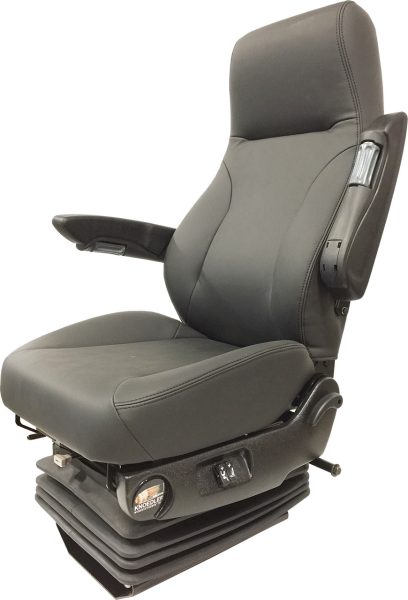
1. Knoedler Truck Seats (Air Chief)

Knoedler

Credit: Knoedler

Knoedler Manufacturing is well-known in the trucking industry for its comfortable, U-shaped seats. Good examples include the Knoedler air chief, power chief, low rider, and extreme low rider seats. All of these seat series provide superior lumbar support. They can reduce muscle soreness and relieve lower back pain.

If we had to pick one, it would be the Knoedler air chief series. This is for maximum back comfort and safety when riding for long periods. This semi-truck seat features a contoured surface and back cushion to relieve tailbone and lumbar pain.

It has a slanting, U-shaped design in the middle to reduce pressure on the back of your legs. You can extend and tilt the seat cushion into different positions. This might be the best option if you’ve been struggling with herniated discs or chronic sciatica pain.

This seat also has an air-suspension system with a bar that moves to encourage proper seat belt use. The adjustable back recline system allows the seat to recline back. You can adjust the headrest to improve your posture at any time. This is crucial to help you maintain focus on the road.

All the optional upgrades that come with this seat make it one of the most luxurious semi-truck seats. The following upgrades stand out:

  • Memory foam upgrade.
  • 23” wide cushion upgrade.
  • Massage system.
  • Heating and cooling in backrest and seat cushions.

2. National Commodore Seats

National commadore

Credit: National

If you’re looking for truck seats designed specifically for lower back pain relief, the National Commodore seats are a win.

They have advanced lumbar support technology, triple-chamber air lumbar support, and a back cycler system to help you minimize back pain and fatigue.

The back cycler system relieves muscle tension and ligament strains while improving blood circulation.
It also prevents spinal disc degeneration. Because of this, many truck drivers prefer the National Commodore seat as the long-term solution for avoiding back pain.

Truck drivers also appreciate this seat because of its inbuilt armrests, large back, and seat cushions.
Generally, the Commodore seat options are some of the best truck seats for reducing road shock and vibrations. Their isolating air suspension feature offers a smooth driving experience.

3. ISRI Truck Seats Series

ISRI 5030or880

Credit: Suburban

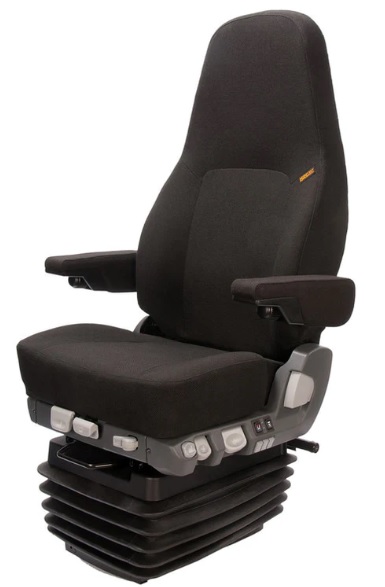
ISRI has a range of truck seats with an ergonomic design to provide maximum back support. The best semi-truck seat for bad back pain within the series is the ISRI 5030/880.

You can choose between the ISRI 5030/880 premium and elite seat options. Both options have similar features, like the lower and upper lumbar support systems. These ensure proper back support during long hauls.

They also have high-density seat cushions with length adjustments for added comfort. Other notable features of the 5030/880 premium and elite semi-truck seats include:

  • Multi-position tilt.
  • Horizontal slides.
  • Air-suspended height adjustment.

These features make both options some of the best semi-truck seats for shorter drivers. However, if you’re looking for a truck seat with a heating or ventilation system, settle for the ISRI elite option.

The elite option also has a map pocket, which most truck drivers welcome as added space. More space provides room to organize your truck, although you can always get a good seat organizer instead.

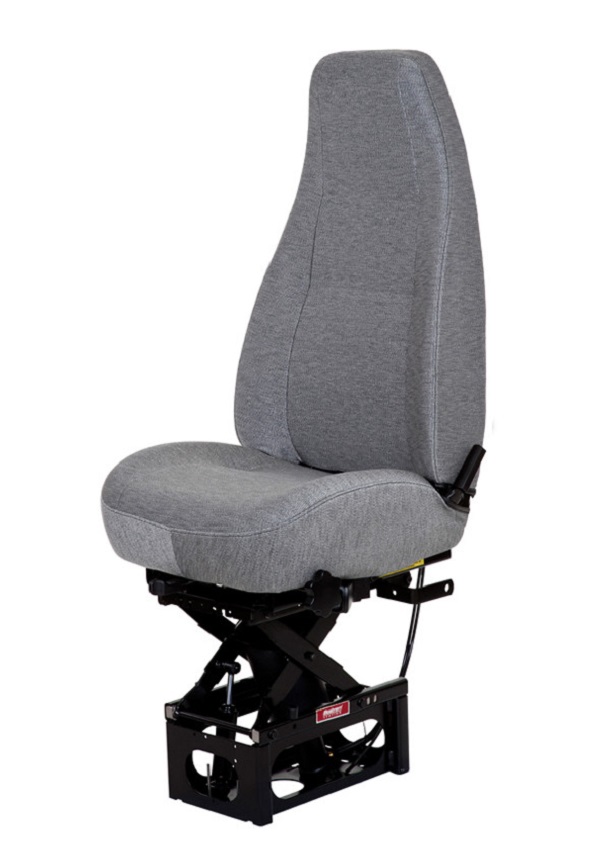
4. Bostrom Talladega T Series

Bostrom

Credit: Bostrom

If you’re looking to ease chronic back pain, you can never go wrong with the Bostrom T series. The seats have a flex support cushion system. These superior seat cushions can:

  • Reduce back compressions.
  • Prevent muscle stiffness.
  • Promote lumbar support.

The flex support system also ensures any movements you make don’t interfere with the back support offered by the seat cushions.

This works well with the scissor action suspension feature, which provides even weight distribution to give you a stable driving experience.

Another Bostrom semi-truck seat worth mentioning is the latest Wide Ride+Serta truck seat.

It combines Bostrom’s truck seat technology and Serta’s gel memory foam to deliver maximum back support.

The gel memory foam cushion is a comfortable cushion that prevents muscle stiffness. It does this at a higher level than a standard or premium memory foam cushion. It eases sciatica and tailbone pain.

It also provides an unmatched cooling ability for proper heat transfer away from your body when needed.

This seat features two climate options. A seat heater and a water-resistant, heat ventilation, leather-only system ensure you remain comfortable. You can experience comfort even when riding under harsh weather conditions. Learn more tips for winterizing your semi-truck to ride safely during winter.

Wide Ride+Serta gives you several optional upgrades like long armrests and cushion tilts to personalize the seat further.

5. Sears Atlas DLX Semi-truck Seat

Atlas-II

Credit: Sears Seating

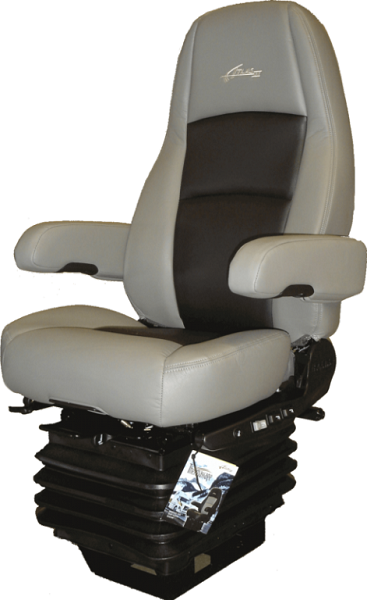
The Sears Atlas II semi-truck seat considers the natural shape of your spine to protect your back.

This is an ergonomic 22-inch wide seat with a standard back and high back cushion to help you ride pain-free for long periods.

The seat has perfect contours and a U-shaped cushion for extra support and maximum comfort. Its toggle link air suspension feature makes it stand out as one of the best semi-truck seats for back pain.

This feature provides superior lateral stability to minimize side-to-side rocking. It’s perfect for preventing and easing tailbone pain.

Sears Atlas II features quad-chamber air lumbar support and a seat cushion tilt or extension system to reduce sciatica pain.

If you want to upgrade this seat, consider getting a map pocket. You can also look at additional armrests or more cushion features. These include heating and massage options for enhanced relaxation.

6. Bose Ride Truck Seat

Bose

Credit: Bose

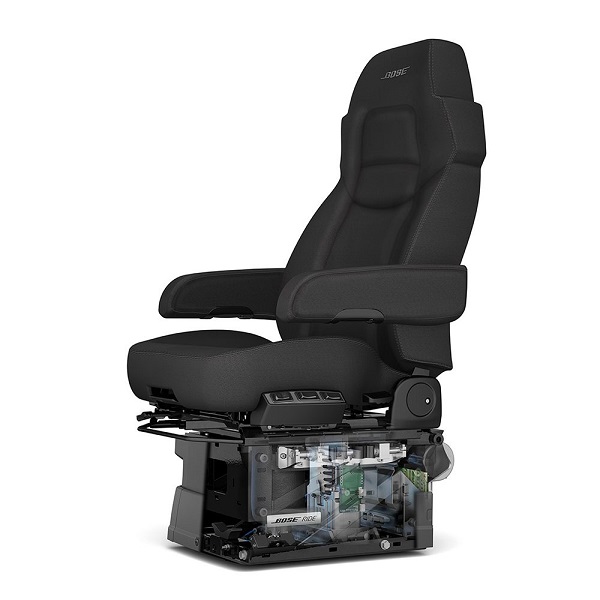
Bose Ride meets all the requirements for the best semi-truck seat for bad back pain. It has advanced technologies built into its suspension base to neutralize all road shocks and vibrations.

This technology senses, analyzes, and counteracts any bumps or jolts. So, you remain comfortable and pain-free throughout your ride.

The seat also has several adjustable features to promote proper posture and reduce fatigue. These include:

  • Individually controlled lumbar supports for the lower and upper lumbar region.
  • An adjustable back recline system that allows the seat to recline up to 26 degrees.
  • A three-position ride control selector.
  • Built-in armrests with height adjustment controls.

This seat cushion is high-density, U-shaped, and 22 inches wide. The cushion features allow Bose Ride to accommodate truck drivers of different builds and body sizes.

You can adjust the cushion to your preferred height and tilt angle for increased comfort and focus when riding for long hours.

Bose Ride is your answer if you’re looking for faster recovery from pain, as well as maximum comfort and safety.

Final Thoughts

Getting the best semi-truck seat for bad back pain is a great investment for any truck driver. It improves your health, helps you put in more miles, and lets you enjoy your career. With the options above, choosing the best seat to meet your needs shouldn’t be a hassle!

You may also want a good seat cushion, with an ergonomic wedge shape, to go with the seat you choose. Our article on the best semi-truck seat cushions can help you find the perfect cushion for any new seat!

can i drive a semi truck without a cdl

Can I Drive A Semi Truck Without CDL?

can i drive a semi truck without a cdl

“Can I drive a semi without a CDL?” It’s a question we hear often, but the answer isn’t straightforward. In most cases, no. If you’re operating a commercial vehicle on public roads, you need a commercial driver’s license (CDL).

The confusion comes from a few narrow exceptions and different state rules. Some situations allow you to drive without a CDL, but they’re limited and often misunderstood.

To clear up the confusion, let’s break down when you can and when you can’t, as well as what it takes to become a professional truck driver.

Can You Drive a Semi Without a CDL?

Yes, but only in some situations.

If the vehicle qualifies as a commercial motor vehicle (CMV), federal law under the Federal Motor Carrier Safety Administration (FMCSA) requires you to have a valid commercial driver’s license (CDL) to operate it.

These rules are defined under 49 CFR Part 383, which outlines CDL requirements for drivers of commercial vehicles.

At a minimum, you need a CDL if the vehicle:

  • Has a gross vehicle weight rating (GVWR) of 26,001 pounds or more
  • Is used in interstate or intrastate commerce
  • Transports goods, passengers, or hazardous materials

State laws follow these federal standards and may add their own requirements, but they don’t override them.

The key factor is how the vehicle is used. If you’re involved in commercial activity or operating a truck above federal weight thresholds, you need a CDL in almost every case.

Truck dashboard

When Can You Legally Drive a Semi-Truck Without a CDL?

There are a few situations where you can legally drive a semi without a CDL, but they don’t apply to most truck drivers.

Private Property Use

You don’t need a CDL license to drive semis or any other truck inside your property. This includes controlled environments like private yards, warehouses, or farms.

As long as you’re not operating on public roads, standard licensing requirements don’t apply in the same way.

Personal Use (Non-Commercial Driving)

If a vehicle meets the definition of a commercial motor vehicle (CMV), you can only drive it without a CDL if it’s used strictly for personal, non-commercial purposes. You’ll still need a valid driver’s license, but it doesn’t have to be a CDL.

This is where many drivers get confused. “Personal use” is defined very narrowly.

The FMCSA considers commerce to include any transportation that crosses state lines or affects interstate movement. Because of that, activities that seem personal can still qualify as commercial.

For example, driving an empty semi-truck across state lines for repairs or maintenance may feel like personal use, but it’s still considered interstate commerce. In that situation, a CDL is required.

CDL Exemptions

Some drivers are exempt from CDL requirements under federal or state law, depending on how the vehicle is used.

Common examples include:

  • Drivers operating military vehicles
  • Emergency service operators
  • Certain recreational vehicle (RV) drivers
  • Farm vehicles transporting agricultural products

These exemptions are limited and don’t apply to most commercial driving situations. Requirements can vary by state, so always confirm the rules where you’re operating before assuming you qualify.

Can I Buy A Semi Truck Without CDL

What Happens If You Drive Without a CDL Illegally

Driving commercial vehicles without a valid CDL can lead to major penalties. The penalties depend on your state, vehicle type, employer, and whether an accident occurred.

Common consequences include:

  • License suspension: You could lose driving privileges for months or longer, especially if you knowingly operated a commercial truck without the right license or endorsements.
  • Fines for the driver and employer: Drivers can face expensive fines, and a trucking company may also face penalties if it allows an unlicensed or improperly licensed employee to operate.
  • Out-of-service orders: Enforcement officers can stop the vehicle and remove it from service, which delays the load and may cost the business money.
  • Criminal charges after an accident: If a crash causes property damage, injuries, or worse, driving without a CDL can make the legal consequences much more serious.
  • Insurance and claim problems: An insurance company may review whether the driver was properly licensed. If not, the claim can become harder to resolve.
  • Job loss and hiring issues: Most employers require a valid CDL before they’ll hire a driver. A violation can damage your record and limit future trucking opportunities.

These penalties can follow you beyond one ticket. If you want to build a real career in trucking, staying properly licensed protects your income, your record, and your ability to keep working.

Can You Buy or Own a Semi Truck Without a CDL?

Yes, you can buy a semi-truck without a CDL. Ownership and operation are treated differently under the law.

You don’t need a commercial driver’s license to purchase or finance a truck. However, you cannot legally operate it for commercial purposes unless you have the proper CDL and endorsements.

This is common for business owners building fleets and for future owner-operators preparing to enter the industry.

Money

How to Get a CDL License

In most states, getting a CDL license is straightforward. The exact process depends on your state, but most drivers follow the same basic path.

1. Meet the Basic CDL Requirements

Most states require you to be at least 18 to drive a commercial vehicle within your state and 21 to drive across state lines. You’ll also need a valid standard driver’s license, proof of identity, proof of residency, and a clean enough driving record to qualify.

2. Complete Entry-Level Driver Training

If you’re getting a Class A CDL or Class B CDL for the first time, you’ll need training from a CDL training school. This training covers vehicle inspections, safe operation, backing, shifting, coupling, air brakes, and road driving.

3. Pass the Knowledge Test

Before you can drive with an instructor, you’ll need to pass the written knowledge test for your license class. You may also need extra tests for air brakes, combination vehicles, or hazardous materials if your future job requires those endorsements.

4. Get a Commercial Learner’s Permit

After passing the knowledge test, you’ll receive a commercial learner’s permit. Most drivers must hold the permit for at least 14 days before taking the skills test. During this period, you can practice with a properly licensed CDL driver in the vehicle.

5. Pass the CDL Skills Test

The skills test usually includes a pre-trip inspection, basic vehicle control, and an on-road driving test. You’ll need to show that you can inspect the truck, handle turns, shift properly, back safely, and operate without creating risk for other drivers.

Eye test

6. Consider Endorsements

Endorsements expand what you can legally haul or operate. Common examples include an air brake endorsement, tanker endorsement, doubles/triples endorsement, passenger endorsement, and hazardous materials endorsement.

The right endorsements can help you qualify for better-paying truck driving jobs.

Conclusion

You can drive a semi-truck without a CDL, although you’ll have to be cautious to do so legally.

In real-world trucking, a CDL is required in almost every situation that involves work or public roads. The exceptions exist, but they don’t apply to most drivers.

If you’re serious about getting into trucking, the CDL is your first step. It opens the door to jobs and eventually building your own operation.

Mission Financial Services helps drivers take that next step with commercial truck financing, including owner-operator loans and first-time buyer options. Once you’re properly licensed, having access to financing can help you move from driver to owner and start building your own business.

If you’re ready to take the next step, start your credit application with us today.

Frequently Asked Questions

Can I Drive a Semi Truck Without a CDL?

Yes, you can drive a semi truck without a CDL only in limited situations, such as on private property, for certain non-commercial personal use, or under a legal CDL exemption. In most public-road or commercial situations, you need a valid CDL.

What Weight Requires a CDL?

You generally need a CDL when a commercial motor vehicle has a gross vehicle weight rating of 26,001 pounds or more. You may also need one when towing a trailer over 10,000 pounds if the combined vehicle rating exceeds 26,001 pounds.

Can I Buy a Semi Truck Without a CDL?

Yes, you can buy and own a semi truck without a CDL. However, you can’t legally operate it for commercial use unless you have the proper commercial driver’s license and endorsements.

commercial truck tire financing

How To Go About Commercial Truck Tire Financing

commercial truck tire financing

If you’re looking for commercial truck tire financing solutions, the goal is simple: keep your truck moving and protect your income. For an owner-operator or small fleet, tire failure can mean missed loads, lost revenue, and expensive roadside repairs.

So, financing tires is not about convenience. It is about business continuity. When a blowout or worn tread forces an unexpected replacement, the cost can quickly reach thousands of dollars per truck.

In 2026, rising tire prices, higher labor costs, and tighter supply chains have pushed the investment even higher. A single tire failure can disrupt your schedule, and multiple failures can shut down your company for days.

How Much Do Commercial Truck Tires Cost Today?

Replacing commercial tire sets is one of the largest maintenance expenses truck operators face. A single tire can cost anywhere from $400 to $900, depending on the type and brand. Different positions on the truck also have different price ranges.

Typical averages include:

  • Steer tires: $600–$900 each
  • Drive tires: $400–$700 each
  • Trailer tires: $300–$600 each

A full replacement across a tractor and trailer can easily exceed thousands of dollars. Many trucks have 18 tires, so the total cost of replacing them all at once can range from $6,000 to $12,000.

Additional expenses often include:

  • Mounting and balancing
  • Disposal of old wheels or tires
  • Service labor

Emergency roadside replacements can push the purchase balance even higher because mobile technicians charge premium service fees.

Some operators reduce long-term costs by using retreads on drive or trailer positions. Retreads are typically cheaper than new tires, but they still require proper installation and maintenance.

Truck wheels

How Long Do Commercial Truck Tires Last?

The lifespan of commercial tire sets depends on how and where the truck operates. Under typical conditions, steer tires may last around 100,000 miles, while drive tires may reach 200,000 miles or more with proper maintenance.

Trailer tires often last longer because they experience less steering stress.

Several operational factors affect tire life:

  • Load weight and freight type
  • Road conditions and terrain
  • Tire pressure and inflation management
  • Alignment and suspension condition
  • Driving behavior

Frequent inspections are essential for safety, longevity, and preventing sudden tire failure. Monitoring tread depth and maintaining proper inflation can extend tire life significantly.

For many operators, replacing tires becomes a predictable maintenance investment rather than an emergency expense.

When Financing Tires Makes Financial Sense

Tire replacement is sometimes unavoidable. When several tires fail at once, the upfront payment can strain your operating budget. In these situations, commercial truck tire financing may be worth considering.

Financing can make sense when:

  • Multiple tires fail at the same time
  • You experience an unexpected blowout
  • Your business is in a seasonal slowdown
  • You want to protect working capital

Instead of paying a large purchase balance upfront, financing spreads the cost across manageable monthly payments.

This can mean the difference between keeping your truck running and losing revenue while waiting to gather enough cash for repairs.

Commercial Truck Tire Financing Options

Several financing options are available when tire replacement becomes necessary. Each option serves a different financial purpose depending on your budget, credit profile, and operational needs.

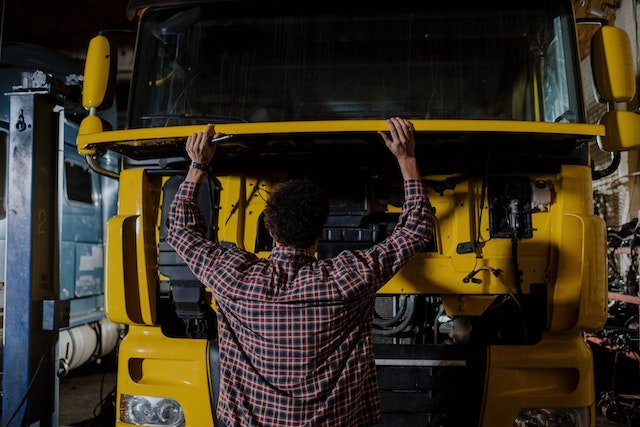
Man crouching at truck

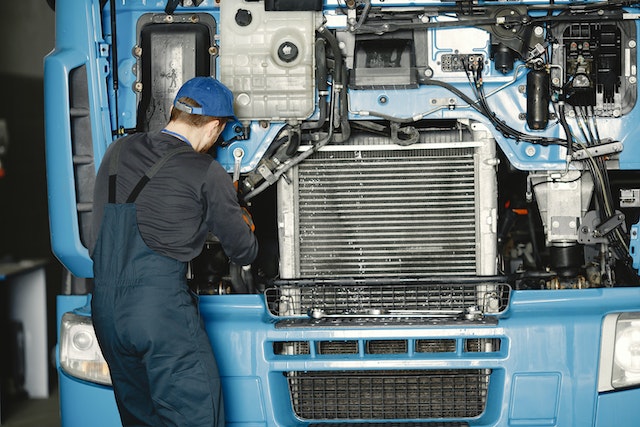
Commercial Vehicle Repair Loans

Commercial vehicle repair loans cover various vehicle repairs – tire problems included. This type of loan allows truck owners to cover repairs immediately and repay the balance over time through scheduled payment plans.

The application process typically includes:

  • A credit application
  • Vehicle information and condition details
  • Business financial documentation, such as bank statements

Lenders review your credit, operating history, and revenue to determine credit approval. Many lenders can issue an instant decision within minutes, allowing drivers to complete repairs quickly and get back on the road.

One advantage of repair loans is flexibility. They can cover more than just commercial tire financing. Many drivers use them for:

  • Brake repairs
  • Suspension issues
  • Transmission services
  • Engine repairs

This allows operators to bundle several maintenance issues into one manageable loan.

Business Line Of Credit

A business line of credit provides a revolving source of financing that can be used for ongoing repairs and maintenance. Instead of taking a new loan every time a repair is needed, the driver can draw funds from a dedicated line of available credit.

This approach is useful for operators who face frequent maintenance costs across their fleet.

Benefits of a business credit line include:

  • Access to funds when needed
  • Flexible repayment terms
  • The ability to reuse the credit after it is repaid

For operators managing multiple trucks, this structure can help maintain steady cash flow while covering maintenance expenses.

Equipment Financing Bundled With Repairs

Sometimes, tire replacement happens at the same time as a truck purchase. In these situations, lenders may allow the driver to include repair costs or accessories within the equipment financing agreement.

Bundling repairs with equipment financing can simplify the payment structure and spread costs across the full financing term. This option is especially helpful when purchasing used trucks that need maintenance before going into service.

Truck wheel

Vendor Tire Credit Cards

A commercial tire credit card is another option offered by some tire retailers. These cards often provide quick credit approval and are accepted by participating tire shops or merchant service providers.

However, many of these cards include promotional balance structures. If the purchase balance is not paid in full within the promotional period, interest may be charged to your account from the purchase date.

Because of this, vendor cards are often best used for smaller auto repair purchases rather than major repairs.

What Lenders Look at When Financing Repairs

When reviewing a commercial truck tire financing application, lenders evaluate several financial indicators.

Key factors include:

  • Credit score and history
  • Time in business
  • Revenue and operating income
  • Existing debt obligations
  • Vehicle condition

Strong financial records and steady income improve your chances of credit approval. However, many lenders still offer flexible financing options for drivers with lower credit scores. Preparing documents before you apply can speed up the approval process.

How Tire Financing Affects Your Monthly Cash Flow

Unexpected repairs can disrupt cash flow for trucking businesses. Paying the full cost of tire replacement upfront may reduce available money for fuel, permits, tolls, and other operating expenses.

Financing spreads that expense across predictable monthly payments. For example, a $4,000 repair might require a manageable minimum monthly payments instead of a single large withdrawal from your business account.

This approach allows operators to maintain operating capital while continuing to generate revenue. And for many drivers, preserving working capital is just as important as controlling repair costs.

pexels-craig-adderley-2449454

Is It Hard to Finance Commercial Truck Tires?

It doesn’t have to be. There are several solutions for financing commercial truck tires on credit.

Approval requirements vary by lender and product. If you have strong credit and steady revenue, you may qualify for lower interest rates and longer repayment terms. If your credit is weaker, you can still have options, but you may see tighter terms, a higher down payment, or a shorter repayment window.

Working with a trucking-focused financier can also make the process smoother because they understand how repairs affect your ability to run loads.

Mission Financial Services, for example, works with owner-operators and small fleets on commercial vehicle financing and repair-related funding. You can handle necessary tire replacements without stalling your operation.

Planning ahead usually leads to better financing outcomes than applying during an emergency breakdown, especially when you need same-day service, and you’re facing roadside premiums.

How to Avoid Emergency Tire Financing

Preventative tire maintenance can significantly reduce the likelihood of emergency tire replacement. Many fleets follow routine inspection schedules to identify issues before they cause downtime.

Effective preventative practices include:

  • Monitoring tread depth regularly
  • Maintaining proper tire pressure
  • Rotating tires based on wear patterns
  • Aligning axles and suspension components

Setting aside a monthly maintenance reserve can also help operators handle replacement costs without relying on emergency financing. Preventative planning helps reduce roadside breakdowns and protects revenue.

Conclusion

There are several financing options for commercial truck tires. The right approach depends on your business goals, cash flow, and maintenance planning strategy.

For many operators, financing is not just about paying for tires. It is a tool for protecting uptime and keeping trucks operating safely.

Planning for tire expenses the right way helps you stay compliant, profitable, and ready for the next load.

If you’re dealing with unexpected tire replacement or other truck repairs, Mission Financial Services can help you secure financing to cover the cost and keep your truck working.

Start your credit application today to explore commercial truck repair financing options designed for owner-operators and small fleets.

Frequently Asked Questions

Can You Finance Commercial Truck Tires?

Yes. Several financing options exist for commercial truck tire financing, including repair loans, credit lines, and vendor financing programs.

How Much Does It Cost to Replace Semi-Truck Tires?

The total cost depends on the number of tires replaced. A full tractor replacement can exceed several thousands of dollars once labor and installation are included.

Are Tire Credit Cards Worth It?

A commercial tire credit card can be useful for smaller repairs. However, drivers should carefully review terms, including deferred interest structures.

Should I Finance Repairs or Pay Cash?

The decision depends on your financial situation. Paying cash avoids interest, while financing protects working capital and may help maintain steady business operations.

Archives

Sign Me Up!

Stay up to date with the latest news in the commercial trucking industry.

Contact Us
close slider