
Office: (404) 975-4800

Safety

ice road trucking

A Guide To Ice Road Driving For Semi Trucks

ice road trucking

Ice road trucking pushes commercial driving into some of the harshest operating conditions on the planet. Drivers haul fuel, food, mining equipment, and industrial freight across temporary winter roads built over frozen lakes, rivers, and remote terrain.

These routes only operate for part of the year, but they play a critical role in keeping isolated communities and industrial operations supplied during the winter months.

For owner-operators and fleet managers, ice road driving demands far more than standard winter driving experience. Extreme cold affects traction and overall vehicle reliability. Drivers also need the right equipment, route knowledge, and preparation to stay safe while moving freight across unstable frozen surfaces.

That’s why we’re here to share tips about handling frozen routes, because even one mistake can create major operational risks.

What Is Ice Road Driving for Semi-Trucks?

Ice road driving is when semi-trucks drive on frozen bodies of water, like frozen lakes or rivers, that have turned into solid ice during the winter. These temporary winter roads act as seasonal freight corridors in regions where permanent highways either don’t exist or aren’t practical to build.

Many of these routes only remain open for a short winter window before warmer temperatures weaken the ice. Unlike ordinary snow-covered highways, ice roads are professionally monitored and maintained throughout the season.

Route operators continuously check ice conditions, monitor ice thickness, inspect for pressure cracks, and enforce strict weight restrictions to keep commercial traffic moving safely.

measuring ice

Where Ice Road Trucking Happens

Ice road trucking primarily operates in northern regions where extreme cold creates stable frozen surfaces for part of the year. Some of the most active ice road systems exist in:

  • Northern Canada
  • Alaska
  • The Northwest Territories
  • Remote mining regions
  • Isolated northern communities

In many regions, permanent infrastructure would cost billions to build across remote terrain and large bodies of water. Seasonal winter roads offer a more practical solution for moving heavy freight during colder months.

How Thick Does Ice Need to Be to Drive On?

The minimum ice thickness required to support heavy vehicles is typically around 30 inches. Commercial trucking routes often require significantly more ice monitoring and structural testing than smaller recreational crossings used for ice fishing or light off-road traffic.

Passenger vehicles may safely cross ice at much lower depths under controlled conditions. Many recreational guidelines reference:

  • 4 inches for foot traffic or walking
  • Around 7.5 to 8 inches for lighter vehicles or passenger vehicles
  • 12+ inches for heavy trucks

Greater thickness is a requirement for loaded commercial trucks. A fully loaded semi-truck places enormous stress on frozen surfaces, especially near moving water, shoreline transitions, or areas with underwater currents.

There are also major differences between blue ice and white ice.

Blue ice or clear ice is dense, clear, and structurally stronger. White ice contains air pockets, snow, and impurities that reduce overall strength. Even if two areas measure the same number of inches, their load-bearing capacity may differ substantially depending on ice quality.

Route crews continuously check conditions using:

  • Ice drilling
  • Ground-penetrating radar
  • Sonar systems
  • Thickness probes
  • Load testing
  • Route inspections

Commercial ice roads also enforce strict:

  • Speed limits
  • Axle restrictions
  • Vehicle spacing requirements
  • Cargo weight controls

These operational safety measures help reduce stress waves that can weaken the frozen surface beneath a moving truck. Drivers should always remember that no frozen route is permanently stable because changing temperatures and moving water can alter conditions quickly.

driver isolation

The Dangers of Ice Road Driving

Ice road trucking creates risks that go beyond standard winter driving. Drivers have to adjust for changing ice conditions, limited visibility, extreme cold, and long distances from support.

  • Loss of traction and extended stopping distance: Reduced traction can make a loaded semi hard to control. Drivers should keep steady speeds on ice-covered surfaces, brake gradually, avoid sudden steering or acceleration, and take extra care near curves and frozen lake transitions.
  • Limited visibility: Northern winter routes can bring whiteouts, heavy snowfall, ice fog, blowing snow, and low-light conditions. Auxiliary lighting, reflective markers, GPS, and dispatch communication help drivers stay oriented. When visibility drops, drivers should slow down and pull away from active traffic lanes only when it’s safe.
  • Unpredictable conditions: Ice roads can change quickly because of temperature shifts, snowfall, and moving water. Drivers may encounter shifting ice sheets, pressure cracks, surface flooding, thin sections near currents, or sudden weather changes. Route inspections help, but drivers still need to watch conditions throughout the trip.
  • Driver isolation, slow speeds, and long trips: Ice road driving often means slow speeds, remote routes, and long haul times. Drivers may spend hours away from reliable support while managing fatigue and mechanical concerns. Emergency gear and a semi-truck tool kit are a necessity because a breakdown can quickly become a serious safety issue.

Equipment Needed for Ice Road Trucking

Make sure your truck is equipped with all the right gear. Ice road trucking places extreme stress on both drivers and equipment. Trucks operating in these conditions need specialized cold-weather preparation to remain reliable.

Common ice road equipment includes:

  • Tire chains
  • Heavy-duty winter tires
  • Engine block heaters
  • Fuel anti-gel systems
  • Auxiliary lighting
  • Reflective markers
  • GPS systems
  • Satellite communication equipment
  • Emergency recovery tools

Many drivers also carry cold-weather clothing, backup food supplies, heated gear, portable chargers, and emergency communication devices to help them stay prepared in remote areas.

Some operators also use insulated storage systems and secondary fuel filtration setups to help prevent equipment failures during extended trips across frozen routes.
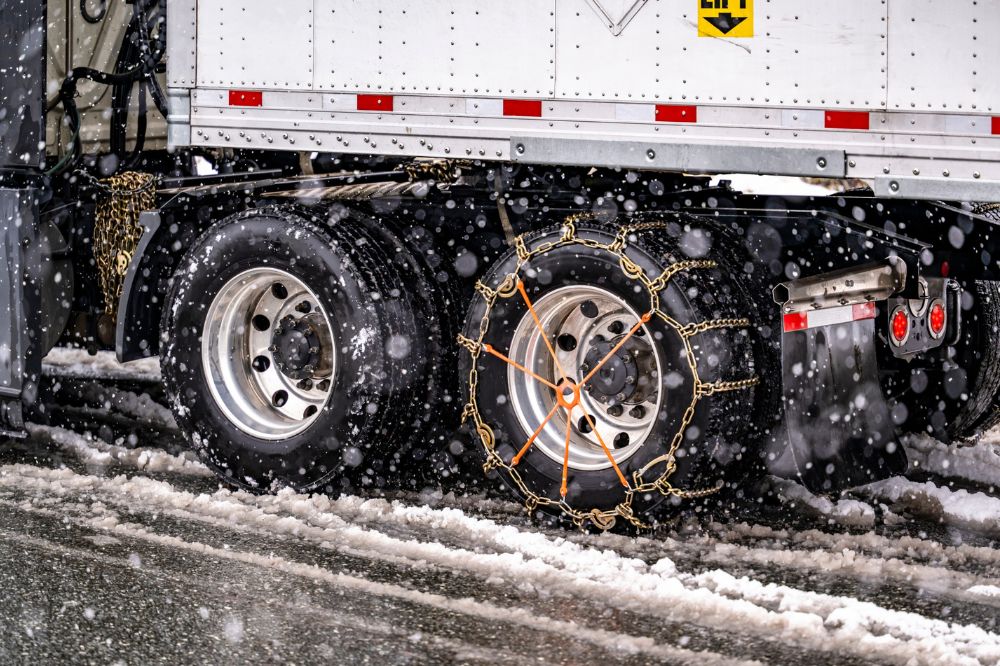
tire chains

Ice Road Truck Driver Requirements

Ice road trucking typically requires more experience than standard over-the-road freight work, which is why they’re some of the highest-paid truck drivers.

Most employers look for drivers with:

  • A valid commercial driver’s license (CDL)
  • Strong winter driving experience
  • Clean driving records
  • Commercial hauling experience
  • Specialized cold-weather training

The physical and mental demands can be significant. Drivers need to be able to remain alert during long trips while carefully monitoring traction, weather conditions, route instructions, and vehicle performance.

Many operations also require drivers to complete specialized ice safety training before operating on active winter roads.

How Much Do Ice Road Truckers Make?

Ice road truck drivers make around $81,820 a year, but bear in mind that it’s often seasonal. Some experienced owner-operators or specialized freight drivers earn more when demand, route difficulty, and contracts line up.

Ice road truck drivers often earn more than standard freight drivers because the work requires winter driving experience, specialized safety training, clean decision-making, and reliable equipment.

Pay may increase with hazard pay, seasonal bonuses, remote operation premiums, or high-priority freight contracts.

Some owner-operators may gross over $100,000 in a strong season, but truck prep, repairs, insurance, and downtime can reduce take-home pay.

Ice Safety Precautions: What to Check Before Driving

Ice road trucking requires constant attention to operational safety and vehicle preparation.

1. Check the Ice Thickness

Before driving on an ice road, always check the ice conditions and thickness. Never assume frozen surfaces are stable simply because other vehicles previously crossed the route.

Professional operators continuously monitor:

  • Route inspections
  • Ice reports
  • Weather conditions
  • Structural testing results
  • Load restrictions

Always follow official route guidance before entering active ice crossings. Local authorities and route operators often publish updated reports to help drivers know which sections remain safe for commercial traffic.

Freight transportation truck on the road in snow storm blizzard

2. Reduce Your Speed

Maintain slow and steady speeds to reduce the risk of skidding on ice or sliding through snow cover.

Smooth acceleration, controlled braking, and consistent speeds help reduce stress on the frozen surface while improving vehicle control. Sudden steering corrections or aggressive braking inputs can quickly destabilize a loaded truck.

3. Know the Route

Familiarize yourself with the ice road route before starting your journey.

Drivers should understand:

  • Planned checkpoints
  • Hazard zones
  • Fuel stops
  • Emergency procedures
  • Weather patterns
  • Dispatch communication protocols

Staying in contact with dispatchers and local route authorities can help drivers respond quickly if conditions change.

4. Safety Equipment

Drivers should always carry:

  • Backup communication devices
  • Recovery tools
  • Emergency lighting
  • Cold-weather gear
  • Extra food and water
  • First aid supplies

Some fleets also require backup GPS systems and emergency locator beacons because remote northern routes can leave drivers hundreds of feet from reliable infrastructure or nearby support.

5. Regular Maintenance

Keep your vehicle well-maintained, including checking tire pressure, ensuring all lights are working, and the brakes are in good condition.

Cold temperatures place additional strain on:

  • Batteries
  • Brake systems
  • Tires
  • Fuel systems
  • Electrical components
  • Air systems

Regular inspections and winterization procedures help reduce the risk of mechanical failures during remote operations.

Drivers should also inspect fuel additives, heaters, and fluid systems before every trip because freezing temperatures can create unexpected failures even in properly maintained trucks.

Many winter driving enthusiasts enjoy learning about ice roads because the conditions are unlike traditional highway freight operations. Still, commercial trucking on frozen roads involves far more planning and operational discipline than recreational driving on a small frozen pond or seasonal trail.

Conclusion

Ice road trucking requires preparation, experience, and a strong understanding of extreme winter operating conditions. Reliable trucks and properly maintained equipment make a major difference in these environments.

From winter-ready components to dependable braking systems, every part of the vehicle needs to perform under extreme stress.

Mission Financial Services helps owner-operators and fleet owners secure financing for dependable commercial trucks built to handle demanding conditions.

Whether you’re repairing equipment or purchasing your next semi-truck, our team can help you explore financing solutions that support long-term reliability and operational performance. Start your credit application today.


defensive driving

The Benefits Of A Defensive Driving Course For Truck Drivers

defensive driving

Driver error is one of the top causes of the 388,000+ truck accidents across the U.S. annually. To reduce the number of truck accidents and keep our roads safe, key stakeholders within the trucking industry, like the National Safety Council, offer defensive driving courses for truckers.

A well-designed defensive driving course for truck drivers provides standard truck-specific defensive driving training to new and seasoned truck drivers. 

Let’s explore the concept of defensive driving, including the benefits of defensive driving courses, to help you understand what you can do to avoid accidents and remain safe behind the wheel.

What Is Defensive Driving?

Defensive driving uses safe driving techniques to predict and mitigate potentially risky road situations before accidents happen. These safe driving practices allow truckers like you to prepare for the actions careless drivers might take and how fluctuating road conditions might affect the way cars operate. 

Almost all defensive driving training programs are centered on proactive, safety-focused driving skills based on two core principles:

  • Increasing driver awareness to help drivers stay alert of their surroundings so they can notice any changes and respond in good time
  • Creating a buffer – i.e., taking full responsibility for your vehicle. This includes driving a safe car and knowing how your vehicle should be driven in hazardous conditions. It also includes knowing when to take your vehicle off the road, if needed, to keep yourself and all other road users safe.

pexels-gustavo-fring-6720527

Who Can Benefit from Defensive Driving Training?

Defensive driving training helps drivers improve their driving skills while addressing various issues affecting their driving records. These training programs are helpful to new and seasoned drivers, including:

  • Inexperienced drivers under 21 years. Most states have a point or demerit system under which an individual’s driving license gets suspended or revoked based on the total points accumulated for the traffic offenses committed within a certain period. 
  • Mature drivers from 55 years and above. Most mature drivers may experience a decline in reaction time and flexibility or vision and hearing challenges. Several states, like New Jersey, offer defensive driving courses to mature drivers to help them learn how to compensate for any changes they may face and continue to drive safely.  

What Does Defensive Truck Driving Training Include?

Defensive truck driving training covers various aspects of driving commercial trucks, including:

Speed Management

A speed management defensive driving course helps you understand how to choose the right speed following changing road conditions. So you can take the most appropriate action to avoid collisions.

Space Management 

As a defensive driver course, speed management offers lessons on managing the space around your vehicle. You’ll learn about maintaining enough space between cars as a safety cushion, changing lanes and merging, adjusting to traffic, etc.

Driver Distractions  

A defensive driving course on driver distractions covers different driver distractions, their consequences, and how to minimize them.

Emergency Maneuvers

Emergency Maneuvers like evasive steering to avoid hitting oncoming or stationary vehicles and off-road recovery are part of a defensive driver training module to help you prevent fatal injuries and losses.

Skid Control 

A defensive driving course on skid control covers different skids, their causes, and how to avoid or recover from them.

Rear-End Collision Avoidance  

With this online or classroom course, you’ll know how to calculate and maintain enough following distance, estimate stopping time, and navigate intersections or other passing vehicles.

Lane Changes and Intersections 

This course equips you with skills in changing lanes and navigating intersections effectively. You’ll learn about mirror use and lane change rules.

Night Driving 

Defensive night driving covers reduced visibility and increased fatigue. Here are a few overnight safety travel tips to note.

Winter Driving 

In a winter defensive driving course skills you’ll gain include installing tire chains, dealing with poor traction and skids, plus knowing when to stop and park safely.

Crash Reporting And Investigation Procedure  

An effective crash reporting and investigation procedure course provides all the details you need to handle truck accidents effectively.

Benefits Of A Defensive Driving Course For Truck Drivers

Besides knowing how to drive safely, a defensive driving course for truckers offers the following benefits:

Saving Lives

All the safe driving practices you learn from defensive driving training help you save thousands of lives. You become alert on the road and can easily tell when a person is about to make a mistake that can cost many their lives, then respond fast enough to prevent it from happening. 

Saving Money

Becoming a defensive driver saves you money in different ways:

  • You qualify for lower insurance rates and discounts on your auto insurance premiums.
  • Avoid vehicle damage costs related to truck collisions.
  • Avoid losing cash on product compensation because of reduced cargo damage in transit.
  • Safe driving improves vehicle longevity because of reduced wear and tear from aggressive driving. You spend less on vehicle maintenance.

Avoiding Traffic Violations

A defensive driving course improves your driving skills. You get a good grasp of traffic regulations and can avoid traffic violations. You’ll also avoid the penalties that come with each traffic ticket.

For truckers with a poor driving record, a defensive driving course can help you reduce points and improve your driving record. 

Improving Company Reputation And Bottom Line

For fleet owners, defensive driving courses help you to:

  • Improve your company’s reputation through safe driving behaviors
  • Qualify for insurance reduction
  • Reduce costs associated with driving incidents and insurance claims
  • Improving driver retention. 

All these benefits can reduce operating costs and increase savings to improve your bottom line.  

Final Thoughts

Getting defensive driving training is essential, whether you pay for your fleet drivers to take the course or do it in a personal capacity. You’ll gain critical skills that’ll help you thrive in the trucking industry.

With a stable internet connection, you can successfully complete defensive driving courses online at your own pace. So you don’t have to worry about the lessons interfering with your trucking schedule. The National Safety Council offers some of the best online defensive driving courses. Consider taking their online safety training courses.

Contact us at Mission Financial Services if you get involved in a trucking accident and need help to get back on track. We can help finance your repairs or truck purchase to get you back on the road sooner.


safety

Safety Tips For Commercial Truck Drivers

safety
There’s a lot that could go wrong on the road as a commercial truck driver. So being properly prepared, and understanding all potential safety concerns, is so important.

Taking the right approach to truck driving safety will help you avoid accidents, and truck stop safety incidents, and keep your truck working properly. In this guide, we’ll break down all the different safety elements you need to be aware of as a truck driver.

Driving Safety Tips

It’s essential that truck drivers are always doing what they can to stay safe on the roads. As a truck driver, here are some of the most important truck driving safety tips to keep in mind.

Defensive Driving

Understanding defensive driving is essential for truck driver safety. This is when you maintain a proactive mindset by anticipating hazards and prioritizing safety on the roads.

Regularly assess your surroundings and other vehicles, predict and prevent potential risks, and adapt to changing conditions. Keep a safety cushion, use communication tools, and stay calm under pressure.

Maintain Proper Following Distance

Keep a safe following distance to allow for enough reaction time. Many truck drivers agree to maintain a minimum of one truck length for every 10 mph you’re traveling.

reduce speed

Use Mirrors Effectively

It’s essential for truck and bus drivers to check their mirrors regularly and to be aware of their surroundings. Adjust them properly before starting your journey and consistently monitor blind spots.

Anticipate Potential Hazards

Stay alert and anticipate potential hazards on the road. Look ahead for brake lights, traffic signs, and changes in traffic flow to respond proactively to any challenges. Of course, always wear your seat belt.

Practice Speed Management

Always stick to speed limits and adjust your speed based on road and weather. Avoid aggressive driving and maintain a speed that allows for safe stopping distances.

Avoid Distractions

Eliminate distractions inside the cab, such as mobile phones, and focus on the road. Distracted driving significantly increases the risk of accidents in the trucking industry.

Be Mindful of Blind Spots

Truck drivers deal with larger blind spots than smaller vehicles. Be aware of these blind spots and make necessary adjustments, such as signaling well in advance before changing lanes.

Participate in Ongoing Training

Stay up to date with industry best practices and regulations through continuous training. Ongoing education can enhance your defensive driving techniques and keep you informed about the latest safety technologies and truck driving tips.

Safety At Truck Stops

Truck drivers also need to stay safe when their commercial motor vehicles are parked at truck stops. Here are a few essential tips to keep in mind about this.

truck stop

Choose Well-Lit Areas

Park in well-lit sections of the truck stop to enhance visibility and deter potential security threats.

Lock Your Vehicle

Always lock your truck when leaving, even if it’s just for a quick break. This may sound simple, but it’s essential to deter theft and unauthorized access.

Be Mindful of Personal Belongings

Keep valuable items out of sight and secure personal belongings to avoid attracting unwanted attention.

Stay Vigilant During Rest Breaks

When resting, stay aware of your surroundings. Be cautious of unfamiliar individuals and report any suspicious activity to authorities.

Use Designated Parking Areas

Park in designated truck parking areas to ensure you have enough space and avoid obstructing traffic flow.

Follow Truck Stop Rules

Always stick to any posted rules and regulations at truck stops. This includes speed limits, no-smoking zones, and other safety guidelines.

Fuel Up Wisely

Choose well-lit and reputable fuel stations. Be cautious when using your credit card and monitor for any suspicious activity at the fuel pump.

Truck Safety Checks

Beyond safety tips for driving or road conditions, keeping your truck well-maintained is vital for your safety. As a truck driver, here are a few necessary truck safety checks to keep in mind.

Vehicle Maintenance

Prioritize regular, comprehensive maintenance checks for your truck. This includes inspecting your brakes, tires, shocks, fuel filter, lights, fluids, starter, and any other critical components.

A well-maintained vehicle is fundamental for safe and efficient transportation.

truck maintenance

Brake System Inspection

Regularly check and test your truck’s brake system, including brake pads, drums, and air pressure. Properly functioning brakes are essential for effective stopping and overall road safety.

Tire Care and Inspection

Inspect your tires for proper inflation, tread depth, and signs of wear. Ensure that all tires, including the spare, meet safety standards. Well-maintained tires enhance traction and reduce the risk of blowouts.

Lighting and Visibility

Regularly inspect all lights, including headlights, taillights, brake lights, and turn signals. Proper lighting is crucial for visibility, especially during low-light conditions. This is a major factor in road safety.

Fluid Levels Check

Monitor and maintain proper levels of essential fluids such as oil, transmission fluid, coolant, and windshield washer fluid. Adequate fluid levels keep your truck running smoothly and prevent mechanical issues.

Steering System Inspection

Ensure your steering system is functioning correctly by checking for any unusual noises, fluid leaks, or difficulty in turning. A responsive steering system is crucial for maintaining control on the road.

Suspension System Check

Inspect your suspension system for signs of wear, including worn-out bushings or uneven tire wear. A well-maintained suspension system is necessary for a smoother ride and better handling.

Safety Tips for Weather

Preparing for the weather is a major part of truck driver safety. Here are a few tips to help you with this.

wet roads

Monitor Weather Forecasts

Stay informed about upcoming weather conditions along your route. Regularly check weather forecasts for potential challenges and plan accordingly.

Adjust Driving Speed

Reduce speed during adverse weather, such as rain, snow, or fog. Slowing down allows for better control, and increased reaction time, and minimizes the risk of accidents.

Increase Following Distance

Extend your following distance in dangerous weather. Wet or icy roads require more time and space to stop safely.

Avoid Cruise Control

Disable cruise control in slippery conditions. Maintaining direct control over acceleration and deceleration is crucial for safe driving in tricky weather.

Brake with Caution

Apply brakes gently to avoid skidding on wet or icy surfaces. Practice controlled braking to maintain stability.

Stay Informed About Road Conditions

Check for real-time road condition updates, especially in winter. Be aware of closures, detours, or areas prone to ice patches.

Secure Cargo in Windy Conditions

In windy conditions, ensure that cargo is properly secured to prevent shifting, which can affect the stability of the truck.

It’s a good idea to stay in contact with your dispatcher or fellow drivers to share information about weather and road challenges. Collaboration enhances overall safety.

route planning

Safety Tips For Women Truckers

Female truck drivers often face many unique safety challenges while on the road. Here are some essential safety tips to keep in mind.

Choose Well-Lit Rest Areas

When stopping for breaks or rest, opt for well-lit, busy areas. This enhances visibility, which can help with security.

Maintain Regular Communication

Stay connected with family, friends, or fellow truckers. Regular check-ins can provide a sense of security and allow for swift responses in case of emergencies.

Secure Restroom and Shower Facilities

Utilize truck stops or rest areas with secure and well-maintained restroom and shower facilities. Be aware of your surroundings and report any concerns.

Know Your Route

Familiarize yourself with the route and plan your stops in advance. This minimizes uncertainty and allows you to make more informed decisions about where to rest or refuel.

Carry Personal Safety Devices

Keep personal safety devices, such as a whistle, pepper spray, or a personal alarm, easily accessible. These tools can provide an added layer of protection in emergencies.

Invest in Self-Defense Training

Consider enrolling in self-defense classes to build confidence and learn techniques that can help you in emergency scenarios.

Establish Boundaries

Clearly communicate and assert personal boundaries with colleagues, fellow truckers, or anyone encountered during the journey. Trust your instincts and prioritize your comfort and well-being.

woman truck driver

Secure Cab Access

Ensure that your truck’s cab is properly secured when parked, especially during rest stops. Lock your doors and windows to prevent unauthorized access.

Network with Other Women Truckers

Connect with other women truckers through industry groups or forums. Sharing experiences and advice fosters a supportive community and provides valuable insights into navigating the profession.

Report Security Concerns Promptly

If you encounter any suspicious activity or feel uneasy about a situation, report it straight away to authorities or your company’s security team.

Trust Your Intuition

Always trust your instincts. If something feels off or uncomfortable, take action to prioritize your safety, whether that means changing your route or seeking assistance.

Final Thoughts

Truck drivers can face all kinds of dangers on the roads. However, by being properly prepared for them and proactively focusing on your safety, you should be able to avoid these issues.

Make sure you take care of your vehicle, follow the right driving safety precautions, and understand how to stay safe in your surroundings. This will make your life as a truck driver far easier and more enjoyable.

Looking to purchase a new semi-truck? Then get in touch with us at Mission Financial Services, where we make gaining truck financing easy for everyone.

truck driver log

How Long Can Semi Truck Drivers Drive

truck driver log

The Federal Motor Carrier Safety Administration (FMCSA) limits how long semi-truck drivers can drive in the U.S. to minimize the number of trucking accidents caused by exhausted truckers.

Understanding these limits is crucial if you’re looking to start your career as a truck driver. Violating these laws comes with penalties that might end your career before it kicks off.

Here’s everything you need to know about the FMCSA’s hours of service regulations to help you get started on the right foot.

What Are the Hours of Service Rules?

Hours of service regulations are guidelines FMCSA puts in place to ensure commercial truck drivers are not overworked. They outline how long a semi-truck driver can:

  • Drive at a time without stopping to take a break
  • Be on duty – this includes participating in non-driving work
  • Be off duty before starting their next shift
  • Work within a given period

Since truck drivers don’t follow conventional office work hours, the hours of service rules are based on the total number of hours worked instead of specific daytime hours.

8-Hour Rule

Truck drivers can drive for eight consecutive hours before taking a mandatory 30-minute break to rest and recharge. It’s critical to note that any non-driving period or interruption of at least 30 minutes straight satisfies this rule. A break includes having lunch, resting in the sleeper berth, or on duty but not behind the wheel.

work hours

11-Hour Rule

As a truck driver, you can only drive for 11 hours maximum within a 14-hour window. Once you reach 11 driving hours, you must spend a minimum of 10 consecutive hours off duty before you start another 11-hour shift.

Remember, you cannot drive for these 11 hours consecutively due to the 8-hour rule. You’d have to take a 30-minute break after traveling for 8 hours without a 30-minute-long interruption.

14-Hour Rule

The 14-hour rule specifies that truck drivers can only work a maximum of 14 hours per day or duty period. After 14 hours, the driver has to rest for ten consecutive hours, even if they haven’t exhausted their 11 hours of maximum driving time.

That means, if you want to maximize the 11 hours of driving time per shift, you’ll have to do it within 14 hours from the moment you start work. Starting your shift at 6 a.m. means you have until 8.00 p.m. (14 hours later) to end it.

Within this 14-hour window, you can only drive for 11 hours (following the 11-hour rule above). The remaining 3 hours are for performing other non-driving tasks like having meals, unloading the truck, fueling, handling repairs, etc.

60/70-Hour Limit

The 60/70-hour limit governs truck drivers’ weekly driving hours, calculated over a rolling schedule. Drivers can work up to 60 hours in seven consecutive days or 70 hours in eight days. Resetting requires 34 consecutive hours off duty.

It’s worth mentioning that all these regulations apply specifically to property-carrying truckers.

Passenger-carrying drivers, for instance, have a 10-hour driving limit and a 15-hour limit on their work day. Their resting period after every shift is less – 8 consecutive hours instead of 10.

weather

Exceptions to Hours of Service Regulations

It is important to note that there are some exceptions to the hours of service regulations.
Sleeper Berth Provision
This provision lets you split the ten consecutive hours of rest you need after every 14-hour on-duty period into two periods, as long as:

One off-duty period lasts at least 2 hours
The other involves spending a minimum of 7 consecutive hours in your sleeper berth

All sleeper berth pairings should add up to the required 10-hour off-duty period for property-carrying truckers and 8 hours for passenger-carrying drivers.

Adverse Driving Conditions

FMCSA allows you to extend your daily driving time by 2 hours if you experience adverse driving conditions. But, you must still follow the 14-hour and 30-minute break HOS regulations.

These include any challenging road conditions you were unaware of before you started your journey. They may have led to slower driving, causing unexpected delays. Some examples of such conditions are bad weather, road construction, and heavy traffic due to an accident.

Short-Haul Exception

Under this exception, qualifying drivers can extend the 14-hour workday limit by 2 hours to 16 hours.

You are eligible for this exception if you only drive within a short 150-air mile radius from your typical workplace and often return to this place after every shift. Most times, such drivers are exempt from keeping their daily logs.

sleeper berth

What Are Daily Driver’s Logs?

Drivers’ logs are records about how semi-truck drivers spend their hours on the road. Truckers manually fill in how they spend their non-driving time, whereas electronic logs automatically capture their driving time. Doing this ensures all drivers comply with the required hours of service regulations.

A typical daily truck driver’s log contains four categories of info:

  • Driving information—time spent operating the truck behind the wheel
  • On duty (not driving)—time spent conducting non-driving duties, like loading and unloading the truck, carrying out inspections, etc.
  • Sleeper berth—hours spent resting inside the sleeper berth
  • Off duty—time spent away from all kinds of trucking work

Who Must Comply With These Regulations?

All drivers who drive commercial motor vehicles across state lines must comply with the HOS regulations set by FMCSA. A commercial motor vehicle refers to any truck or trailer that:

  • Weighs 10,001 pounds and above
  • Has a gross combined weight rating (GCWR) and gross vehicle weight rating (GVWR) of 10,001 pounds or more
  • Transports hazardous material in large quantities, requiring placards

Penalties for Breaking HOS Rules

A few penalties that kick in if you break the HOS rules include:

  • Being placed out-of-service until you get enough off-duty time to stay in compliance
  • FMCSA imposes a fine of $1,000 to $11,000, depending on how severe the violation was
  • State and local law enforcement agencies can also charge additional hefty fines
  • The safety ratings of trucking companies decrease after repeated violations
  • You, the trucking company you work for, or both may face criminal charges

Final Thoughts

Following the hours of service rules is critical for your safety and the safety of other road users. It also ensures you have a successful truck driving career on the right side of the law.

We’ve provided a general overview of legal driving hours for truckers, but state regulations may vary slightly. Always verify the specific requirements in your state to ensure compliance.

If you’re looking to launch your trucking career, check out our resources on the different jobs commercial truck drivers do and what to expect from the position to prepare yourself adequately.

We also offer various commercial vehicle loans and can help you purchase your first truck with ease if you want to start as an independent trucker. Reach out to us to learn more about this.

truck accident stats

How Many Accidents Are Caused By Semi-Trucks?

truck accident stats
Large trucks, like semi-trucks, are essential in growing the U.S. economy. They’re the backbone of the overland freight transportation industry, which recent statistics indicate is worth over $730 billion. Simultaneously, these large and heavy trucks present a significant risk for fatal road accidents. So how many accidents are caused by semi-trucks?

We investigated how many accidents are caused by semi-trucks nationwide, their causes, and when they are most likely to happen.

The truck accident statistics research findings below provide insight that truck drivers like yourself can use to minimize or prevent motor vehicle crashes and make our roads safer for everyone.

How Common Are Semi-Truck Accidents?

Crashes involving large trucks have become a growing concern as their numbers increase yearly.

In 2021, there were approximately 523,796 police-reported large truck accidents that injured an estimated 154,993 people and killed 5,788 individuals across the U.S.

This was a significant increase (nearly 26% rise) from 2020, when about 415,444 large truck crashes happened, 141,613 people were injured, and 4,945 died.

High-Risk Times for Truck Accidents

Fatal semi-truck accidents peak between June and October, with the highest recorded in September 2021 at 515 crashes. Urban areas witness over half (54.53%) of these incidents, primarily on non-interstate highways (73.99%).

Most fatal and non-fatal accidents involving large trucks occur on weekdays between 6 a.m. and 6 p.m. As a semi-truck driver, vigilance is crucial, especially on non-interstate highways during weekdays, to prevent accidents and safeguard road users.

bus accident

Semi-Truck Accident Statistics

Here is a summary of essential semi-truck accident statistics commercial truck drivers need to note.

Truck Accidents Statistics by State

Texas leads in fatal crashes with approximately 568 fatal large truck accidents in 2020, followed by California with about 368 incidents. Florida, Georgia, and Illinois rank as the third, fourth, and fifth high-risk states, reporting 322, 210, and 155 fatal semi-truck accidents, respectively, in 2020.

Conversely, Washington stands is the safest state, recording only one fatal accident in 2020. States with the lowest rates include Vermont (4), Rhode Island (6), Hawaii (6), and Alaska (8).

Truck Accidents by Vehicle Type

This section highlights large truck accident statistics by vehicle type so you can see the extent of motor vehicle accident risk you face daily as you share the road with these different types of vehicles.

Semi -Truck Accidents

Semi-trucks are responsible for nearly all fatal large truck crashes because they have more blind spots and leave little room for error when driving. Of the fatal truck accidents in 2020, 74% included semi-trucks. Also, semi-truck accident victims suffer the most severe injuries.

Bus Accidents

Thousands of deadly bus accidents happen every year. In 2021, more than 100 people died as a result of school bus-related accidents alone. If we include data from fatal motor vehicle accidents involving private charter and public buses, the number of fatalities easily doubles.

reduce speed

Garbage Truck Accidents

Frequent and potentially fatal garbage truck accidents result from the poor driving habits of many garbage truck drivers. These drivers often operate in low-light conditions and tend to stop and start multiple times in the middle of their routes instead of pulling over, contributing to unavoidable fatal accidents.

Common Causes of Truck Accidents Statistics

Different types of commercial truck accidents may occur as a result of one or a combination of the following causes:

Truck Driver Error

The Federal Motor Carrier Safety Administration (FMCSA) conducted a large truck crash causation study, identifying truck driver errors as the primary cause of most accidents. These errors, categorized as non-performance, decision, recognition, and performance errors, accounted for 87% of all examined accidents.

The study underscores the need for heightened attentiveness among drivers of semi-trucks and large vehicles compared to drivers of passenger vehicles.

Speeding

Most inter- and non-interstate roads impose low-speed limits for truckers due to the vehicles’ large sizes and the longer distance needed to stop. However, speeding was a contributing factor in 7.3% of the fatal accidents that happened in 2020.

tired driver

Trucker Fatigue

FMCSA established hours of service guidelines to regulate the number of consecutive hours truckers can drive and how long they should rest before resuming work. Despite this, some truck drivers spend long hours on the road and fall asleep behind the wheel due to trucker fatigue. Trucker fatigue is a contributing factor in about 13% of truck accidents.

Drug Use

Alcohol and drug use impair a person’s ability to drive safely by affecting cognitive functions, resulting in diminished focus, impaired vision, and slower reaction times. In 2020, approximately 2.8% of truck drivers involved in accidents had a blood alcohol content (BAC) exceeding 0.08%.

Despite the Federal Motor Carrier Safety Administration (FMCSA) setting a stringent BAC limit of 0.04%, which can lead to license suspension, drug and alcohol use still contributes to nearly 20% of truck accidents.

Tire Defects

Tire defects, including tread separation, pressure loss, and full-on blowouts, can destabilize large trucks, causing truck drivers to lose control of their vehicles and crash. Tire problems lead to large truck crashes nearly 6% of the time.

Brake Problems

Brake problems resulting from stuck calipers, master cylinder failure, and leaking fluid lines usually prevent drivers from stopping in good time. They occur more frequently than tire defects and lead to large truck crashes almost 29% of the time.

Roadway Issues

Poor road conditions contribute to approximately 20% of large truck accidents. Common roadway issues include large potholes, missing road markings, and missing signage.

Final Thoughts

Reducing the unpredictability of truck accidents is possible through collective efforts. Avoid drinking and driving, consistently maintain your truck, and remain vigilant to prevent errors while driving.

In the unfortunate event of a semi-truck accident, it’s essential to know your rights and seek compensation for damages. Follow a step-by-step guide to navigate the aftermath successfully.

Additionally, engaging a competent lawyer is crucial for filing a truck accident case. Explore our blog for detailed guides on selecting the best commercial vehicle accident lawyers tailored to various motor vehicle accidents. Take proactive steps to enhance road safety and protect your rights.

semitruck accidents

Semi-Truck Driver Accidents: What You Need To Know

semitruck accidents

Semi-truck driver accidents are a frequent occurrence in the U.S., with approximately 388,000 incidents annually. In certain years, like 2021, this number surpassed the half-a-million mark.

The prevalence of these accidents is due to various factors. As a truck driver, understanding these causes is crucial. It enables you to take necessary precautions, ultimately reducing the likelihood of trucking accidents.

This article looks at top causes of semi-truck accidents and how you can prevent them to make our roads safer for all road users.

Common Causes of Semi-Truck Driver Accidents

According to a truck crash causation study conducted by the Federal Motor Carrier Safety Administration (FMCSA), the common causes of semi-truck accidents fall under three main categories:

  • Driver error
  • Equipment failure or vehicle malfunction
  • Environmental conditions

Let’s take a look at each of these in turn.

Driver Error

Driver error is an umbrella term referring to any mistake a driver makes that leads to an accident. This is the number one cause of semi-truck driver accidents because almost all trucks are entirely human-driven.

Oversight by truckers includes non-performance errors, that is, mistakes unrelated to the driver’s driving skills, and performance errors, i.e., those related to their driving habits, and may include the following:

distracted truck driver

Distraction Behind the Wheel

A slight lapse in concentration when driving a semi-truck can lead to a fatal semi-truck driver accident, killing or injuring several people. This is because driving a semi-truck is different from driving regular cars. It requires more calculation, such as ensuring there is enough space (about 40% more) before stopping.

Distracted drivers can easily miscalculate their next move and cause a crash. Often, truck drivers get distracted trying to use their phones and other hand-held devices while driving.

Case in point: a trucker was recently charged with five counts of manslaughter. He hit another commercial vehicle, which crashed into two other cars, killing five people on the scene.

Driver Fatigue

Truckers are usually compensated based on the number of miles they drive, motivating many to extend their work hours for increased mileage. However, the FMCSA has established strict hours-of-service regulations that all truckers must follow.

Despite these guidelines, the pressure to cover more distance often leads to fatigue, and some truckers may find themselves dozing off behind the wheel, contributing to the occurrence of truck crashes.

Substance abuse

Alcohol or substance abuse impairs one’s judgment, and truck drivers are not immune to their effects. A truck driver can become drowsy and slow to respond to different situations or conditions on the road when under the influence. Fatal truck crashes are more likely to occur as a result.

Traffic Violations

Flaunting interstate traffic laws is a common practice among truckers. Most run stop lights, fail to obey road signs, or overspeed, increasing their risk of getting involved in semi-truck accidents.

blind spot

Failure to Check Blind Spots

Because of their large size and weight, there are several blind spots a trucker must check before switching lanes or turning. Some drivers fail to check their mirrors as needed and hit other vehicles or pedestrians.

Aggressive driving

Road rage affects nearly all drivers, truckers included. More often than not, it leads to reckless or aggressive driving, where one driver might try to crash into another who made them angry deliberately.

Inexperienced Drivers

Inexperienced drivers are more likely to cause a crash, especially on interstate roads, compared to their experienced counterparts.

Equipment Failure Or Vehicle Malfunctions

The Insurance Institute for Highway Safety (IIHS) conducted another large truck crash causation study and realized that equipment failure or vehicle malfunctions are among the top causes of semi-truck accidents. Nearly 55% of the trucks involved in the crashes studied had one mechanical failure at the very least.

If your vehicle or any of its parts fail when you are on the road, a truck crash becomes unavoidable because the situation is almost always out of your control. There are several types of equipment failures or vehicle malfunctions to note, including:

  • Part manufacturing defects
  • Wrongly Loaded Cargo
  • Transmission failure
  • Improperly inflated or worn-out tires
  • Missing safety equipment, like underride rails
  • Overall poor vehicle maintenance, including poorly maintained brakes

rain
Environmental Conditions

Unpredictable weather and changing road conditions can also cause semi-truck accidents. Heavy rains or storms, for instance, make roads wet and slippery, increasing the risk of accidents. Some roads are also poorly maintained and demand more cautious driving.

If a truck driver fails to drive keenly on uneven roads or those with large potholes, fading road markings, and missing signage, they will likely cause a crash.

Steps You Can Take to Prevent the Causes of Most Truck Accidents

As you can tell, most causes of semi-truck driver accidents are things or situations within your control. Here are a few steps you can take to drive safely and prevent truck accidents:

  • Focus – be keen while driving to stay alert and respond to changing road conditions accordingly. Avoid taking your eyes off the road to use your phone or any other gadget when behind the wheel.
  • Maintain your semi-truck properly regularly – this helps identify and handle mechanical issues quickly, minimizing the risk of accidents. Also, follow the required pre-trip vehicle inspection process to ensure your truck is always in good shape before getting on the road.
  • Obey traffic rules and regulations – these rules are there to protect you and other road users.
  • Maintain a safe distance from other vehicles to give yourself enough room to maneuver.
  • Avoid overloading and ensure all cargo is secured perfectly before making a trip.
  • Don’t drink or use any street drugs and drive.
  • Get enough rest, especially if you’re a long-distance truck driver. It prevents fatigue and helps you stay alert while driving.

road rules

Final Thoughts

It is essential to note that most truck accidents happen due to a combination of factors. For example, a semi-truck driver might run stop lights due to brake failure or make sudden, unpredictable turns due to poor road conditions.

Because of this, it’s advisable always to drive defensively and follow all the tips for preventing trucking accidents discussed above.

That said, there are a few things you ought to do if you ever find yourself in a truck crash. Follow our safety guide to learn how to handle a semi-truck accident.

Also, contact us if you need financial help to replace your truck after an accident. We’re always ready to help.

Archives

Sign Me Up!

Stay up to date with the latest news in the commercial trucking industry.

Contact Us
close slider