
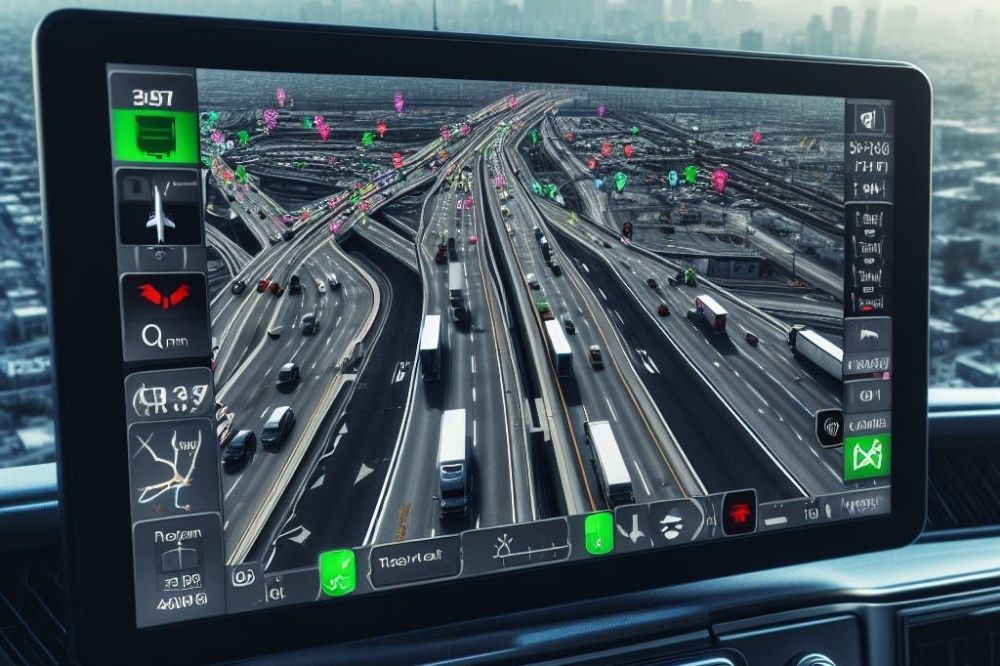
Picking the right commercial truck driver GPS system can make or break a long haul. In our years of financing trucks for owner-operators and small fleets, we’ve seen how the right unit saves drivers from wasted miles, missed exits, and a scrape with a bridge that’s too low for a loaded trailer. A regular car GPS just won’t cut it once you’re hauling 80,000 pounds.
In this guide, we’ll cover what makes a truck GPS different from a consumer one, the features worth paying for, and which truck GPS systems stand out.
What Is a Truck GPS Tracker?
A GPS tracker, or Global Positioning System tracker, is a device that pinpoints a vehicle’s exact location in real time. It works by communicating with satellites orbiting the earth to calculate speed, direction, and position.
Truck GPS units take this a step further. They factor in your truck’s height, weight, and length before mapping a route. Drivers who skip a truck-specific unit often end up backing out of a road they never should have turned onto.
GPS trackers also support fleet management, theft prevention, and driver accountability. For owner-operators, this same data can double as proof of route and delivery times when a customer disputes a load.
Why a Truck GPS Beats a Regular Car GPS
A truck GPS uses the same satellite technology as a car GPS, but it’s built around a much bigger, heavier vehicle. The difference shows up in two places: the route itself and what your back office can see.
Routing Built for Big Rigs
Truck-specific systems route around low bridges, weight-restricted roads, and HazMat-restricted streets. They also flag tight turns and steep grades that a car GPS would never catch.
Anyone who’s backed up half a mile after hitting an unexpected low bridge knows exactly why this matters.
The Federal Highway Administration’s bridge weight formula explains why some roads carry strict limits in the first place, and a good truck GPS routes around them automatically.
Visibility for Fleet Owners
If you run more than one truck, a commercial GPS gives your back office a window into every route. Dispatchers can plan multi-stop routes, update drivers in real time, and spot extra load opportunities along the way.
Small fleet owners save real money simply by catching off-route miles before they add up. Good route planning starts with having the right data in front of you.
What Types of Commercial Vehicles Need a Truck GPS App?
Truck GPS apps aren’t just for long-haul rigs. Several types of commercial vehicles benefit from truck-specific navigation.
Semi-Trucks and Tractor-Trailers
Long-haul trucks moving freight across state lines need routes built around their height, weight, and length. This matters even more for commercial truck drivers hauling heavy freight day after day.
Delivery Trucks
Box trucks and delivery vans making multiple local stops need precise navigation to keep their routes tight and their fuel costs down.
Construction and Utility Vehicles
Crews heading to remote job sites rely on truck GPS apps to find locations that don’t always show up clearly on standard maps.
Oversized and Specialty Loads
Vehicles hauling oversized freight or hazardous materials need routing that accounts for these restrictions from the start, not as an afterthought.
Fleet Vehicles
Businesses running several trucks use GPS units to track location, monitor driver behavior, and keep every vehicle running efficiently. This is especially useful as a small fleet grows past a couple of trucks.
How to Choose the Right Truck GPS for You
Picking a truck GPS comes down to a handful of practical factors.
- Screen Size: Go with a large, clear screen you can read at a glance. A bigger display means less squinting and fewer distractions while driving.
- Ease of Use: Look for a simple, intuitive interface. You shouldn’t need a manual just to enter a destination.
- Durability: Trucks vibrate, heat up, and freeze depending on the season. Your GPS should hold up to all of it without glitching out.
- Installation: Some units need professional mounting, while others clip onto a dash or windshield in minutes. Decide which fits your setup before you buy.
- Software Updates and Long-Term Support: Pick a brand that keeps pushing map updates and new features. Roads change constantly, and outdated maps lead to bad routes.
- Storage Space: Make sure the unit has enough internal storage, or supports a memory card, for large map files and frequent updates.
Must-Have Features for a Commercial Truck GPS
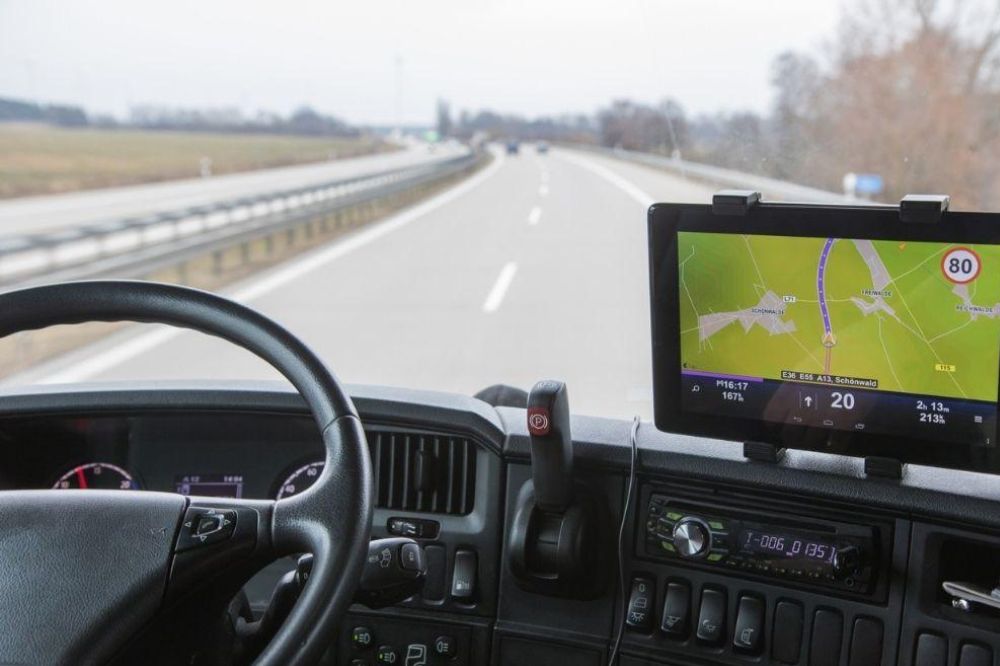
A handful of features separate a true commercial GPS from a basic car unit:
- Up-to-date maps showing truck stops, parking, and rest areas
- Driver safety alerts for fatigue, speed limits, and narrow roads
- Drive assist tools like lane guidance and intersection views
- Accurate turn-by-turn directions with voice prompts
- Truck-specific routing based on weight, height, length, and HazMat status
- Real-time traffic updates to dodge delays
- Road restriction alerts for low bridges and weight limits
- Toll road and highway bypass options
- Fuel-efficient route suggestions
- Trip logging and fleet management data
These features matter even more once you factor in federal rules. Hours of service regulations limit how long a driver can stay behind the wheel, and a GPS that flags rest stops and parking early helps drivers stay compliant without scrambling at the last minute.
Truck parking shortages make this even more pressing. Recent research from the American Transportation Research Institute found there’s roughly one public truck parking space for every 11 truck drivers nationwide.
A GPS that surfaces parking options well before a driver’s clock runs out can be the difference between a safe stop and a forced one on the shoulder.
Weigh stations matter too. The Commercial Vehicle Safety Alliance runs roadside inspections throughout the year, and a GPS that flags upcoming weigh stations helps drivers prepare instead of getting caught off guard.
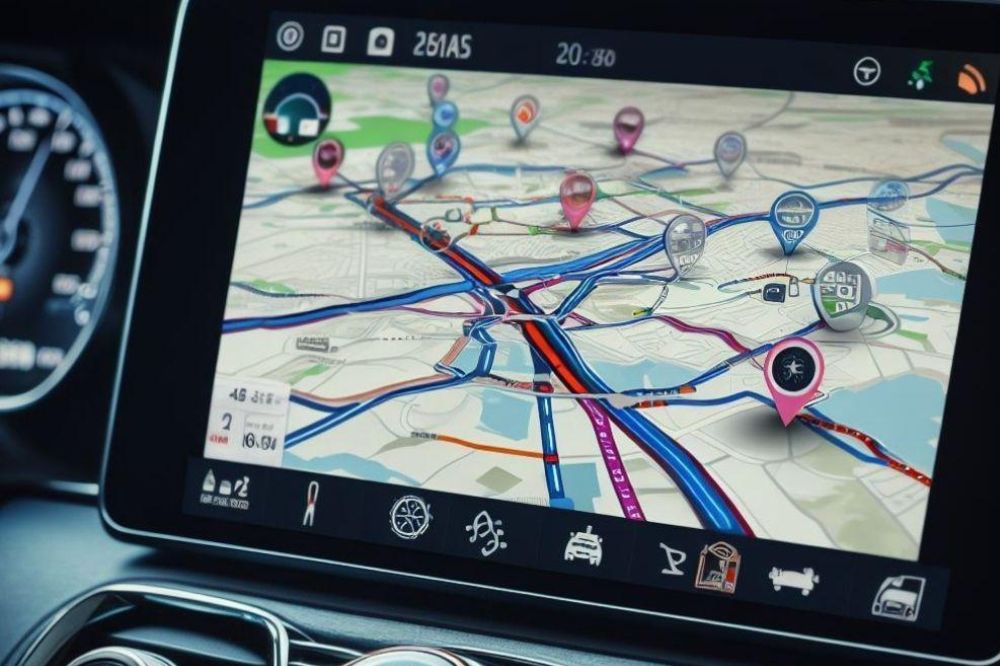
Best Truck GPS Systems for Owner-Operators and Small Fleets in 2026
If you’re running one truck or a fleet of ten, you don’t need enterprise software built for hundreds of trucks. Here are some of the top truck GPS systems:
Garmin dēzl OTR Series
Launched in 2024, Garmin’s dēzl OTR series (models OTR620 through OTR1020) routes around bridge heights, weight limits, and HazMat restrictions right out of the box. Screen sizes run from 6 to 10 inches, and the units tap into a community of fellow drivers to surface rated parking spots and loading dock info.
They keep working without a data connection once maps are loaded, which matters on rural routes where cell service disappears.
Rand McNally TND Series
Rand McNally pairs truck routing with IFTA fuel logging tools and integrates with its separate ELD device via the DriverConnect app. For owner-operators who want navigation and compliance tools that talk to each other, this combination saves time on separate logins and separate hardware.
Trucker Path
This free app leans on its driver community for real-time parking, fuel prices, and weigh station updates. Trucker Path is a solid pick for owner-operators who want strong features without paying for a dedicated device.
TruckMap
TruckMap offers free truck-specific navigation with crowd-sourced parking and weigh station data. It’s a smart starting point for new owner-operators easing into the cost of running their own truck.
CoPilot Truck
CoPilot Truck by Trimble is one of the few apps built around offline maps. It downloads route data to your device so you get full truck-specific navigation even where cell service drops out. For drivers running rural routes or areas with spotty coverage, that reliability is hard to replace. It’s subscription-based and available on both iOS and Android.
Motive
Motive combines GPS tracking with dash cams and driver coaching tools. Small fleets that want safety monitoring alongside navigation often find this bundle worth the higher price tag.
When weighing your options, think about whether you want a dedicated hardware device or a phone-based app. Hardware units tend to work better without cell service, while apps update faster and cost less upfront. Either way, expect most providers to charge a monthly fee to keep their map data current.
Choosing the Right GPS Comes Down to Your Operation
The best truck GPS system depends on your routes, your budget, and how many trucks you’re running. A solo owner-operator hauling local freight has different needs than a ten-truck fleet running cross-country. Think through the features that matter most for your operation, then pick a system built to support them.
A reliable GPS is one of many tools that keeps your trucking business running smoothly, right alongside the right financing for your equipment. If you’re looking to purchase a semi-truck or upgrade your fleet, get in touch with us at Mission Financial. We help drivers and small fleets secure financing that fits their business.