
Owning a semi-truck puts you in a rare position. You already have one of the most valuable assets in American logistics. Whether you’re an experienced driver or an aspiring entrepreneur, there are dozens of profitable ways to put that rig to work.
From freight transportation to agricultural hauling and specialized services, the opportunities in 2026 are broader and more profitable than ever before. The American Trucking Associations projects that total U.S. freight tonnage will grow by 25.6% by 2030.
With the right commercial vehicle, a valid CDL, and a clear business plan, you can turn your truck into a thriving operation.
And if you’re just getting started, flexible commercial vehicle loans from Mission Financial Services can make it easier to purchase or expand your fleet without straining cash flow. But first, let’s go over why you should start a semi truck business.
Why Start a Semi-Truck Business?
Starting a semi-truck business is one of the fastest ways for owner-operators to gain financial freedom and long-term control over their careers. When you own your truck, you control your routes, your schedule, and, most importantly, your income potential.
The U.S. trucking industry continues to expand rapidly. Total freight tonnage is projected to grow by 25.6% by 2030. And with trucks already responsible for about 72% of all freight tonnage in the U.S., demand is both massive and enduring.
Operating your own trucking business means you can specialize in the type of freight you enjoy most. You might focus on long-haul cross-country deliveries, regional routes with shorter turnaround times, or niche markets like refrigerated or agricultural transport.
And when you’re ready to scale, you can hire other drivers and manage operations, turning a one-truck business into a profitable small fleet.
With flexible commercial vehicle financing from Mission Financial Services, it’s easier than ever to expand without draining your cash flow.

12 Best Semi-Truck Business Ideas
If you’re thinking of investing in a semi-truck, the good news is that plenty of trucking business opportunities and ideas are available. Each one comes with its own startup requirements, profit potential, and market niche. Let’s dig into it.
1. Freight Transportation
One of the most popular trucking business ideas is to get into freight transportation. This is an enormous field you can join, with all kinds of different areas you can specialize in.
Freight hauling remains the backbone of the U.S. economy. Whether you’re moving raw materials, retail goods, hazardous waste, or industrial components, freight transportation gives you the flexibility to choose your loads and clients.
The two most common models are:
- Less Than Truckload (LTL): Smaller shipments from multiple suppliers that share trailer space, which is ideal for maximizing capacity and reducing downtime.
- Full Truckload (FTL): Dedicated loads for a single shipper, often with higher payout and simpler logistics.
Freight may be transported between different transport links (like rail, air, or sea), or you could transport freight from a supplier directly to a customer.
2. Agricultural Hauling
The farming and agriculture industry needs trucks to operate. This is another huge sector that you can build your trucking business around.
Agricultural and food-product shipments represent about 30% of all ton-miles across the U.S. freight transportation system, offering huge demand. You can focus on hauling livestock, grain, feed, fertilizer, or heavy farm machinery, depending on your trailer type and regional opportunities.
If you do decide to focus on the agricultural sector, it pays off to specialize in a certain type of trucking. Certain types of freight, like refrigerated dairy or bulk grain transport, can help you stand out and command premium contracts.

3. Truck Rental or Leasing
If you own your truck, you might even consider starting a truck rental business. Renting or leasing out your semi-truck to other drivers or small carriers can generate steady passive income.
This is especially true if your truck isn’t always in use. Many owner-operators use downtime between contracts to rent their trucks short-term through local listings or industry platforms.
This business model scales best when you own multiple rigs, but even a single truck can bring in consistent monthly revenue. Of course, this business idea works best if you own multiple trucks and not just one.
To reduce risk, make sure to secure strong rental contracts and semi-truck insurance coverage.
4. Moving and Relocation Services
When it comes to starting your own trucking company, you can also look at going into the moving business. While most moving companies use box trucks, semi-trucks are ideal for large-scale or long-distance relocations.
You can partner with corporate relocation firms, logistics providers, or government contractors to move offices, equipment, or bulk furnishings across states.
Marketing your trucking business to industrial clients or large residential moves can make your services stand out in a crowded space.
Startup costs are relatively low since you already own the main asset: your truck. Focus on obtaining a USDOT number, operating authority, and proper cargo and liability insurance.
If you plan to operate across state lines, you’ll also need an MC number from the FMCSA and any state-specific household goods carrier permits.
5. Courier and Delivery Contracts
Trucking businesses can also consider going into local shipping or courier services. This category has evolved a lot in recent years. With the continued rise of e-commerce and bulk retail, larger deliveries often require regional trucking capacity that smaller couriers can’t handle.
By targeting furniture stores, appliance retailers, or B2B delivery contracts, you can fill a profitable niche between local delivery and long-haul freight. Semi-truck courier services can haul larger items and larger loads using dry vans or curtain-side trailers designed for quick loading.
While profit margins depend on contract volume and fuel management, many regional delivery operators maintain steady weekly income thanks to repeat B2B contracts and short-haul routes that keep operating costs low.
Financing additional trucks or trailers with the help of Mission Financial Services can further boost efficiency and earnings potential.

6. Waste and Recycling Removal
Hauling waste, recyclables, or scrap materials is an essential and often recession-proof trucking service. There will always be waste, from people and businesses.
You can specialize in construction debris, commercial waste, metal recycling, or hazardous materials, depending on your equipment and certification level. Operators with hazmat or environmental transport endorsements can access higher-paying contracts that most competitors can’t bid on.
To operate legally, you’ll need a USDOT number, proper waste-hauling permits (issued at the state or local level), and insurance coverage for environmental and cargo liability.
Startup costs depend on your equipment and the type of waste you move. Many operators use roll-off trailers for construction debris, dump trucks for bulk materials, sealed containers for liquid or hazardous waste, or flatbed trailers for recycling and scrap metal transport.
7. Car Hauling and Transportation
Car hauling is one of the most profitable ways to use a semi-truck, especially if you have the right trailer setup. Depending on your market, you can choose between open multi-car trailers (ideal for new car deliveries) or enclosed haulers that protect classic or luxury vehicles during transport.
Startup costs in car hauling are generally higher than in other trucking niches because of the specialized equipment and insurance requirements involved. You’ll need a reliable semi-truck with enough horsepower for heavy towing.
Success in this niche depends on establishing consistent partnerships with auto dealerships, auctions, rental agencies, or online vehicle marketplaces, such as Carvana and Bring a Trailer.
To operate legally, you’ll need a USDOT number, an MC authority, and cargo insurance that covers vehicle damage in transit.
8. Construction Material Hauling
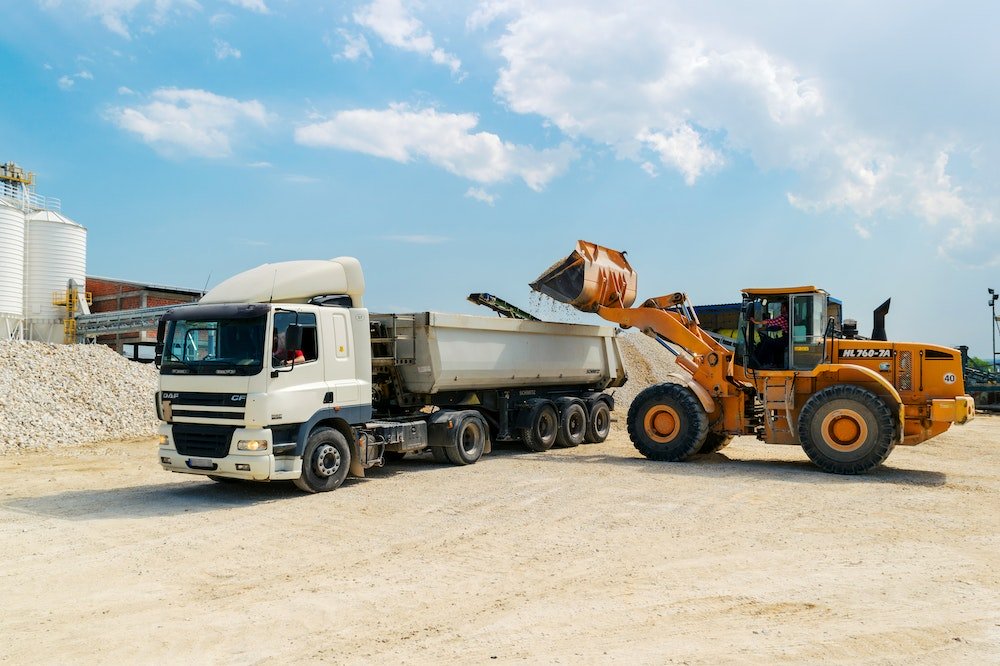
Construction haulers handle heavy materials such as steel, concrete, lumber, and aggregate, often navigating congested urban areas or job sites. It’s less about long-distance routes and more about coordinating multiple short runs that keep major projects on schedule.
To succeed, you’ll need a heavy-duty semi-truck, a flatbed or dump trailer, and the proper permits for overweight or oversize loads.
Because deliveries are time-sensitive, maintaining clear communication and on-time performance is key to earning repeat contracts.
This niche rewards professionalism and reliability. It’s a strong fit if you’re an experienced driver who wants consistent, hands-on work supporting large-scale construction projects.

9. Snow Plow and Seasonal Services
In areas that experience harsh winters, converting a semi-truck into a snow plow is a practical way to generate income when freight slows. Many operators partner with local governments or private snow-removal contractors to clear roads, parking lots, school zones, and distribution centers.
All you need is a plow attachment and possibly a salt spreader to get started. Plow operations typically run overnight or in early morning hours after heavy snowfall, offering a dependable seasonal workload that complements long-haul driving.
This is a strong diversification option for owner-operators who want to keep their trucks profitable throughout the winter months.
10. Oversized Load Transportation
If you’re ready to take on more complex freight, oversized hauling offers both challenge and reward.
You’ll move loads that exceed standard U.S. limits of 8.5 feet in width, around 13 ½ feet in height, or 80,000 pounds in total weight, though exact thresholds vary by state. These include industrial equipment, bridge beams, turbines, and modular buildings.
Each run is a project in itself, requiring detailed route planning, permitting, and coordination with pilot vehicles to move safely through multiple jurisdictions.
You’ll need specialized trailers such as lowboys, extendable flatbeds, or multi-axle setups designed for heavy or awkward cargo. Because only a small number of drivers are qualified and properly equipped, demand often outpaces supply, creating room for higher-paying contracts.
Every mile takes more planning, but it also brings the satisfaction of mastering one of trucking’s most respected specialties.
11. Semi-Truck Driving School or Training Service
The trucking industry faces an ongoing shortage of qualified CDL drivers and is projected to need roughly 1.2 million new drivers over the next decade. Using your truck for driver training can be a profitable and stable business model.
You can register as a private CDL training provider or partner with local trade schools to offer behind-the-wheel instruction for new drivers.
Operating legally requires meeting FMCSA training standards, maintaining liability and vehicle insurance, and equipping your truck with dual controls or instructor access features.
Once certified, you can train students year-round, creating consistent revenue while helping to strengthen the future trucking workforce. This path suits seasoned drivers who want to leverage their experience while spending less time on the road.
12. Green or Electric Truck Logistics
Recent market analysis shows that the heavy-duty electric truck market is set to grow from about USD 1.22 billion in 2023 to USD 4.70 billion by 2030, a compound annual growth rate of roughly 20.6%.
Federal and state programs also now offer meaningful incentives and tax credits for carriers that invest in zero-emission trucks. For example, companies purchasing qualified commercial clean vehicles may receive tax credits of up to $40,000 under the Inflation Reduction Act (Section 45W).
EV adoption is still in its early stages, which means there’s room for new drivers and small operators to establish themselves before the market becomes crowded.
Begin by researching which electric trucks qualify for federal or state incentives. Many states also offer grants or rebates to help cover charging infrastructure and fleet conversion costs.
Next, look at where freight electrification is expanding fastest. Regions with existing EV infrastructure, such as California and Texas, are ideal for new operators entering green logistics.
If you’re new to the industry, consider starting with short-haul or regional routes where charging access is reliable and downtime is limited. These routes allow you to build experience while keeping costs predictable and operations sustainable.

How to Choose the Right Semi-Truck Business Idea
Choosing the right trucking business idea starts with understanding your budget, licensing, and local market conditions. Here’s how to narrow your focus and pick a niche that fits.
1. Startup Capital and Equipment Needs
Assess how much you can invest upfront and whether your current equipment aligns with your goals. Lower-cost ideas like local courier services or junk hauling are ideal if you already own a rig and want to start earning quickly.
In contrast, car hauling or oversized freight requires specialized gear such as step-deck or enclosed trailers and higher insurance coverage.
If you’re still exploring equipment options, consider whether it’s smarter to buy a used commercial truck or upgrade to a new commercial truck that meets the demands of heavier or long-haul work.
Matching your truck’s capabilities to your chosen niche can significantly impact both profitability and safety.
2. Licensing and Experience Level
Your credentials will determine which lanes are open to you. Drivers with CDL endorsements for hazmat, doubles/triples, or tanker loads can move into premium freight markets with higher per-mile rates.
If you’re newer to trucking, consider starting with lower-barrier options like regional freight or short-haul deliveries to gain hours, refine your safety record, and build professional contacts before expanding.
3. Local and Regional Demand
Study what industries dominate your region. Agricultural hauling thrives across the Midwest and South, while construction hauling is strong in fast-growing metro areas. In northern states, snowplow and seasonal services provide a reliable winter income.
Tailoring your services to local demand helps reduce fuel costs, maintain regular routes, and secure repeat business from area clients.
Finally, outline a simple business plan that maps your target market, startup costs, and growth goals. This not only helps guide your operations but also positions you for financing or partnership opportunities when you’re ready to scale.

Startup Costs and Financing Options
To start your trucking business, you’ll also need to budget for permits, insurance, maintenance, and ongoing compliance. Here are some ranges to expect going into the 2026 market.
| Expense Category | Typical Range | Details |
| Commercial Truck Purchase | $80,000 – $150,000 (new) or $40,000 – $70,000 (used) | Cost depends on truck age, model, and specifications. Buying used can significantly lower startup costs. |
| Insurance & Licensing | $9,000 – $16,000 per year | Covers primary liability, cargo, and physical damage policies. Rates vary by state, cargo type, and driving record. |
| Fuel & Maintenance | $50,000 – $70,000+ per year | Fuel is typically the largest annual expense; maintenance includes tires, oil changes, and preventive repairs. |
| Permits & Registration | $500 – $3,000+ | Includes USDOT/MC numbers, IFTA registration, IRP plates, and state-specific operating authority. |
| Business Setup & Marketing | $2,000 – $5,000 | Covers business licensing, software, website setup, and branding or advertising for new carriers. |
Financing Your Trucking Business with Mission Financial Services
Mission Financial Services simplifies commercial vehicle financing with direct-lending options designed for real owner-operators. There are no middlemen and no unnecessary fees.
Whether you’re purchasing your first truck, rebuilding after credit challenges, or expanding into a small fleet, we offer tailored loan programs, including:
- First-time buyer and bad credit loans for new drivers and business owners building credit history.
- Title loans and repair loans, ideal for covering truck repairs or using your vehicle as collateral for quick funding.
- Dealership and small fleet loans, structured to help you scale efficiently or buy through trusted dealerships.
- Simple-interest contracts, which offer transparent financing and help you save on interest as you pay down your balance.
With flexible repayment options, fast approval, industry-specific solutions, and a team that understands the trucking business, Mission Financial Services helps you stay on the road and in control of your growth.
Frequently Asked Questions
How Much Does It Cost to Start a Semi-Truck Business?
Startup costs typically range from $100,000 to $200,000, depending on your truck type, insurance, and operating permits. Many new drivers lower their upfront investment by leasing or financing their first truck through Mission Financial Services.
What Is the Most Profitable Semi-Truck Business Idea?
Freight hauling, oversized load transport, and car hauling often provide the highest earning potential. Actual profits depend on your operating costs, route efficiency, and contract rates.
Can I Start a Trucking Company With One Truck?
Yes. Many successful owner-operators begin with a single truck, building a customer base before expanding. As your revenue grows, you can add drivers or finance additional vehicles through Mission Financial Services.
Do I Need an LLC for My Trucking Business?
Forming an LLC isn’t legally required but is highly recommended. It helps separate personal and business assets, provides liability protection, and may offer tax advantages for independent truckers.

Conclusion
Starting a profitable trucking business is absolutely within reach. All it takes is the right truck, the proper licensing, and a clear plan that fits your skills and long-term goals.
Whether you focus on freight transport, specialized hauling, or driver training, your semi-truck can become the foundation of a lasting business.
If you’re ready to take the next step, Mission Financial Services can help you secure financing for your truck. From first-time buyers to experienced owner-operators, we provide direct-lending solutions that simplify startup costs and support steady growth.
With the right plan (and the right partner), you can keep your business moving forward, mile after mile. Start your credit application with us today.