
Office: (404) 975-4800

Bridgette

Semi-Truck vs Full Truck | What Is the Difference?

Semi-Truck vs Full Truck | What Is the Difference?

Trucks are used across almost all industries. In fact, according to the American Trucking Associations, trucks deliver over 80% of all US freight. That makes transporting goods with trucks a good business to be in.

If you’re new to the world of trucking, though, you may be confused by some of the jargon, such as the names of different types of trucks. Don’t worry, we’ve got you covered. Join us as we explore the differences between the semi-truck vs full truck.

What is the Difference Between a Semi-Truck and a Truck?

Most trucks are either full trucks or semi-trucks. So, what is the difference between a semi-truck vs full truck, and why does it matter so much in the trucking industry? They are both trucks used for transporting cargo. However, they have distinct differences that make them suitable for different types of cargo hauling.

A clue to the main difference is in their names. A full truck has a full trailer. A semi-truck has a semi-trailer. Let’s examine the different trailer types to understand what makes them so different.

What is a Full Trailer?

Full trailers move with the trucks that tow them, but do not rely on the towing vehicle to support the load. A full trailer carries its own weight entirely. The full trailer has a drawbar that connects to the coupling on the truck.

What is a Full Truck?

A full truck is a straight truck with its own cargo space. It does not have a detachable trailer. It has a trailer for cargo hooked to the truck itself.

Full trailer trucks are reliable and versatile, and are used widely in a variety of roles. If you’ve ever heard of a box truck, it is a full truck. It is called a box truck because the cargo area is an enclosed, rectangular box that is attached to the truck’s chassis.

Thinking of buying a box truck for your business? Before you do, read our guide to understanding box truck financing.

What is a Semi-Trailer?

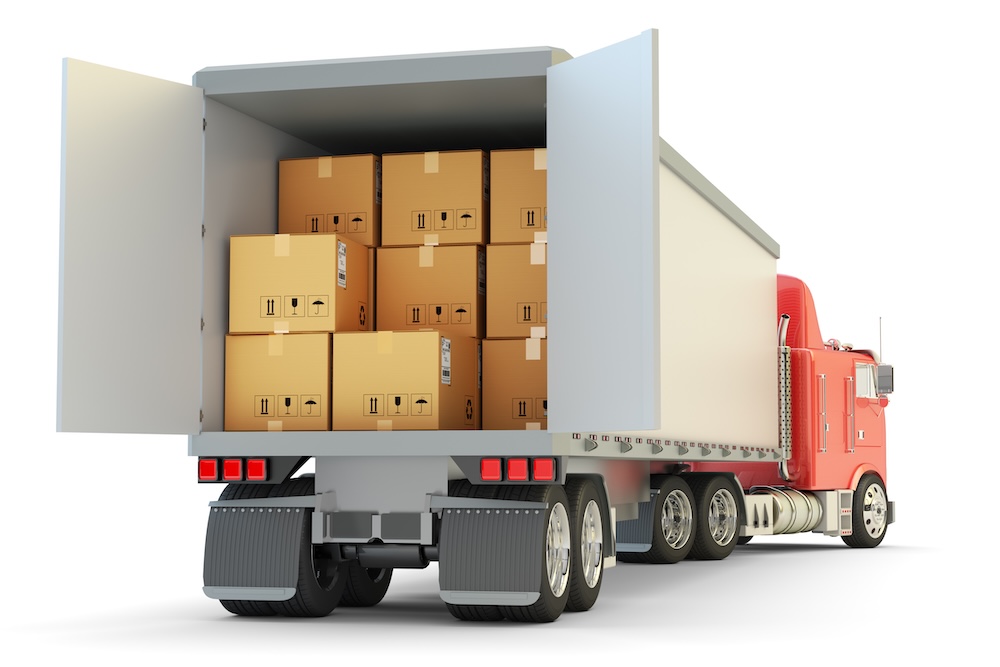
Semi-trailers are detachable trailers usually constructed of high-strength steel or aluminum. They get hitched to a truck to transport cargo. Semi-trailers come in different designs to suit specific cargo, for example, raw materials, bulky goods, liquids, chemicals, etc.

The truck can offload the entire trailer without waiting for the goods in it to be offloaded, and attach another one. The trailer often has legs to support it when it is uncoupled from the truck.

What is a Semi-Trailer Truck?

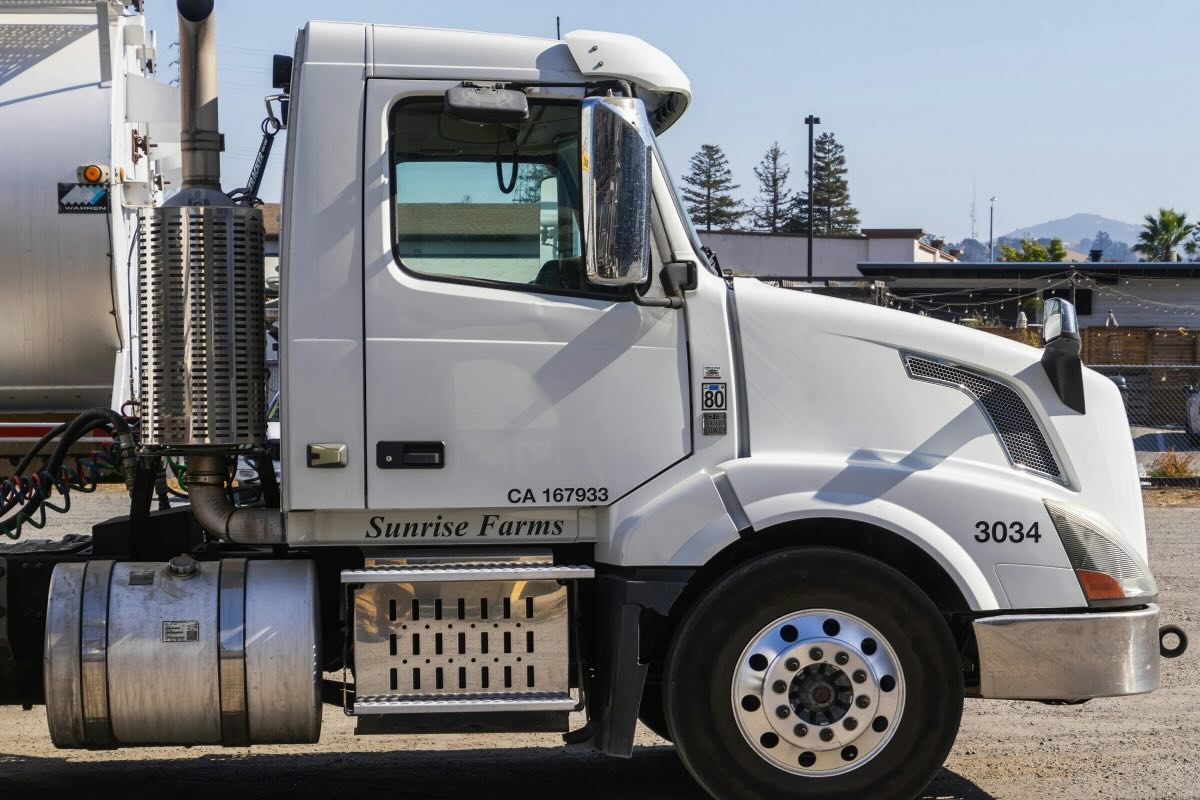
The semi-trailer is used with a tractor truck, more powerful than a regular truck. The truck does not carry cargo itself, but instead pulls the rear trailer carrying the cargo. This combination of a semi-trailer and a tractor truck is called a tractor trailer truck or semi-trailer truck.

It is often just referred to as a semi-truck or a semi in the U.S. Elsewhere, it may be known as an articulated truck. An articulated vehicle is composed of two parts: a tractor unit (or cab) and a trailer.

Driving a semi-tractor truck with a long semi-trailer is very different from driving a delivery van or even a heavy-duty full trailer truck. These giant vehicles are much longer and can have multiple trailers. Remember this when you are looking for drivers for your trucking business.

If you need a driver who has experience driving big semis, state this clearly in the commercial truck driver job description. The last thing you need is for your truck driver to be involved in an accident. A truck accident can be much more costly than a car accident or a motorcycle accident, after all.

Full vs Semi-Truck: Key Differences

There are quite a few differences between a full truck vs semi-truck. Consider these before you purchase a truck to start a truck delivery business.

Connection Mode

The first and most obvious difference between a semi-truck vs full truck is the connection mechanism. A semi-trailer is connected to a truck by a heavy metal coupling called a kingpin.

This cylindrical connection is located underneath the front end of the trailer. It locks the trailer onto the truck. Meanwhile, a full trailer is connected by a front hook on the trailer and a coupling on the truck.

Dimensions

Dimensions are another giveaway in the comparison of a semi-truck vs full truck.

The semi-trailer’s standard dimensions are 48 to 53 ft. long, 8.5 ft. wide, and 13 ft. high. Compare this with the full trailer. Its standard dimensions are only 10 to 26 ft. long, 8.5 ft. wide, and 13 to 14 ft. high. Therefore, the semi-trailer is usually much longer than a full trailer.

Capacity

There’s also a big difference in the capacity of the semi-truck vs full truck. Semi-trailers can carry up to 80,000 lbs in weight. Full trailers typically carry about 33,000 lbs. in weight. Therefore,  the semi-trailer usually carries more weight than a full trailer.

Usage

Because of their different dimensions and capacities, usage is another big difference between the semi-truck vs full truck.

Semi-trailer trucks can take more cargo and are thus often used for long-distance hauling. There are different types of semi-trailers, like refrigerated trailers for perishable foods, and lowboy trailers for oversized loads.

Full trailer trucks can take a lot of cargo, but decidedly less than the biggest semis. That’s why they are typically used for smaller, usually local, deliveries.

Driving a heavy truck, especially a semi, requires a Commercial Driver’s License (CDL).

Components and Design

A comparison of the semi-truck vs full truck shows a very different design and components. Full trucks are trailers on their own wheels, with both front and rear axles, although sometimes, the rear axles are in the middle. And these axles support the entire trailer’s weight.

Semis are a combination of a truck and a trailer, without a front axle. So, why do semi-trailers have no front axles, only rear axles? The front half of the trailer is supported by the back of the truck itself. The rest is supported by the rear axles.

Wheels

A two-axle straight truck will usually have four wheels. The number of wheels on a semi-truck can vary depending on the freight. Six to ten wheels is typical. However, there can be as many as eighteen, and these trucks are often referred to as eighteen-wheelers.

The extra wheels on semi-trucks offer better weight distribution, with more stability and balance for those heavier cargo loads. Of course, heavier loads can impact fuel consumption, but most modern semis offer better fuel efficiency.

Maneuverability

The design of a semi-truck vs full truck affects maneuverability as well.

Semi-trailers generally provide better traction than full trailers and more maneuverability in tighter urban spaces. Semi-trucks are easier to reverse even with the trailer hooked. This is because they only have a single turning point at the coupling, unlike full trailers, which have two: the drawbar and the coupling.

Experienced drivers handle these issues well. However, even new truck drivers will find it easy to handle any truck by attending one of the top CDL training schools. These schools offer practical commercial truck driver training for all heavy trucks, including semis.

The Role of Semi-Trucks in Commercial Transport

In the choice of semi-truck vs full truck, which is more popular? The truth is, they both are, because they both have advantages. Full trailer trucks are easy to drive, have low operational costs, and are ideal for transporting lightweight goods.

However, semi-trucks are especially popular for commercial transport logistics and long haul transport. They can haul much larger volumes. And they fulfill necessary functions at all stages of the commercial journey.

They are crucial for manufacturing, hauling raw materials to factories. They are essential for distribution, carrying finished goods to retailers. And they are just as useful for retail deliveries, transporting the merchandise to waiting consumers.

This makes semi-trucks invaluable for commerce. But they are just as important for agriculture and other sectors. This makes owning or operating a semi-truck fleet a good business to be in.

Conclusion

Now that you know all the differences between a full truck and a semi-truck, you can decide which is the better option for your business.

For a smaller local delivery business, a full truck is fine. Semi-trucks are preferred for long hauls as they can take much more cargo. If you’re building an intracontinental freight business, this is the truck you will need.

Whatever you decide, you’ll need reliable financing to buy your trucks. Mission Financial Services can help you get the funds to buy new or used commercial vehicles and semi-trucks. Contact us today to get started.

May 2025 Driving Data Report: Critical Insights

May 2025 Driving Data Report: Critical Insights

If you want to know how well your business is doing, compare it to the rest of your industry. If you want to know how well the overall industry is doing, look at the industry data. Just as there is car data, there is also data collected by those in the trucking industry, shipping, and freight.

So, which way are North American commercial vehicle driving trends headed in May 2025? We examined recent data from America’s Commercial Transportation Research Co. (ACT Research) and other reputable news, statistics, and industry sources. Here are our critical insights.

Economic Influences on Driving Data

Transport will always be hit hard by economic turbulence. Shifts in consumerism influence demand. Fuel hikes influence logistics costs. In May 2025, there is an even greater challenge: tariffs.

The US economy faces great uncertainty amid the trade tariffs brought into effect by the Trump administration. Financial market turmoil led to concerns that a recession was on the horizon. On April 9, President Trump authorized a 90-day pause for more extreme reciprocal tariffs.

It’s not all bad news. The United States e-commerce market has shown healthy growth. E-commerce revenue is expected to show annual growth of 8.22%, resulting in a projected market volume of US$1.84tn by 2029.

This increases the demand for small, medium, and heavy commercial vehicles for logistics and transportation associated with e-commerce.

Vehicle Market Trends

We looked at the latest driving data report from ACR Research to understand recent commercial vehicle and shipping trailer market trends.

Medium-Duty Vehicle Market Trends

The overall demand for medium-duty trucks has shown a decrease since March, with a preliminary 13,600 net orders for medium-duty trucks (+/- 5.0%).

Heavy-Duty Vehicle Order Dynamics

A slowdown in orders for heavy-duty vehicles was also noticed, but the exact cause is undetermined. However, moderating economic activity, private fleets’ pausing their expansion, plus trade and policy uncertainty could all play a role.

Trailer Market Performance Indicators

In a monthly survey by ACT Research, original equipment manufacturers (OEMs) indicated that conditions regarding supply, demand, and general business operations were on par with the previous year. While that is not always good news, it is not necessarily bad news either, as it shows stability.

Truck Sales and Pricing Analysis

Truck sales show us how much the trucking industry is growing. Buying more trucks means that businesses are expanding. What does the recent truck driver data have to say about North American truck sales?

Used Truck Sales

Same-dealer Class 8 used truck sales showed a slight increase in February. The 0.9% month-over-month increase was consistent with, although not as strong as, the expected seasonal advance of 5%.

In March 2025, the Class 8 average retail sale price for used trucks rose by its largest percentage since March 2022, gaining 5.6% month-over-month.

Used truck prices are typically influenced by factors such as age, condition, and mileage. Looking at the research, Steve Tam, Vice President at ACT Research, had this to say: “Several other considerations are likely affecting recent pricing changes.”

Commercial Vehicle Pricing

Under the Trump administration’s current tariff policy, vehicles compliant with the United States-Mexico-Canada Agreement (USMCA) would be exempted.

It means at least 75% of the vehicle’s components must be produced in North America. The remaining percentage of the vehicle that doesn’t come from North American auto companies will face tariffs of 25%. This will inevitably lead to increased demand for trucks made in the US.

The extent to which domestic production can meet domestic demand remains to be seen.

Freight and Transportation Forecast

In January 2025, the American Trucking Associations projected that truck volumes would grow in 2025 after two years of declines. Let’s see if the recent driving data supports this.

U.S. Freight Rate & Volume Outlook

The Cass Transportation Index report is a good resource for anyone seeking data for the trucking industry. Based on records for shipping invoices from Cass Information Systems, it covers multiple industries in North America and shows key freight volume trends.

Don’t worry, they don’t violate data privacy or sell data to data brokers. They only share the data related to activity and volume that can help the transport industry. For example, the shipments component of the Cass Freight Index was unchanged in March 2025, month-over-month.

DAT freight and analytics, a well-known US-based freight exchange service, runs the largest truckload freight marketplace in North America. Their 2025 Freight Focus report showed that the truckload marketplace was entering a new phase in 2025.

However, trade policies, geopolitics, and labor issues could all influence how quickly and how well freight rates and volumes bounce back.

Supply-Demand Balance in Transportation

The trucking industry relies on a demand for freight shipping by road and the availability of trucks and drivers. Shifts on either side tip the supply-demand balance. In February, as freight volumes decreased and capacity contracted, supply-demand measurements shifted to 51.1 from the previous month’s 59.1.

Workforce and Driver Availability

Thanks to the sharing of driving data, we also see what’s going on in the workforce. Although the number of qualified truck drivers may vary from one location to the next, we still get an overall view of the available workforce.

Labor Market Metrics for Commercial Drivers

Driver availability has been slowing over the past 17 months. The Driver Availability Index fell 2.1 points to 51.0 in March, from the previous index of 52.3 in February 2025.

As older drivers retire and the number of younger drivers declines, driver shortages become difficult to solve. This is evident in a report from IRU, an international transport organization. Their report on truck driver shortages showed that it’s a global problem.

Driver Retention and Shortage Solutions

Many businesses are looking for alternative solutions to driver shortages. It is predicted that Level 4 autonomy will eventually dominate logistics and commercial operations.

AI is being heralded as the future of transportation. But this depends on how quickly self-driving technology matures, as well as how regulatory frameworks evolve.

State of the Industry Overview

ACT Research analyst Carter Vieth said, “Cancellations at a 20-month high may indicate customers are pulling back on orders given the increasingly pessimistic outlook.”

What else is the driving data telling us about the state of the trucking industry?

Classes 5-8 (Medium-to-Heavy Duty) Vehicles Analysis

According to driving data from ACT Research, final North American Class 8 net orders totaled 16.5k units in March. This showed a decline of 5.9% year-over-year. Tractor orders of 12.2k units were up only 0.9%. Meanwhile, at 4.2k units, vocational truck orders decreased 21% year-over-year.

U.S. Used Truck Classes 3-8 Performance

The Class 8 average retail sale price rose by its largest percentage since March 2022, gaining 5.6% m/m in March. However, it still has a way to go. On a year-over-year basis, prices were 6% lower, while falling 7.7% in the year-to-date.

How to Make 2025 a Good Year for Your Trucking Company

By keeping a close eye on driving data through freight and transportation indexes and reports, you get a sense of where the industry is headed. You can compare current freight rates and volumes with previous months and years’ performance, and make predictions based on that data.

However, during times of economic uncertainty such as these, things change quickly. Predictions don’t necessarily come to fruition. What can you do to make 2025 a good year for your trucking business?

Buy Local

As demand from local e-commerce logistics continues to rise, US-based trucking businesses can profit from it. If you’re thinking of adding new vehicles to your business, and new trucks to your fleet, go for North American-based car companies and US-manufactured commercial vehicles or used trucks.

Get the Right Coverage

Don’t risk driving uninsured. Several insurance companies cater to the trucking industry, with insurance premiums to suit every budget. Some insurers offer custom comprehensive coverage with discounts tailored to your needs. We have a useful guide to commercial truck insurance that can help you.

Invest in Good, Used Trucks

Save money where you can. Buying used trucks will enable you to add to your fleet at a more affordable price than buying new. But first, read our tips for buying used commercial trucks. And remember that Mission Financial Services offers affordable used semi-truck loans.

Hire the Best Drivers

Looking at the US truck driver community, the problem may not be simply a shortage of skilled drivers, but more a matter of a lack of driver retention.

Don’t just hire drivers who hop in, hit the accelerator pedal, and go. Provide training and guidance. Become an active member of a trucking association that supports you and your truck drivers. Share driving data that can help improve the industry.

You’re more likely to retain drivers if they know what qualifications and driving habits are expected of them from the start. Check out our guide to writing a commercial truck driver job description.

Conclusion

Freight driving data reports give us access to expert insights. This helps us determine where the industry may be heading.

Demand for trucks has slowed. Driver shortages may worsen. There is uncertainty hanging over the entire market. Yet, in May 2025, there is potential for growth. And Mission Financial Services is here to help.

We offer financing specifically for the trucking industry. Whether you’re buying new or used semis or need to maximize your existing fleet with crucial repairs, we have the loan you need. Contact us today, and get the financing that will improve your driving data in 2025.

How Does Semi-Truck Repair Insurance Work?

How Does Semi-Truck Repair Insurance Work?

Owning or operating a semi-truck business can be financially rewarding. But it can also cost you a lot of money in truck repairs, and when you least expect it.

A single in-frame engine rebuild can cost $15,000 to $30,000. A transmission failure can run $8,000 to $12,000. Even electrical system issues tied to sensors or emissions systems can sideline a truck for days while technicians complete diagnostics.

Whether wear and tear causes the issue or an accident triggers it, repair costs can quickly become unaffordable if you are not prepared.

That is where truck repair insurance comes in. It helps reduce the financial impact of major breakdowns, but many operators misunderstand how it actually works.

How Does Semi-Truck Repair Insurance Coverage Work?

At a basic level, semi-truck repair insurance works like mechanical breakdown protection.

You pay a monthly premium to keep your insurance policy active. When a covered failure happens, you pay your deductible, and the provider covers the remaining approved repair costs based on your coverage limits.

But here is the key detail: coverage is not automatic.

Before major work begins, you need to report the claim to your insurance provider. They will review it and approve the repair based on your policy terms.

If a repair shop starts diagnosing or performing repairs without that approval, the provider may deny coverage because they were not given a chance to verify the failure. That could leave you responsible for the full cost.

That is why experienced operators make sure the shop, the provider, and the driver are aligned before any significant work begins.

Why Is Repair Insurance Important?

No matter how carefully you drive your truck, there is always the possibility of something going wrong along the road. Even a cursory look at the large truck crash facts from the Federal Motor Carrier Safety Administration (FMCSA) will confirm this.

An accident involving heavy vehicles like trucks can have serious financial implications, such as medical expenses. Besides the possibility of bodily injury and property damage, dealing with the repercussions of an accident can cause costly delays, too.

Of course, a road accident is not the only thing you need to worry about. There are various risks to consider. Trucks can be damaged by debris during natural disasters or even just by severe weather and harsh terrain conditions. And despite your best efforts, they sometimes break down without warning.

When you have a heavy truck like a semi, repairs can become very expensive. Replacement part costs and high labor rates can make a serious dent in your cash flow. Semi-truck repair insurance can help cushion your business against these costs.

What Does Semi-Truck Repair Insurance Cover?

Most policies focus on high-cost mechanical failures that can shut down a truck and disrupt business operations. That typically includes:

  • Engine failures, such as internal damage or cooling system breakdowns
  • Transmission failures that prevent proper shifting or power delivery
  • Drivetrain problems involving axles, differentials, or driveshafts
  • Electrical system failures tied to sensors, wiring, or onboard control modules (when caused by a covered mechanical or component failure)

These are not minor repairs. These are the types of failures that take a semi-truck off the road and immediately impact revenue.

Whether you own a trucking company or are an independent truck driver, this financial protection is essential for getting back on the road again, quickly and without severe financial strain.

Some policies also offer expanded coverage options, depending on the provider, but the main purpose remains the same: protect against major, unexpected repair costs.

What Is Not Covered by Repair Insurance?

Semi-truck repair insurance is valuable, but it does not cover every type of cost associated with running a truck. Here’s what it typically does not cover:

  • Routine maintenance: Regular service items like oil changes, fluid replacements, and scheduled maintenance. These are standard operating costs.
  • Wear-and-tear parts: Components such as tires, brake pads, and other high-wear items naturally degrade over time and are excluded from most policies.
  • Accident-related damage: Damage caused by collisions, backing into objects, or other accidents. This is handled under physical damage or collision insurance, not repair insurance.
  • Cargo damage or loss: If freight is lost or damaged, it falls under cargo insurance. Repair insurance only applies to the truck itself, not what it is carrying.
  • Bodily injury and liability: Liability insurance covers Injuries to drivers or others, as well as damage to third-party property.
  • Operator-related or preventable issues: Repair insurance may deny claims for failures caused by neglect, improper maintenance, or misuse because they do not meet the criteria for a covered mechanical breakdown.

Understanding these gaps is important. Repair insurance is one part of a broader commercial auto insurance strategy, not a complete solution.

How Claims Work for Truck Repair Insurance

Claims for semi-truck repair insurance operate similarly to other types of auto insurance claims. In practice, the process involves multiple steps, and delays can happen if everything is not documented correctly.

Breakdown and Initial Report

The process starts when a breakdown occurs. In most cases, the driver will contact dispatch, or the owner-operator will contact the repair facility directly. From there, the issue needs to be reported to the insurance provider before any major work begins.

Timing matters here. Most providers need a chance to review the failure before major work begins. If you report the issue too late, or if repairs start before approval, the insurer may not be able to verify the cause of damage or confirm that the repair falls within the policy’s coverage terms.

Inspection and Diagnosis

Once the issue is reported, the truck is inspected by a repair shop. The shop will diagnose the failure and determine what caused it. This step is critical because coverage depends on whether the issue qualifies under the policy.

Insurance will typically cover mechanical breakdowns, but not wear items or maintenance-related failures.

Once the claim is submitted and documented, the insurance provider will assign an adjuster. It is their job to assess the situation and evaluate the damage. In some cases, the adjuster may request additional documentation, photos, or even a partial teardown before approving the claim.

Repair Estimate and Approval

After diagnosis, the repair shop provides a full estimate. A quote from a repair shop will indicate what the repairs will cost.

This estimate is submitted to the provider for approval. At this stage, the insurance company reviews:

  • The cause of failure
  • Whether the policy covers the component
  • The total repair cost compared to coverage limits

Repairs should not begin until the insurance provider confirms approval. Starting work too early can result in denied portions of the claim.

Payment and Repairs

Once approved, repairs can begin. The insurance provider will cover the approved portion of the repair, and you are responsible for the deductible and any non-covered items.

The insurance provider either sends payment directly to the repair shop or reimburses you, depending on the policy.

Where Delays Happen

In real-world scenarios, the process is not always instant. Most delays happen during diagnosis and approval. If the issue isn’t clear or the shop needs to dig deeper to confirm the failure, the claim can take longer to move forward.

Those delays mean more downtime, which is why experienced operators choose repair shops that know how to document claims properly and communicate with providers efficiently.

How Much Does Semi-Truck Repair Insurance Cost?

The cost of semi-truck repair insurance varies based on risk. Newer trucks with lower mileage typically qualify for lower premiums. Older commercial trucks or those with higher mileage tend to cost more to insure, or they may have more limited coverage options.

Monthly premiums often range from $700 to $2,000. But the more important factor is the deductible.

A lower deductible reduces out-of-pocket costs during a repair but increases your monthly premium. A higher deductible lowers your monthly cost but increases your financial exposure when something goes wrong.

This becomes a business decision. You are choosing between predictable monthly costs and the ability to absorb a large repair expense when it happens. For many trucking companies, this comes down to cash flow management and risk tolerance.

Do You Need Semi-Truck Repair Insurance?

Whether you need semi-truck repair insurance depends on your operation, equipment, and financial position. But for most operators, it plays a key role in protecting cash flow and minimizing downtime.

When It Makes Sense

If you are running a newer truck that generates consistent revenue, protecting that asset is critical. A major failure can quickly disrupt your ability to cover operating expenses.

If you do not have significant repair reserves, insurance provides a layer of protection that helps keep your truck on the road and your business moving.

High-utilization trucks, especially those running long distances, benefit the most. The more you run, the higher the likelihood of a costly breakdown.

When Operators Consider Alternatives

In some cases, operators with older equipment may face higher premiums or more limited coverage. Because of that, some choose to set aside dedicated repair funds instead of paying monthly premiums.

However, this approach requires strong cash reserves and discipline. A single major repair can still create financial strain, especially when combined with downtime.

Repair Insurance vs Other Types of Truck Insurance

There is often confusion about how truck repair insurance fits into the broader commercial auto insurance stack. The key is understanding that each type of coverage protects against a different category of risk.

Repair Insurance vs Physical Damage Coverage

Repair insurance covers failures that happen inside the truck. That includes breakdowns tied to the engine, transmission, drivetrain, or electrical systems. These are issues that develop over time or happen without an external event.

Physical damage coverage is different. It applies when something external damages the truck. This includes:

  • Collisions with another vehicle
  • Backing into loading docks or fixed objects
  • Fire, theft, or vandalism
  • Weather-related damage like hail or flooding

In other words, if the truck breaks down on its own, repair insurance may apply. If something hits the truck or the truck hits something else, physical damage coverage applies.

Repair Insurance vs Liability Insurance

Repair insurance protects your truck. Liability insurance protects everyone else. If you get in an accident and are legally responsible, primary liability coverage pays for:

  • Bodily injury to other drivers or passengers
  • Damage to other vehicles or property
  • Associated legal fees and claims

It does not pay to repair your truck.

That means in a serious accident, you could have liability coverage handling third-party damage while physical damage coverage handles your truck.

For any operation running commercial trucks, liability insurance is mandatory. Repair insurance is optional and designed to cover a completely different type of risk.

Repair Insurance vs Warranty

A warranty is typically limited in both time and scope. It usually comes from the manufacturer or dealer and covers defects or failures within a set period or mileage range. Once that coverage expires, the cost of repairs shifts entirely to the owner.

Repair insurance steps in after that point. It acts as third-party protection for continued operation, especially for trucks that are still running high miles and generating revenue.

Repair Insurance vs Paying Out of Pocket

Some operators skip truck repair insurance entirely and handle repairs out of pocket. That approach can work, especially for those who keep strong cash reserves or prefer to avoid monthly premiums.

But the risk shows up when timing and cost collide.

A major repair is rarely just the repair bill. An engine failure might cost $20,000 or more, but the bigger issue is downtime. Every day the truck is in the shop is a day it is not generating revenue. For owner operators and small fleets, this can quickly impact fuel budgets, insurance payments, and overall cash flow.

This is where the decision becomes less about cost and more about flexibility.

Some operators choose insurance for predictable monthly expenses. Others choose to self-fund repairs. And many use financing as a middle ground.

Instead of paying a large lump sum upfront, repair financing allows you to spread the cost over time while getting the truck back on the road quickly. That can be especially useful when the repair is urgent and delaying it would cost more in lost loads than the repair itself.

For example, if a transmission fails mid-week, waiting to save cash for repairs could mean missing multiple loads. Financing that repair allows the truck to get back into rotation faster, which helps protect revenue.

Mission Financial Services, for instance, offers repair financing solutions designed specifically for semi-trucks and commercial vehicles, helping operators cover major repairs without draining working capital. For many businesses, having access to funding is just as important as having the right insurance coverage.

In practice, most successful operators do not rely on just one strategy. They combine insurance and financing options to manage risk and keep their trucks moving.

Conclusion

Semi-truck repair insurance will help you with those unforeseen repairs resulting from damage to your trucks. But it’s not your only option.

Repair insurance is one way to manage risk, but it is not the only strategy available. Some operators rely on insurance. Others build reserves. Many combine both with financing. What matters most is minimizing downtime and keeping your operation running.

Mission Financial Services provides semi-truck repair financing solutions for owner operators and growing trucking companies.

When major repairs hit, having access to funding can help you stay operational without putting your business at risk. Start your credit application today and let Mission Financial Services get your truck back on the road.

Cass Transportation Index Report

The Cass Transportation Index report is a monthly report on the overall North American freight volumes and expenditures. Thousands subscribe to this report to understand what these measurements mean for their industry. Even the Bureau of Transportation Statistics has come to rely on this data.

If you are new to the trucking industry, you may have heard of this report without realizing its importance. That is why we compiled this short guide to the Cass Transportation indices and the Cass Transportation Index report. We explore what they are, what they measure, and what they can do for you.

What the Cass Transportation Index Measures

To understand what a Cass Transportation Index report is, how it works, and why it matters, let’s first look at where it comes from. The report is based on specific indices, composite statistics compiled from data at Cass Information Systems.

Cass Information Systems is an automated payment systems provider and one of the largest invoice processors for freight bills in the U.S. transport industry. This gives Cass access to data, which it uses to measure freight transportation through various indices.

The Indices Used by Cass Information Systems

There are different Cass Transportation Indexes:

  • The Cass Freight Index measures North American monthly freight expenditures and volumes to provide an aggregate of U.S. freight deliveries.
  • The Cass Truckload Linehaul Index indicates market fluctuations in per-mile truckload pricing.
  • The Cass Intermodal Price Index tracks changes in U.S. domestic intermodal costs.

A Cass Transportation Index report offers in-depth analysis and forecasting for a range of US freight measures, including the indexes listed above.

A Measure of North American Freight Shipments and Volumes

A Cass Transportation Index report provides you with a snapshot of North American freight volumes. Knowing how your business compares to how others are faring in the industry speaks volumes too.

When you’re moving freight, either across the state or across the country, you’re doing more than just hauling cargo. You’re playing your part in the greater North American freight shipping sector. And what happens across the sector affects your business.

The report gives insights into freight trends, plus their relation to relevant supply chain indicators and the wider economy. And it does so by examining all the data obtained from the Cass Transportation Index.

How the Index Works

Cass Information Systems uses data from its entire Cass client base. This includes freight shipped by all modes of domestic transport. But truck hauls make up more than three-quarters of domestic freight shipping activity.

They examine all intra-continental freight shipments, including those of raw materials and finished goods, to produce each index. The monthly Cass Transportation Index report is based on the various Cass Transportation indices.

The data in each report represents the month in which the invoices for those transactions are processed by Cass. The data does not necessarily correlate with the month when those freight shipments took place. The Index point for each subsequent month represents the latest volume in relation to the baseline.

Why You Need the Freight Market Data in a Cass Transportation Index Report

A trucking industry forecast will help you understand regulatory changes, new technologies, and other factors impacting the trucking industry. But a Cass Transportation Index report can help you to better understand the freight transportation industry’s highs and lows.

Although there are other data and index providers, the Cass Transportation Index report is one of the most widely used. It has been trusted by the transportation industry for years, and can make a big difference to your business.

Still on the fence? Here are the top three reasons why you need the freight market data and insights in the monthly Cass reports.

1. Comprehensive Data for All Types of Freight Haul

Whatever you’re hauling, you’ll find information relevant to you in a Cass Transportation index report. Of course, freight shipping is a very broad category indeed. Fortunately, the Cass client base is very broad.

It contains large shippers moving everything from food, automotive parts, and consumer packaged goods to chemicals, medical supplies, and more. That is how Cass indices give those in the trucking industry a comprehensive view of what’s happening in the overall freight market.

2. Monthly Comparisons for Tracking Developing Trends

The reports offer an ongoing monthly comparison to identify developing freight shipping market trends. Whatever the size of your trucking business, you’ll find this information useful. These trends can affect the demand for, and costs involved in, your cargo hauling services.

The expenditures component will give you an idea of how your freight shipping costs compare to the costs experienced in the rest of the freight shipping industry. Each month’s volume data will show you how much the general demand for freight haulage in North America is either increasing or decreasing.

3. Better Decision Making

Running a trucking business can be challenging, from creating the best marketing strategies for your trucking business to getting the best insurance and negotiating prices. You are constantly looking for relevant market data and insights for inspiration and guidance.

If you are involved in trucking and hauling, the Cass report is yet another invaluable tool to add to the list. Best of all, you don’t have to do hours of painstaking research. All that you have to do is access and read the report. Everything you need to know is already analyzed and broken down for you.

By observing and understanding monthly trends in the freight and supply chain sector, you are empowered to make better, data-driven business decisions. You can also look back on key points in previous years’ Cass reports to see how the freight shipping business is evolving.

Indexes Related to the Cass Freight Index

Of all the Cass indices, the Cass Freight Index, in particular, receives a lot of attention. It covers a diverse range of shippers and the aggregate volume of their transactions, for an overall view of North American shipping activity.

It is not only relevant to those in the trucking industry, but to all modes of domestic freight transportation.

On its own, it offers key information about the state of the freight shipping industry. But when examined alongside the related indices, it can give you even more crucial data for a full picture of the health of the freight industry.

Cass Truckload Linehaul Index

Some indices related to the freight index are more relevant to truckers than others. The Cass Truckload Linehaul Index, for example, measures fluctuations in U.S. domestic baseline truckload costs, specifically focusing on the linehaul component (movement of freight over long distances).

Cass Intermodal Price Index

Other indices are relevant to everyone involved in freight and shipping. The Cass Intermodal Price Index carries great insights into costs. But unlike the Truckload Linehaul Index, it tracks all costs for intermodal freight (cargo in shipping containers transferred between varying modes of transportation).

Freight Index vs. Passenger Index vs. Combined Index

The Cass Transportation Index report is taken seriously by the U.S. Department of Transportation’s Bureau of Transportation Statistics (BTS), too. This government bureau looks at the Cass Freight Index data, as well as data from the Dow Transportation Index and Transportation Services Index (TSI).

The Cass Freight Index measures shipment volumes and freight expenditures based on all freight transactions processed by Cass Information Systems. The Transportation Services Index measures the volume of passengers and freight moved.

BTS uses the data to create three indices: one for passengers, one for freight, and one that combines the two.

The Dow Transportation Index is more of a measure of how investors view the profitability of the transportation industry. The other indices measure freight shipments more directly. Together, these indices and statistics allow BTS to assess the economy’s demands for moving freight and passengers.

Conclusion

The Cass Transportation Index report provides accurate and relevant freight market data. The freight rates allow you to assess demand for your services. And the freight shipping costs allow you to determine your projected costs.

So, what’s next? Perhaps you want to take advantage of increased demand for your services by adding to your fleet. Maybe you need help with unexpected truck repair costs to get back on the road again.  Whatever the case, Mission Financial Services is here for you. Contact us today.

Life of a Truck Driver

Life of a Truck Driver

The life of a truck driver is unlike any other profession. For many, it’s a rewarding career that keeps the American economy moving.

From delivering freight across the country to navigating traffic congestion, truck drivers are essential workers who dedicate themselves to the open road. In fact, trucks move more than 70% of all freight in the U.S., making truck drivers a critical part of the nation’s supply chain.

If you’re considering how to become a truck driver, or you’re just curious about what a day in the life looks like, this guide will walk you through the ins and outs of the profession. We’ll explore a typical day, where truck drivers sleep, the rewards and challenges, and how to maintain a work-life balance.

A Typical Day in the Life of a Truck Driver

A day in the life of a truck driver often starts early and ends late. While many truck drivers have varying routines depending on their role and location, some common experiences tie the trucking industry together.

Morning Routine

For most truck drivers, the day begins with a pre-trip inspection of their tractor trailer.

This includes checking the brakes, lights, tires, and fluid levels to ensure the vehicle is safe to operate. Safety is critical in this profession, not just for the driver but also for other drivers on the road.

After a quick stop at a truck stop or rest area for coffee and breakfast, it’s time to get behind the wheel. Truck drivers often consult their dispatch about the next load, confirm delivery details, and plan for any potential traffic or weather conditions that could affect their route.

The Driving Experience

Once on the road, drivers must stay alert through long hours of navigating highways, cities, and rural areas.

From hauling cargo across state lines to dealing with traffic congestion, no two days are exactly alike. Truck driving offers a chance to meet people, see the country, and experience life beyond the cubicle.

The driving itself requires focus and patience. Whether you’re a company driver or running your own rig, you’re responsible for safely transporting freight in a big rig that can weigh up to 80,000 pounds.

Afternoon Activities

As the day continues, truckers often need to refuel, grab a bite, or wait for their load to be ready.

Many drivers use this downtime to contact family or catch up with friends. Some take the opportunity to plan the best routes for avoiding traffic and maximizing fuel efficiency.

Stops at truck stops offer more than just fuel. They provide a place to rest, shower, and chat with fellow truckers. In a job that can be isolating, these moments of connection matter.

Evening Decompression

After hours on the road, most drivers wrap up their day by logging hours, parking at a safe location, and prepping for the next day.

Depending on the company, they may sleep in the tractor trailer’s sleeper cab or a nearby motel. For company drivers working home weekly routes, it might mean a return to their own beds.

As night falls, some take time to unwind with a show or a call home. Truck drivers enjoy the small routines that bring structure to a lifestyle known for unpredictability.

Where Do Truck Drivers Sleep?

Many truck drivers sleep in their trucks, specifically in sleeper cabs designed for long-distance hauling.

These cabs typically feature a bed, storage space, and sometimes even a mini-fridge or microwave. Long haul drivers often park at truck stops or rest areas to catch some shut-eye.

For regional drivers or those working local routes, they might return home at night or stay in hotels. Regardless of where they sleep, rest is critical for safety and performance on the job.

Rewards of Being a Truck Driver

The life of a truck can be incredibly rewarding, both personally and professionally. For many, truck driving isn’t just a job. It’s a chance to build a rewarding career that offers job security, financial stability, and the freedom of the open road.

With the trucking industry experiencing a continued high demand for qualified drivers, many trucking companies are offering competitive pay and attractive benefits to bring new talent into the driver’s seat.

Even better, you don’t need a college degree to get started. In most cases, a high school diploma and the right training are all it takes to become a truck driver.

And while the paycheck is important, most drivers find value in many other aspects of the job. This could include independence, variety, and the opportunity to travel the country.

Challenges Faced by Truck Drivers

Despite the perks, truck driving isn’t without its challenges. The life of a truck driver can be demanding, especially for those new to the trucking industry. Here are some of the most common obstacles that many truck drivers face:

  • Long hours behind the wheel lead to fatigue and limited time for rest.
  • Extended time away from family and friends, especially for long haul and over-the-road routes.
  • Unpredictable weather conditions that can impact safety and slow down delivery times.
  • Health concerns, including limited access to healthy food, exercise, and regular sleep schedules.
  • Stress from tight deadlines, managing heavy or sensitive freight, and the pressure to stay on schedule.
  • Traffic congestion, construction delays, and navigating through unfamiliar cities and routes.

Still, most truck drivers say the rewards outweigh the challenges, especially with the right support system and schedule.

Essential Skills and Qualities

Based on our expertise, truck drivers need more than just a commercial license to thrive in this profession.

Strong time management, navigation skills, and the ability to handle stress are crucial. You’ll need to manage your load, communicate with dispatch, and make quick decisions on the road.

A solid understanding of vehicle maintenance and a commitment to safety are must-haves. For those who support drivers, such as dispatchers or logistics staff, clear communication and scheduling flexibility are key to keeping everything running smoothly.

Balancing Work and Family Life

Maintaining relationships while on the road is tough, but not impossible.

Many drivers use video calls and text messages to stay in touch with loved ones. Choosing a company that offers home weekly or flexible scheduling can make a big difference.

Even when away for weeks, thoughtful gestures like postcards or surprise video calls help keep family bonds strong. Ultimately, the right balance comes down to communication, planning, and support from both the driver and their loved ones.

Health and Wellness Tips for Truck Drivers

Staying healthy behind the wheel means being intentional. Truck drivers can make use of downtime at truck stops or rest areas to stretch, walk, or do quick bodyweight workouts.

Choosing healthier meals, drinking plenty of water, and prioritizing sleep help maintain energy for long hours on the road. Mental health matters, too. Listening to music, podcasts, or audiobooks can ease loneliness.

And don’t underestimate the power of staying connected with family, friends, or even other drivers in the industry.

Conclusion

The life of a truck driver is filled with hard work, freedom, and responsibility. From sunrises on the open road to the satisfaction of delivering a load safely and on time, it’s a profession that supports the very backbone of the American economy.

While it’s not for everyone, truck driving remains a rewarding career for those with the grit, determination, and love for the road. Ready to take the next step toward your truck driving career? Mission Financial Services is here to help you get started.

Contact us today to learn more about our commercial vehicle financing options and drive your future forward with confidence.

Semi-Truck Alignment Guide

Semi-Truck Alignment Guide

Proper semi-truck alignment is one of the most important aspects of vehicle maintenance for heavy-duty trucks. When your truck’s wheels aren’t properly aligned, it can lead to a host of costly problems. This could include uneven tire wear and steering wheel vibration, to decreased fuel efficiency and poor vehicle control.

In this guide, we break down what alignment really means for a diesel truck, how to spot alignment issues, and why keeping your truck properly aligned can extend tire life, improve fuel economy, and ensure a smooth ride for thousands of miles.

What Is Semi-Truck Alignment?

Truck alignment, also called truck wheel alignment, is the process of adjusting a vehicle’s suspension components and axle angles so that the wheels meet the road at precise angles. These angles, including the camber, caster, and toe, determine how your tires make contact with the pavement.

In heavy-duty applications, alignment typically focuses on the front axle, but can extend to the rear axle or even include all axles in what’s known as a final alignment. When any of these angles are off, your semi-truck might experience steering wheel vibration, vehicle pulling, or abnormal tire wear.

It’s important to note that alignment isn’t just about the wheels. It’s also about how the steering components, suspension system, and axle offset work together to keep your truck driving straight and steady under heavy loads.

Why Semi-Truck Alignment Is Important

A properly aligned semi-truck offers multiple benefits that go beyond tire preservation.

First and foremost, truck drivers experience better steering response and safer handling. When alignment is off, the truck may pull to one side, the steering wheel may feel loose or shaky, or the truck may show signs of a crooked steering wheel or off-center steering wheel.

But the impact isn’t just felt in the cab. Misalignment creates increased rolling resistance, which in turn reduces fuel efficiency. For long-haul drivers and fleet managers, poor fuel economy can significantly raise operational costs.

Signs a Semi-Truck Needs Alignment

How do you know it’s time to get your alignment checked? Watch for these common indicators of alignment problems:

  • The truck pulls to one side or has difficulty driving straight.
  • Steering wheel vibration, especially at highway speeds.
  • A crooked steering wheel or off center steering wheel.
  • Uneven or abnormal tire wear across the treads.
  • Frequent corrections are needed to keep the vehicle in a straight line.
  • Decreased fuel efficiency.

All of these are red flags that your semi-truck’s alignment is off. Ignoring them may lead to premature wear on tires and key suspension and steering components.

How Often Should a Semi-Truck Alignment Be Done?

There’s no one-size-fits-all answer, but routine maintenance suggests that heavy-duty vehicles should have their alignment checked every 50,000 to 60,000 miles. However, various factors can require more frequent checks.

If your truck has recently hit a curb, driven over a pothole, or been involved in an accident, it’s wise to check alignment immediately. Likewise, trucks carrying frequent heavy loads may require more attention due to increased strain on the axles and suspension system.

Based on our expertise, keeping alignment as part of your vehicle maintenance schedule helps prevent alignment issues from spiraling into bigger, costlier problems.

The Truck Wheel Alignment Process

During a wheel alignment, a technician uses specialized equipment, usually laser or computerized systems, to measure and correct wheel angles. The process begins by assessing current positions relative to OEM specifications and ends with adjustments to steering, suspension, and axle settings.

Most full-service alignment shops will include a front axle adjustment and, if needed, corrections to the rear axle. Some shops even specialize in aligning heavy-duty and diesel truck models, which often require more precision due to their weight and usage.

Causes of Misalignment in Semi-Trucks

Misaligned wheels can result from everyday events, especially when driving a heavy-duty truck. Common causes include:

  • Hitting potholes, curbs, or road debris.
  • Overloaded or unbalanced trailers.
  • Worn suspension components.
  • Faulty or damaged steering components.
  • Uneven axle offset.

Even a small impact can throw off alignment. And, when you consider the weight and length of a fully loaded semi-truck, the effect on tire wear and steering can be dramatic.

The Benefits of Regular Wheel Alignments

Routine wheel alignment services offer long-term advantages for semi-truck owners and fleet operators:

  • Improved fuel efficiency through reduced rolling resistance.
  • Longer tire life with even wear across all tires.
  • Enhanced steering system performance and vehicle handling.
  • Smoother rides for truck drivers and less driver fatigue.
  • Lower operational costs from fewer part replacements.

Even small adjustments can lead to noticeable improvements in performance and savings. For example, maintaining proper tire pressure and alignment can boost fuel efficiency by as much as 3%. This is a meaningful difference when operating heavy-duty vehicles over long distances.

Perhaps most importantly, a proper alignment ensures that the truck remains safe and roadworthy. For owner-operators and fleets alike, it’s an investment that pays for itself through extended equipment life and better fuel returns.

How Much Does Semi-Truck Alignment Cost?

The cost of semi-truck alignment can vary based on the number of axles serviced (front only vs. full alignment), labor costs in your area, condition of steering and suspension systems, and whether additional services (like tire balancing) are included.

On average, alignment for a diesel truck or heavy-duty vehicle ranges from $200 to $400. If your truck needs adjustments to the rear axle or extensive suspension work, the cost may be higher.

But compared to the price of replacing multiple sets of tires or burning excess diesel due to poor alignment, regular alignments are a smart financial move.

Choosing the Right Alignment Shop

The right shop should use specialized equipment designed specifically for truck wheel alignment. They should also have proven experience diagnosing and repairing suspension systems, with a strong understanding of axle offset, rear axle adjustments, and precise steering geometry.

Look for a provider with a solid reputation, ideally backed by positive reviews from other truck drivers or fleet operators who trust their work.

Conclusion

Keeping your semi-truck alignment in check is essential for maintaining tire life, reducing operational costs, and ensuring a smooth ride.

From minimizing uneven tire wear and steering wheel vibration to improving fuel efficiency and extending the life of your steering and suspension components, regular wheel alignment is a crucial part of vehicle maintenance.

If you’re a truck driver or small fleet owner looking to maintain your heavy-duty vehicle properly, don’t overlook the importance of routine alignment checks. For help financing repairs or locating trusted service partners, turn to Mission Financial Services.

Archives

Sign Me Up!

Stay up to date with the latest news in the commercial trucking industry.

Contact Us
close slider