
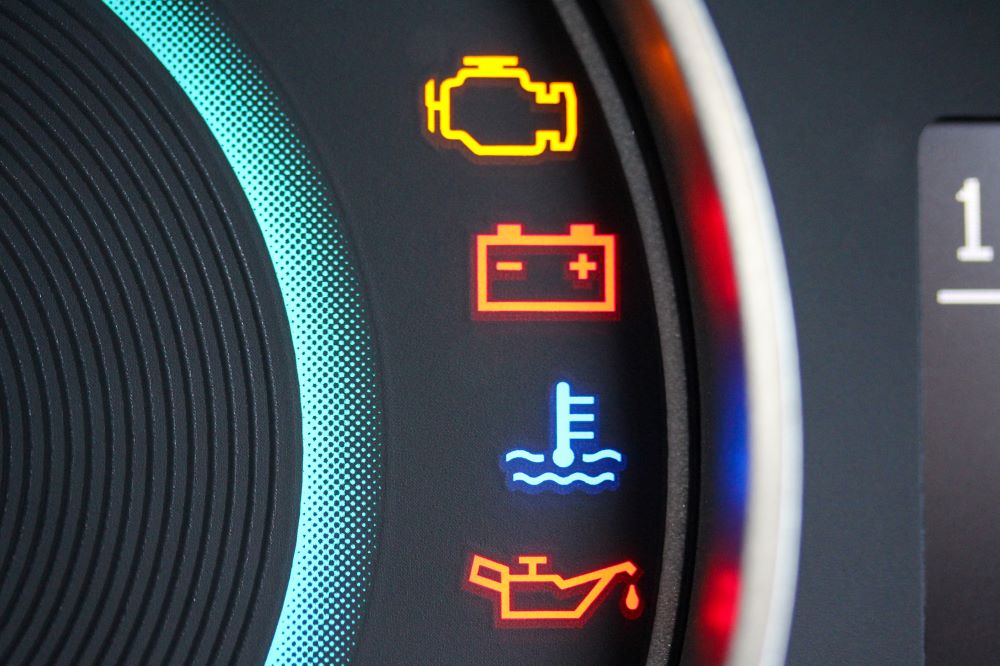
Interpreting Semi Truck Warning Lights
Interpreting semi truck warning lights is essential to keeping your truck in top condition and ensuring road safety. These lights are your vehicle’s way of signaling either a potential issue that requires immediate attention to prevent a malfunction or a fatal accident, or a reminder for routine maintenance.
The problem is that semi trucks have many warning lights, and new ones are added as technology improves. This can make it hard to know what each warning light means and what to do when they come on.
We’ve created a quick guide to help you understand common dashboard warning lights, their meanings, and what to do about them.
What The Color Of A Warning Light Tells You
Before you worry about a specific icon when a warning light appears, look at the color first. Color tells you how much time you have before a small problem gets bigger.
Red Lights Mean Stop Now
Red lights signal an immediate safety risk. Low oil pressure, a failing brake system, or an overheating engine can cause serious damage within minutes.
Pull over as soon as you safely can and shut the engine down.
Yellow Or Amber Lights Need Attention Soon
Amber lights are a heads-up, not a five-alarm fire. You can usually finish your current run. Just don’t ignore these for weeks.
For example, a check engine light or a DEF warning falls into this category.
Green And Blue Lights Are Just Information
Green and blue lights confirm that a system is switched on. High beams and cruise control are good examples. They’re not warnings, so you don’t need to take any action.
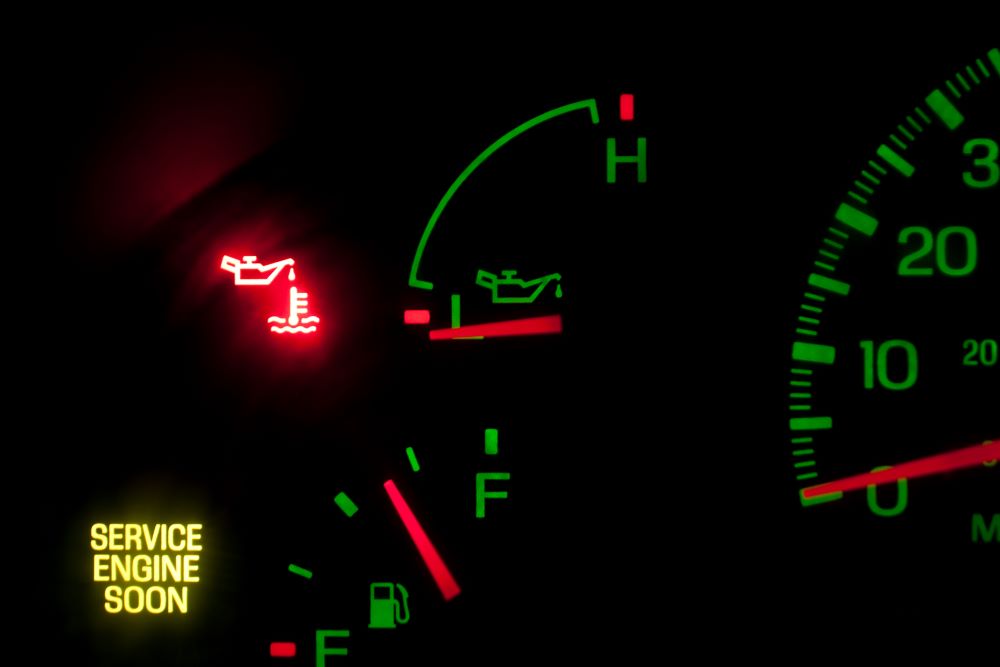
Common Dashboard Warning Lights And What They Mean
Every truck brand labels its lights a bit differently. Even so, the same handful of systems trigger warnings across nearly every make and model. Here are the most common warning lights and what each of them means:
Check Engine Light
The check engine light covers a wide range of issues. It can mean anything from a loose gas cap to a misfiring cylinder.
A steady light usually means you can finish your trip and schedule a diagnostic within the week.
A flashing light is more serious. It often points to a misfire that can damage your catalytic converter. Pull over and get it looked at right away.
Engine Oil Pressure Light
This is one of the most serious lights on your dash. If it comes on while driving, you may have less than a minute before bearing damage starts.
Pull over immediately and shut the engine off. Don’t restart it until a technician has diagnosed the problem.
Low oil pressure can come from a leak, the wrong viscosity, or simply an overdue oil change.
Diesel Exhaust Fluid (DEF) Warning
Modern diesel engines use DEF in a selective catalytic reduction system. This keeps nitrogen oxide emissions in check. When the tank runs low, you’ll see an amber warning well before you run dry.
Historically, an unresolved DEF warning triggered a fast, severe engine derate. Some trucks dropped to just 5 mph. The EPA issued updated guidance in 2025 on this. It gives manufacturers room to phase derates in more gradually.
Newer software updates should give drivers more time to refill or repair before performance drops. Either way, don’t wait. Top off DEF at your next stop and get any fault code checked.
DPF Status Light
The diesel particulate filter (DPF) traps soot from your exhaust. When it fills up, the truck needs to burn off that buildup through regeneration.
A steady light usually clears on its own. Just drive at highway speed for 20 to 30 minutes to allow passive regeneration.
If the light keeps returning or starts flashing, you’ll likely need a forced regen at a shop. Don’t let it go, or the filter can clog and damage the engine.
Coolant Temperature Light
A coolant warning means your engine is running hotter than it should. Pull over and shut the engine down. Let it cool for at least 30 minutes before you check the coolant level.
Driving on an overheating engine risks warped heads. That’s a repair bill that can run into the thousands.
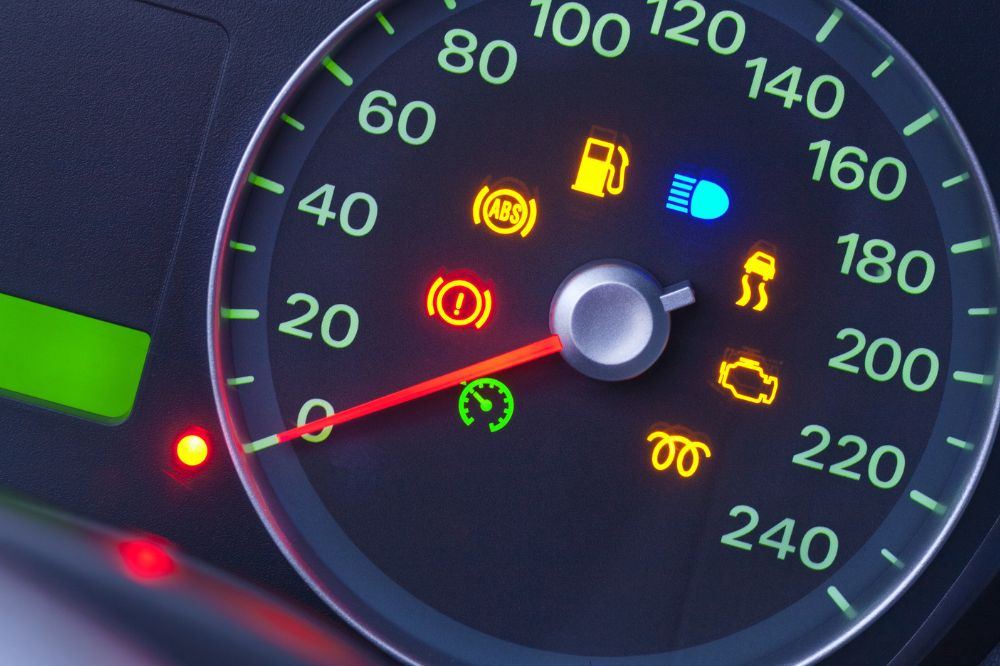
ABS And Trailer ABS Lights
Your anti-lock brake system prevents wheel lock during hard stops. If the light comes on, basic braking still works. You just lose that extra layer of protection, especially on wet or icy roads.
A trailer ABS light points to the same issue on the trailer side. It raises your risk of a jackknife during hard braking.
Brake defects are consistently one of the top reasons trucks get placed out of service.
The FMCSA requires a warning device for service brake failures on air, hydraulic, and vacuum brake systems.
Treat any brake light as a reason to get inspected before you’re back on the interstate.
Tire Pressure Warning Light
More trucks now come equipped with tire pressure monitoring, and for good reason. Underinflated tires run hotter and wear faster. They’re also more likely to blow out under a heavy load.
When the pressure in one or more of your tires drops below the recommended minimum, the tire pressure monitoring systems (TPMS) warning lights will alert you.
If this light comes on, check your tire pressure at your next stop. Don’t wait for a full inspection.
How To Respond When A Light Comes On
Most warning lights fall into one of three responses.
First, pull over. Any red light, or a flashing check engine light, means stop as soon as it’s safe. Shut the engine down and don’t restart it until you know what’s wrong.
Second, troubleshoot. Your owner’s manual usually explains what a light means for your specific make and model. Some issues, like a DEF top-off, you can handle yourself.
Third, get it checked. Yellow and amber lights that don’t clear up on their own need a technician’s eyes. Catch them early, before they turn into a bigger repair.
A thorough pre-trip inspection catches a lot of these issues early. It’s a lot easier to fix a slow leak in the yard than on the shoulder of an interstate.
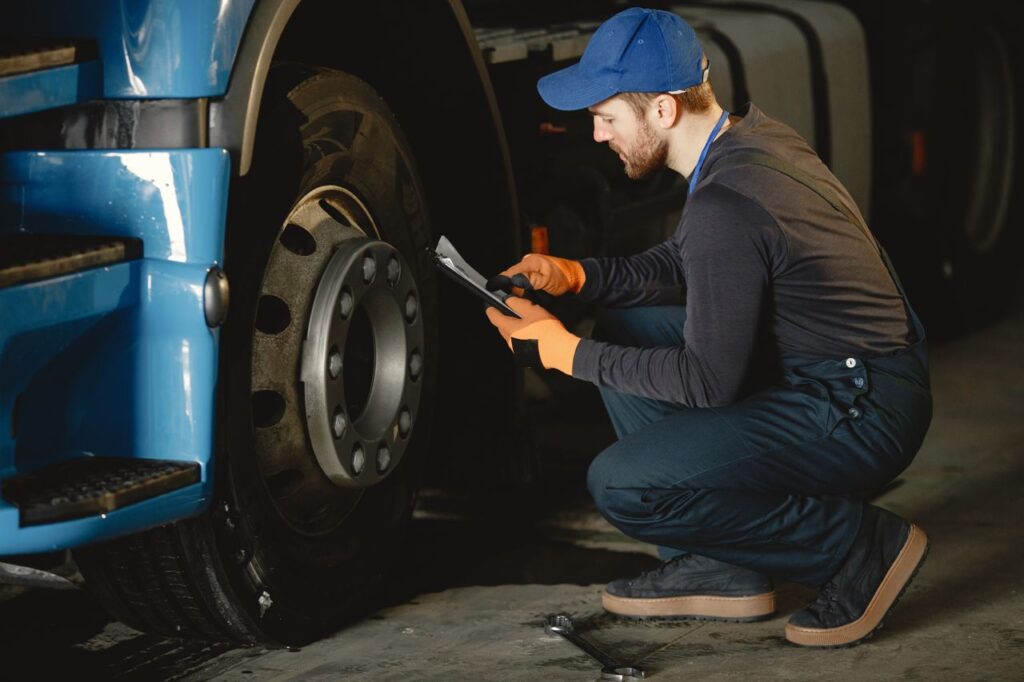
Preventing Warning Lights With Regular Maintenance
We’ve found that the drivers who see the fewest surprise warning lights share a habit. They stick to a maintenance schedule instead of waiting for a light to tell them something’s wrong.
A regular truck maintenance checklist keeps small issues from becoming emergencies. For example, a slipping belt or aging oil is a lot cheaper to fix than a seized engine.
Financing Repairs When A Warning Light Turns Into A Bigger Bill
Sometimes a warning light means a quick fix. Other times it means a transmission rebuild or an engine repair you never budgeted for. Either way, a truck sitting in the shop isn’t earning, and that adds up fast.
We offer commercial truck repair loans for exactly this situation.
We work with owner-operators every day who need funding fast, not a weeks-long approval process while their truck sits idle. A major repair shouldn’t force you to drain your cash reserves or turn down loads while you wait on parts.
Knowing what your dashboard is telling you is the first step. Having a plan to pay for the fix is the second.
If a warning light just turned into a repair estimate you weren’t expecting, reach out to our team and let’s talk about your options.