

Office: (404) 975-4800

News

Start-Up Checklist For Owner Operators

Start-Up Checklist For Owner Operators

glenn-carstens-peters-RLw-UC03Gwc-unsplash

If you’re looking at launching a career in trucking you may want a detailed startup checklist for truck owner-operators to help you start your trucking company on the right foot and set it up to succeed long-term.

Becoming an owner-operator can be overwhelming if you don’t have sound guidance. You must complete lots of paperwork and go through various tests to gather the required documents and meet the safety standards for owner-operator trucking businesses.

Without the required documentation, licenses, and proof of compliance with various federal and state regulations, you’ll sabotage your trucking business before it begins.

Owner-Operator Startup & Compliance Checklist

Here’s our step-by-step owner-operator startup checklist you can use as a roadmap to get your own trucking business up and running smoothly.

Determine your business type and create your business plan

To run a successful trucking business, determine your business type and create a business plan first. There are two types of owner-operator trucking businesses.

  • Leased Owner operator. A leased owner-operator operates their truck under the trucking authority of another company. If you choose this route, you won’t have to get some of the legal documents discussed below.
  • Owner-operator with own authority. Operating under your own authority means you’re a fully independent trucking business.

Ideally, your business plan should include your trucking business niche, target market, and overall business goals. You also want to evaluate your finances during this step to ensure you have enough budget to begin and run your business well before the profit starts rolling in.

driver license

Obtain a Commercial Driver’s License (CDL)

You’ll need to get your commercial driver’s license (CDL) and relevant endorsements, depending on the type of trucking business you want to start.

There are three main classes of CDL licenses in the trucking industry:

Class A CDL. A class A commercial driver’s license is necessary to operate large commercial vehicles, including combination vehicles weighing 26,001 pounds or more. These are the most popular types of trucks used by trucking companies – from tractor-trailers and big rigs to 18-wheelers.

Class B CDL. With a Class B CDL, you can only operate single vehicles weighing 26,001 and above. Or, combination vehicles weighing less than 26,001 pounds, such as delivery trucks, dump trucks, and buses.

Class C CDL. A Class C CDL allows you to operate hazmat vehicles and vehicles designed to carry sixteen or more passengers (the driver included).

Besides your commercial driver’s license, you might require special endorsement for specific types of equipment and cargo.

We recommend getting a Class A CDL because it allows you to operate all types of commercial trucks. Check out our quick guide on obtaining your CDL to learn how to get your commercial driver’s license.

Register Your Business

With your business plan and CDL ready, it’s time to register the venture officially with the state, the Internal Revenue Service (IRS), and the Department of Transportation (DOT). Doing this allows you to get the official business info you require for obtaining licenses and other crucial documents before you begin your operations.

Your location and the business structure you select will determine the process you’ll follow to register your trucking company. There are four types of business structures you can work with in the trucking industry: sole proprietorship, partnership, corporation, and limited liability company (LLC).

Each business structure is regulated differently. There are tax obligations and various liabilities you’ll be responsible for. So, be keen to choose a structure that will work best for you.

buy a truck

Buy or Lease Your Equipment

To get the best trucking equipment, first, decide whether you want to buy or lease your truck. Purchasing your equipment might seem expensive when starting, but it’s the best option if you plan to commit to your business long-term. Leasing is cheaper in the short term, but you’ll likely pay more in the long run.

If you decide to purchase your truck, you’ll have two options – to buy a new or used semi-truck.

Whichever option you choose, partner with an established truck financing institution to ease the financial burden of purchasing your commercial truck.

Consider working with Mission Financial Services to get financial help tailored to your situation. We have suitable loans for first-time buyers of commercial vehicles and can customize our packages further, even if you have bad credit.

Get your MC Number and Trucking Authority

The Federal Motor Carrier Safety Administration (FMCSA) requires all truck companies involved in interstate commerce to have a Motor Carrier (MC) number. This step is crucial if you plan to operate independently under your own authority and haul freight across states.

You’ll also have to get insurance coverage as part of your operating authority application process.

If you plan to operate as a leased owner-operator, you can skip this step. You won’t need your own Motor Carrier number because you’ll be working under the MC number and trucking authority of the company you lease under.

Also, skip this step if you have no plans for operating commercial vehicles across state lines. Owner-operators operating within their state don’t require a Motor Carrier number.

File a BOC-3 Form with the FMCSA

Filing a BOC-3 Form is another mandatory Federal Motor Carrier Safety Administration requirement. It shows you have a designated process agent in the states you operate in. A process agent is an individual or business capable of receiving legal documents on your behalf if people file complaints against you.

The process agent stays on top of all legal communication, helping you avoid unnecessary fines. You can have one process agent representing you in all the regions you operate in to make your work easier.

owner operator

Obtain Your USDOT Number, IFTA License & HVUT Certificate

Other essential licenses and certificates you require to conduct your operations include:

USDOT Number. Like the MC number, a USDOT number is specific for owner-operators planning to haul goods across state lines. The Department of Transportation will use this number to confirm your trucking business’s registration status, compliance reviews, safety records, ratings, and inspections. Visit FMCSA’s registration portal to get your USDOT and MC number.

International Fuel Tax Agreement (IFTA) License. An IFTA license is mandatory if you operate in multiple states and transport taxable fuel. It allows you to report and pay fuel taxes to one state, simplifying your business processes. To obtain this license, apply through your state’s Department of Revenue.

Heavy Highway Vehicle Use Tax (HVUT) Certificate. If your commercial vehicles weigh 55,000 pounds or more and operate on public highways, you must have an up-to-date HVUT certificate. It shows you pay the IRS’s annual tax for such commercial vehicles. Visit the IRS website to apply for this certificate.

Owner-Operator Compliance Checklist

To ensure owner-operators comply with all FMCSA regulations, the Department of Transportation conducts unannounced audits periodically. There are four primary types of DOT audits you should anticipate:

  • New entrant audits. DOT conducts new entrant safety audits to ensure you’re within the safety guidelines as you get your commercial trucking business operations off the ground. Expect these within a year after filing and getting your DOT number.
  • Security audits. These examine your company’s driver training and safety plan and your security measures.
  • Hazardous materials audits. When performing a hazardous materials audit, the DOT checks your hazardous material labeling, training, plus shipping documentation.
  • Compliance review. Commonly known as a targeted DOT audit, this review happens when there’s an indication of poor performance. An indicator could be anything from increased crash rates to citizen complaints. However, FMCSA can also perform random compliance reviews without any cause.

The best practice to ensure you pass all DOT audits and remain in business is to stay on top of your DOT compliance requirements. Some key areas you should focus on being on the safe side include:

  • Adherence to hours of service regulations
  • Vehicle maintenance and inspections
  • Driver qualification and licensing documentation
  • Hazardous materials compliance requirements
  • Participating in DOT’s drug and alcohol testing program

Final Thoughts

Running a profitable trucking company as an owner-operator can be rewarding. There’s no cap to how much you make as you enjoy autonomy over your trucking business operations. However, you must set it up correctly for this to be true.

Our owner-operator checklist above is well-organized to ensure your business gets off the ground fast. If you follow it keenly, you’ll legally operate your commercial trucking business in many states and avoid the hefty fines that result from non-compliance.

Remember, you can always reach out to us if you need help purchasing your truck to get started. We’ll work to ensure our flexible commercial loans fit your budget and business goals so you can start your truck company on stable grounds financially.

trucking business

Best Business Structure For A Trucking Business

trucking business

Identifying the best business structure is crucial if you’re looking to start a trucking business. Whether you’re planning to venture out as an independent owner-operator or a fleet owner, a good business structure provides the framework under which your trucking business should operate.

Below, we discuss the most common business structures for trucking companies and their advantages and disadvantages to help you choose the perfect setup for the type of trucking company you wish to start.

Common Business Structures for Trucking Companies

Some business structures are designed for small businesses, while others work well for established trucking companies with their own fleet. Here are the four most preferred business structures in the trucking industry:

Sole Proprietor

As a sole proprietor, you own and manage your trucking business entirely. This means you receive all profits but also bear full responsibility for debts and losses, as there’s no legal separation between you and the business.

Starting as a sole proprietorship is the simplest, quickest, and most cost-effective way to establish a trucking company with minimal government involvement. Typically, trucking businesses begin this way before considering other structures.

Setting up a sole proprietorship involves minimal paperwork and fees, often only requiring an operating license in some states. Tax obligations are straightforward, as you report income and expenses on personal tax returns and pay taxes on business profits.

tax benefit

Advantages Of A Sole Proprietorship

There are four primary advantages to sole proprietorships:

  • Tax benefits: Sole proprietors are subject to one layer of income taxes. Some qualify for a 20% tax reduction following the tax break regulations outlined under 2017’s Tax Cuts And Jobs Act (TCJA). If qualified, you can deduct up to 20% of your taxable business income, helping you save your business profits.
  • Simple tax process: With a sole proprietorship, filing your taxes is straightforward. Unlike other structures, where business entities need an Employer Identification Number (EIN), you can use your Social Security Number (SSN) to pay taxes.
  • Easier banking: You don’t require a business checking account and can also use your personal bank account for business purposes.
  • Easy to set up, run, and dismantle: Getting started with a sole proprietorship business structure is faster. You don’t have to handle a lot of paperwork. It’s also easier to manage your business as there are no ongoing official requirements, such as holding shareholder meetings or an election to vote for directors.
  • Complete control: As the only owner, you have full authority over all decisions and processes. You don’t have to consult any other party as required in other business structure.

Disadvantages Of A Sole Proprietorship

  • The business isn’t registered as a separate legal entity in a sole proprietorship. So, you don’t qualify for the legal protections registered businesses enjoy. And because you and your business operate as a single entity, creditors can seize your private assets to recover their money if you face serious business cash flow issues.
  • Raising capital for a sole proprietorship can be challenging.

partnership

Partnerships

A partnership is an unincorporated business with two or more business owners. Parties sign a formal agreement to operate the trucking business as a team and split the profits. Since the business is unincorporated, it’s not a separate legal entity, so all owners and the business entity operate as one.

Two partnership types exist:

  1. General partnership: All owners share financial and legal liability equally. Each partner is personally liable for debts and decisions made by others.
  2. 2. Limited partnership: Comprising general partners who manage operations and limited partners, often investors, who have limited liability and minimal involvement in management.

Partnerships don’t pay income taxes; instead, partners report profits and losses on Form 1065 and pay taxes individually, including self-employment taxes based on their share of profits.

Advantages Of Partnerships

  • The biggest advantage of partnerships is resource pooling. Partners can pool their capital and split purchase and overhead costs, thus reducing the financial load of starting a trucking company. They can also combine their knowledge and expertise to ensure the company succeeds.
  • Few tax forms. Filing taxes in a partnership business structure is simple, as each partner reports the business’s profits and losses through their personal income tax returns. There’s no need to file business taxes.

Disadvantages Of Partnerships

  • A partner who doesn’t pull their weight may bring additional liabilities and company debts, which all partners must pay.
  • Business decisions require consensus, and the chances of disagreeing are high.
  • Selling the business in the future might be difficult because it’ll require all partners to agree.

shareholders

Corporations

Corporations differ from partnerships as they are legally distinct entities from their shareholders, offering government protection but with stringent regulation, making them complex to manage.

Operating a corporation entails extensive paperwork, record-keeping, tax compliance, and annual reporting, making it costly and less suitable for small businesses.

There are two main types of corporations: C corporations and S corporations.

C corporations can be closed or open, with limited liability and publicly traded stock.

S corporations are limited to 100 shareholders, issue only common stock, and offer liability protection with additional tax benefits. Profits and losses pass through to shareholders’ personal tax returns, avoiding double taxation associated with C corporations.

Advantages

  • Liability protection. Because the company is an independent business entity, owners or shareholders aren’t liable for the company’s debts or wrongdoings. So you don’t risk your private assets. You won’t, for example, lose your private property if a company driver causes a fatal accident and the business cannot compensate victims.
  • Quick capital. Corporations can raise funds fast by selling company stock or offering shares to employees. It’s easy for them to raise funds when in need.
  • Business continuity. Both types of corporations allow simple ownership transfers. Shareholders can sell their shares if they want to leave the company, and business will continue without disruption.

Disadvantages

  • Getting started is expensive
  • There are strict regulations to follow. including holding annual meetings with properly recorded minutes, establishing a formal organizational structure, and conducting extensive accounting activities. These almost always require a tax professional.

LLC

Limited Liability Company

A Limited Liability Company (LLC) structure is one of the best business structures for independent contractors and small trucking companies. It combines the advantages of corporations and partnerships, offering business owners adequate liability protection, tax benefits, and operational flexibility.

An LLC protects your personal assets from the liabilities incurred by the company the same way a corporation does. But there are no strict rules to follow to run the business lawfully, as is the case for corporations. Also, unlike S corporations, LLCs can have more than 100 shareholders.

To set up an LLC correctly, you must file articles of your business’s associations in the Secretary of State office of the region you plan to operate in.

The Different LLCs for Transportation Businesses

Several types of LLCs exist to cater to various niches and operational models in the transportation industry, including:

  1. Freight and logistics LLCs – specialize in moving goods and managing shipping, warehousing, and distribution logistics.
  2. Passenger transport LLCs include companies involved in transporting people, such as taxis, ride-sharing services, and charter buses.
  3. Specialty Transport LLCs cover trucking companies hauling specialized goods, including heavy equipment and hazardous materials
  4. Vehicle rental and leasing. These LLCs include companies that rent or lease commercial vehicles to other entities, such as truck leasing businesses and car rental agencies.

Advantages Of LLCs

  • Limited liability. Shareholders aren’t liable for the business’s shortcomings.
  • Increased stakeholder participation. There’s no limit to the number of stakeholders who join an LLC.
  • Pass-through taxation. Owners report the business’s profits and losses through their individual returns. There’s no paying corporate taxes.
  • Flexible distribution of business profits. Profit distribution in an LLC can follow a shareholder’s contribution. Shareholders who contributed the most during the startup process can get more profits.

Disadvantages Of LLCs

  • There’s lots of paperwork to fill out when starting, although it’s not as much as the paperwork required for setting up a corporation

Are You Required To Create a Business Entity for a Trucking Company?

You don’t need to set up a separate business entity to start your trucking company in several states.

However, without registering a business entity, the state automatically assumes you’re a sole proprietor, and there’s no distinction between you and the trucking business. As a result, you forfeit legal protection and put your private assets at risk.

It’s advisable to consider all the unexpected threats trucking businesses face when their trucks are on the road. So, you can carefully weigh whether you want to create a business entity to protect your personal assets or leave everything to chance.

Final Thoughts

If you’re thinking of starting a trucking company, it pays to invest enough time and effort in choosing the perfect business structure. It’ll make a difference in your business profits.

A few factors to consider when choosing a business structure include capital for investment, liabilities, tax obligations, flexibility, and the complexity of managing your business.

Once you’ve identified your business structure and are ready to execute your business plan, reach out to us. We’ll customize our commercial loans to your needs to help you purchase your first truck hassle-free.


business plan

How To Create A Business Plan For A Trucking Company

business plan

If you’re going to start any kind of truck-driving business, then your first step is to create a comprehensive business plan for trucking.

A good business plan is essential for the success of your business. Without one, you won’t have a clear direction, and you’ll probably run into problems that you never expected. With a proper business plan, you’ll be fully prepared for a profitable venture.

Ready to create your trucking business plan? We’ll show you how and answer your trucking business plan FAQs in this actionable guide.

What is a Trucking Business Plan?

A trucking business plan is a document that outlines all the aspects of starting and running a trucking company. It’s an essential blueprint you need to create when starting your business, to help you understand how you’ll get your business off the ground and how your trucking services will work.

Your trucking business plan should include detailed information about your company’s goals, target market, services, financial projections, marketing strategies, and operational plans. We’ll get into more detail in the sections below.

Essentially, it’s a roadmap that guides you on how to establish and grow your trucking business strategically.

Why Do You Need a Trucking Business Plan?

You need a trucking business plan because it acts as an actionable guide for your company’s success.

Around 70% of businesses that survive for five years follow a strategic business plan. And, entrepreneurs who have a business plan in place are 260% more likely to launch their own trucking business.

So, a proper business plan will make it a lot easier to start, manage, and grow a successful business in the trucking industry.

business plan 2

Your business plan helps you clarify your goals, understand your target market, and plan your finances effectively. With a solid plan in place, you can identify potential challenges that your trucking company might face, and develop strategies to overcome them. You’ll also have a clear idea of how you can implement a marketing and sales strategy, and get customers from day one.

Plus, having a well-thought-out business plan makes it easier to secure funding from investors or lenders.

Overall, your business plan provides direction, focus, and a roadmap for building and growing your trucking business.

What to Know Before Creating Your Trucking Business Plan

Before you build your trucking company business plan, you’ll need to have a good understanding of the industry and what’s required to run a successful trucking company. This will ensure your business plan is realistic and includes all the right information.

Make sure that you have a solid understanding of the legal requirements and regulations of the trucking industry. This includes things like obtaining the right permits, licenses, and commercial insurance coverage needed to operate trucking companies.

It’s also important to have both business knowledge and industry knowledge. The more research you do before writing your trucking business plan, the more strategic and realistic your business plan will be for establishing a successful business.

Conduct thorough research to understand the competitive landscape, market trends, and customer needs. Knowing your competition and target market will help you position your trucking business more strategically and identify unique selling points.

You’ll also need to understand the costs associated with purchasing or leasing trucks, maintaining them, fuel expenses, and overhead costs. Having a clear understanding of your financials will enable you to set realistic goals and develop a more sustainable business model.

Consider chatting with other industry professionals who can provide valuable insights and guidance as you develop your trucking business plan.

Ultimately, by doing more research into the industry, you’ll be able to develop a more comprehensive business plan that’s more useful when starting a business.

included in business plan

What to Include in a Trucking Company Business Plan

When setting up a business plan for your own trucking company, you’ll want the plan to be as detailed as possible – covering everything you’ll need to know about how to set up and grow your business.

Here’s a basic overview of the main sections your business plan should cover:

  • Company description: Explain what your company is about and what makes it special. Describe who manages the company (in an executive summary) and why they’re qualified.
  • Operational plan: Explain how your company will operate and what exactly you will do. Lay out specific, achievable goals to help your company grow.
  • Services: Describe what your company offers to customers, including any special services that might give you a competitive advantage.
  • Target market: Identify the customers you want to reach or the areas you want to serve. Explaining your target customers is a key part of any business plan.
  • Market analysis: Look at what’s happening in the trucking industry. Understand what customers want and where they’re located. A thorough competitive analysis is essential.
  • Sales and marketing strategies: Explain how you plan to attract customers and sell your services.
  • Financial projections: Show how much money you expect to make and spend.
  • Funding: Figure out how you’ll get the money you need to start and run your business.

In the section below, we’ll go into more detail about how to write these sections and what information they need to include.

How to Write a Trucking Business Plan

Ready to plan your trucking company? Then follow this business plan template to make sure you cover all your bases before setting up your business.

SMART goals

Picking a Name

The first step in planning out your business is deciding on a name for it.

Choose a name that reflects your trucking business’s identity and values. Make sure it’s memorable, easy to spell, and relevant to your specific niche in the trucking industry.

Company Description

Describe your trucking business, including its mission, vision, and core values. Highlight what sets your company apart from competitors and how you plan to deliver exceptional service to your customers.

This can be a brief description – you’ll go into more detail about each area later on in the business plan.

Management and Personnel

Outline the management structure of your trucking company, including key team members and their roles. If you’re starting an owner-operator venture, then this could just be you.

Emphasize the experience and qualifications of your team members (or just your experience) to instill confidence in potential investors and partners.

Operational Plan (Using SMART Goals)

An essential part of creating a business plan is outlining your operations. Detail how your business will operate on a day-to-day basis.

Try to be as comprehensive as possible here, outlining things like where your truck will park, how it will get serviced, who will drive it, who will manage client liaisons, and so on.

An important part of establishing an operational plan is also setting goals for it. Set Specific, Measurable, Achievable, Relevant, and Time-bound goals for your trucking business.

This could include increasing the number of clients by a certain percentage within six months or reducing delivery times by implementing new technology within a year. These goals will help keep your business on an upward path.

Services

Detail the range of services your trucking company offers, such as long-haul transportation, freight forwarding, or specialized logistics solutions.

Highlight any unique features or advantages your services provide to customers.

Selecting a Target Market

Identify the specific industries or geographical areas you plan to target with your trucking services. Consider factors such as demand, competition, and potential for growth when selecting your target market.

Of course, your target market will need to align with the trucking services your business offers.

market analysis

Market Analysis

A major part of any trucking business plan involves in-depth market analysis. The more this section covers, the better.

Conduct a comprehensive analysis of the trucking industry to identify key trends, such as the increasing demand for last-mile delivery services and the adoption of sustainable transportation practices.

Understand the demands of buyers, including their preferences for on-time delivery, cost-effectiveness, and transparency in tracking shipments. Consider geographical considerations such as population density, infrastructure, and regulatory requirements in different regions to tailor your services to them.

Develop sales and marketing strategies based on your market analysis, focusing on building strong relationships with potential clients, leveraging digital platforms for outreach, and showcasing your company’s reliability and efficiency in meeting customer needs.

Financial Projections

Prepare detailed financial projections for your trucking business, including revenue forecasts, expenses, and projected profits.

Use historical data, market research, and industry benchmarks to make realistic projections for the future.

Funding

Explore various funding options for your trucking business, such as grants, self-funding, or crowdfunding.

Determine the amount of capital you need to start and operate your business successfully and create a plan to secure funding from investors or lenders.

Final Thoughts

No matter how experienced you are in the trucking industry, you’ll struggle to get a successful business off the ground without a clear plan. The more detailed and well-researched your trucking business plan is, the greater your business’s chances of success will be.

As mentioned above, a key part of any business plan is funding and financing. Speak to us at Mission Financial to see how we can help you get easy financing for your semi-truck.

apportioned plates

Understanding Apportioned License Plates

apportioned plates

If you operate a commercial vehicle or power unit across state lines, apportioned license plates are part of the legal framework that allows you to do so.

They work alongside the International Registration Plan (IRP) and the International Fuel Tax Agreement (IFTA) to ensure states and provinces receive the registration fees and fuel taxes they are owed. IRP and IFTA are inter-jurisdictional agreements administered by states/provinces, enforced via state/provincial law and roadside enforcement.

Understanding how apportioned plates work helps prevent fines, audits, and interruptions to your operations.

What Are Apportioned License Plates?

Apportioned license plates are registration plates issued to commercial vehicles that operate in more than one jurisdiction. Apportioned just means divided or distributed, referring to how registration fees are allocated.

Instead of registering the same vehicle separately in every state it travels through, the carrier registers once in a base jurisdiction. That jurisdiction then distributes registration fees to other states and provinces based on the miles the vehicle travels in each one.

When you see a commercial truck using apportioned plates, it means the vehicle is legally registered for multi-jurisdiction operation under the International Registration Plan (IRP). This allows the truck to cross state and, in some cases, international borders without carrying multiple registrations.

How the International Registration Plan (IRP) Governs Apportioned Registration

Apportioned registration exists because of the International Registration Plan (IRP).

The IRP is a reciprocity agreement among the 48 contiguous states + DC + 10 Canadian provinces (Alaska and Hawaii are not IRP members). It is authorized under state motor vehicle laws and administered by each jurisdiction’s motor carrier services division.

Under the IRP, a carrier designates a base jurisdiction, usually the state where the business is registered, and operational records are kept. That jurisdiction issues apportioned plates and collects registration fees. Fees are then distributed to other jurisdictions based on reported mileage.

This system replaces the need for multiple state registrations and creates a uniform process for interstate commercial vehicles.

Elevated view of freeway exit junction over road lanes with fast moving traffic cars and trucks at sunrise. Interstate transportation infrastructure in USA

What Is the International Fuel Tax Agreement (IFTA)?

The International Fuel Tax Agreement (IFTA) is a multi-jurisdiction agreement among the lower 48 contiguous U.S. states and 10 Canadian provinces.

It simplifies fuel tax compliance for interstate motor carriers. Instead of filing fuel tax returns in every jurisdiction traveled, carriers file one quarterly fuel tax report with their base jurisdiction.

That report details:

  • Total miles traveled
  • Miles traveled in each jurisdiction
  • Fuel purchased in each jurisdiction

Tax authorities then calculate the amount of fuel tax owed to each state or province. Failure to file IFTA reports or pay fuel taxes can result in penalties, interest, suspension of credentials, and enforcement actions during roadside inspections.

What Is the Difference Between IFTA and IRP?

The IRP and IFTA serve different legal purposes, even though carriers often comply with both. The IRP governs vehicle registration and registration fees, while the IFTA governs fuel tax reporting and payment.

In simple terms:

  • IRP determines where and how registration fees are paid.
  • IFTA determines where fuel taxes are owed based on miles driven and fuel consumed.

Most interstate carriers subject to IRP registration are also subject to IFTA reporting, but qualification is determined separately under each program.

Blue Tranport Truck Docking in warehouse

Who Must Register for Apportioned Plates, IRP, and IFTA?

Not every vehicle that crosses state lines qualifies for apportioned registration. Requirements are based on vehicle specifications and interstate operation, not business size.

Under IRP rules, a vehicle generally must register if it has a gross vehicle weight rating (GVWR) over 26,000 pounds, or has three or more axles, regardless of weight, and operates in more than one jurisdiction.

The IFTA applies to motor carriers operating qualifying vehicles in more than one jurisdiction, typically using the same weight and axle thresholds.

Vehicles operating strictly intrastate or below these thresholds may not require IRP or IFTA credentials.

Apportioned Plates vs. Commercial Plates

The difference between apportioned plates and standard commercial plates lies in where and how a vehicle is legally allowed to operate.

Commercial plates are state-issued registrations that permit a vehicle to operate for business purposes within a single state.

On their own, they do not authorize interstate operation for vehicles that meet the definition of an apportionable (qualified) vehicle.

Apportioned plates, issued under the IRP, are required when an apportionable vehicle operates across state or provincial lines. These plates allow interstate and interprovincial travel, with registration fees distributed among jurisdictions based on reported mileage.

All apportioned plates are commercial plates, but not all commercial plates are apportioned. Operating a qualifying vehicle interstate without apportioned registration or a valid trip permit can result in citations, fines, and out-of-service orders.

How to Get Apportioned License Plates For Commercial Vehicles

Getting apportioned license plates is a structured regulatory registration process governed by the IRP and administered by each state’s motor carrier authority.

The goal is to ensure that interstate commercial vehicles are properly registered and that registration fees are fairly distributed among the jurisdictions in which they operate.

Confirm Your Eligibility

Eligibility for apportioned plates is based on commercial truck specifications and interstate use, not business size or how often you cross state lines.

As mentioned, a vehicle generally qualifies for apportioned registration under IRP rules if it operates in two or more jurisdictions and has a GVWR over 26,000 pounds, or if it has three or more axles.

If a vehicle meets these criteria, it requires an apportioned registration for legal interstate operation.

Your state’s motor carrier services office or Department of Motor Vehicles can confirm eligibility. However, responsibility ultimately rests with the carrier, not the state.

Register Under IRP

If your vehicle qualifies, you must register it under IRP through your base jurisdiction. This is the state where:

  • Your business is legally established
  • You maintain your business’s operational records
  • You control or dispatch the vehicle

This requirement exists so that one jurisdiction can administer registration, collect fees, conduct audits, and coordinate with other states under IRP rules.

Registering in the wrong base jurisdiction is a common compliance error and can result in your applications being denied or future penalties.

Submit Required Documentation

IRP registration requires documentation that proves ownership, insurance coverage, and operational intent. Most jurisdictions require the following:

  • Proof of vehicle ownership or lease, such as a title or lease agreement
  • Proof of insurance meeting state and federal minimums for commercial vehicles
  • Business registration documents, including an employer identification number (EIN) or state filings
  • Estimated mileage by jurisdiction, often based on prior operations or reasonable projections

Mileage estimates matter because IRP registration fees are calculated based on how much each jurisdiction will be used. Underreporting mileage can trigger audits, back fees, and penalties if the actual distance traveled exceeds reported estimates.

States are authorized under IRP to audit carriers to verify mileage accuracy. Auditors increasingly rely on telematics data and electronic records to confirm where and how vehicles operate.

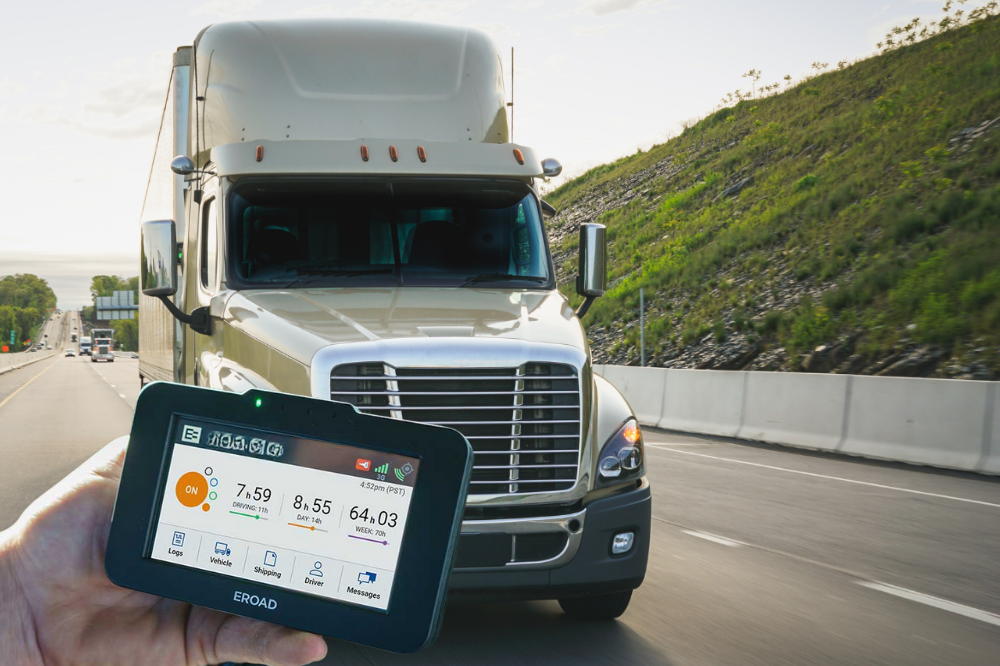
GPS-based tracking systems, electronic logging devices (ELDs), fuel card data, and dispatch records can all be used to validate reported mileage across jurisdictions.

Pay Registration Fees

Registration fees are calculated using:

  • Vehicle weight
  • Number of jurisdictions selected
  • Estimated mileage in each jurisdiction

Heavier vehicles and broader operating territories result in higher fees because they impose greater wear on infrastructure across more jurisdictions.

Fees are paid to the base jurisdiction, which then distributes funds to other states and provinces under IRP guidelines.

Approval and Plate Issuance

Once your application is approved and fees are paid, the base jurisdiction issues:

  • Apportioned license plates
  • IRP cab cards, which list approved jurisdictions and weights

Cab cards must be carried in the vehicle at all times. Enforcement officers use them during roadside inspections to verify legal operation. Failure to produce valid credentials can result in citations or out-of-service orders.

Happy professional truck driver driving his truck and looking at camera.

Common Mistakes to Avoid with Apportioned Registration

Most apportioned registration violations don’t happen because of intentional noncompliance, but because of common misunderstandings about how IRP and IFTA work together and how those rules are enforced. Here are some common mistakes people make:

Assuming Occasional Interstate Travel Does Not Count

IRP requirements are based on qualification, not frequency. If you operate an apportionable vehicle interstate, you generally need IRP apportioned registration or a valid trip permit before operating.

Enforcement officers do not consider intent or frequency during inspections.

Registering in the Wrong Base Jurisdiction

Registering where the truck is parked or purchased, instead of where the business is based and records are kept, violates IRP base jurisdiction rules and can invalidate registration.

Underreporting Mileage

IRP and IFTA both rely on accurate mileage reporting. States are authorized to audit carriers, and discrepancies can lead to back fees, interest, and penalties across multiple jurisdictions.

Confusing IRP Registration with IFTA Fuel Reporting

IRP covers registration fees. IFTA covers fuel taxes. Registering for one does not satisfy the requirements of the other.

Many compliance failures occur when carriers assume IRP registration automatically covers fuel tax obligations. These errors can result in fines, credential suspension, audits, and disruptions to operations.

Frequently Asked Questions

Do I Need Apportioned Plates If I Only Cross State Lines Occasionally?

Yes, if your vehicle meets IRP qualification thresholds. The International Registration Plan does not base registration requirements on how often you cross state lines. It bases them on vehicle characteristics and interstate operation.

Do I Need IFTA If I Have Apportioned Plates?

Not automatically. IRP and IFTA are separate programs with different purposes and qualification rules.

IRP governs vehicle registration and registration fees. IFTA governs fuel tax reporting. A vehicle can require IRP registration without meeting IFTA requirements, although many interstate vehicles qualify for both.

Can I Get Apportioned Plates Without IRP?

No. Apportioned plates are issued only through IRP registration. There is no separate apportioned plate program outside of IRP. If a vehicle requires apportioned registration, the carrier must apply through their base jurisdiction under IRP rules.

What Happens If I Operate Without Apportioned Plates?

Operating a qualifying vehicle without apportioned plates is a registration violation. Consequences vary by jurisdiction but often include roadside citations, fines, and out-of-service orders.

Can I Register for IRP and IFTA at the Same Time?

Yes. Many states allow carriers to apply for IRP registration and IFTA credentials during the same onboarding process. Registering for both at the same time helps streamline compliance and reduces the risk of missing required credentials before operating interstate.

Conclusion

Apportioned license plates exist to make interstate trucking possible under a single, structured registration system. When used correctly, they simplify compliance, ensure fair fee distribution, and allow commercial vehicles to operate legally across jurisdictions.

For carriers planning to purchase a commercial vehicle for interstate use, understanding IRP and IFTA requirements early helps avoid delays and compliance issues.

Mission Financial Services focuses exclusively on commercial truck financing. If you are planning to purchase a vehicle that will operate interstate, start your credit application early to avoid financing delays once registration requirements begin.

ice road trucking

A Guide To Ice Road Driving For Semi Trucks

ice road trucking

Ice road trucking pushes commercial driving into some of the harshest operating conditions on the planet. Drivers haul fuel, food, mining equipment, and industrial freight across temporary winter roads built over frozen lakes, rivers, and remote terrain.

These routes only operate for part of the year, but they play a critical role in keeping isolated communities and industrial operations supplied during the winter months.

For owner-operators and fleet managers, ice road driving demands far more than standard winter driving experience. Extreme cold affects traction and overall vehicle reliability. Drivers also need the right equipment, route knowledge, and preparation to stay safe while moving freight across unstable frozen surfaces.

That’s why we’re here to share tips about handling frozen routes, because even one mistake can create major operational risks.

What Is Ice Road Driving for Semi-Trucks?

Ice road driving is when semi-trucks drive on frozen bodies of water, like frozen lakes or rivers, that have turned into solid ice during the winter. These temporary winter roads act as seasonal freight corridors in regions where permanent highways either don’t exist or aren’t practical to build.

Many of these routes only remain open for a short winter window before warmer temperatures weaken the ice. Unlike ordinary snow-covered highways, ice roads are professionally monitored and maintained throughout the season.

Route operators continuously check ice conditions, monitor ice thickness, inspect for pressure cracks, and enforce strict weight restrictions to keep commercial traffic moving safely.

measuring ice

Where Ice Road Trucking Happens

Ice road trucking primarily operates in northern regions where extreme cold creates stable frozen surfaces for part of the year. Some of the most active ice road systems exist in:

  • Northern Canada
  • Alaska
  • The Northwest Territories
  • Remote mining regions
  • Isolated northern communities

In many regions, permanent infrastructure would cost billions to build across remote terrain and large bodies of water. Seasonal winter roads offer a more practical solution for moving heavy freight during colder months.

How Thick Does Ice Need to Be to Drive On?

The minimum ice thickness required to support heavy vehicles is typically around 30 inches. Commercial trucking routes often require significantly more ice monitoring and structural testing than smaller recreational crossings used for ice fishing or light off-road traffic.

Passenger vehicles may safely cross ice at much lower depths under controlled conditions. Many recreational guidelines reference:

  • 4 inches for foot traffic or walking
  • Around 7.5 to 8 inches for lighter vehicles or passenger vehicles
  • 12+ inches for heavy trucks

Greater thickness is a requirement for loaded commercial trucks. A fully loaded semi-truck places enormous stress on frozen surfaces, especially near moving water, shoreline transitions, or areas with underwater currents.

There are also major differences between blue ice and white ice.

Blue ice or clear ice is dense, clear, and structurally stronger. White ice contains air pockets, snow, and impurities that reduce overall strength. Even if two areas measure the same number of inches, their load-bearing capacity may differ substantially depending on ice quality.

Route crews continuously check conditions using:

  • Ice drilling
  • Ground-penetrating radar
  • Sonar systems
  • Thickness probes
  • Load testing
  • Route inspections

Commercial ice roads also enforce strict:

  • Speed limits
  • Axle restrictions
  • Vehicle spacing requirements
  • Cargo weight controls

These operational safety measures help reduce stress waves that can weaken the frozen surface beneath a moving truck. Drivers should always remember that no frozen route is permanently stable because changing temperatures and moving water can alter conditions quickly.

driver isolation

The Dangers of Ice Road Driving

Ice road trucking creates risks that go beyond standard winter driving. Drivers have to adjust for changing ice conditions, limited visibility, extreme cold, and long distances from support.

  • Loss of traction and extended stopping distance: Reduced traction can make a loaded semi hard to control. Drivers should keep steady speeds on ice-covered surfaces, brake gradually, avoid sudden steering or acceleration, and take extra care near curves and frozen lake transitions.
  • Limited visibility: Northern winter routes can bring whiteouts, heavy snowfall, ice fog, blowing snow, and low-light conditions. Auxiliary lighting, reflective markers, GPS, and dispatch communication help drivers stay oriented. When visibility drops, drivers should slow down and pull away from active traffic lanes only when it’s safe.
  • Unpredictable conditions: Ice roads can change quickly because of temperature shifts, snowfall, and moving water. Drivers may encounter shifting ice sheets, pressure cracks, surface flooding, thin sections near currents, or sudden weather changes. Route inspections help, but drivers still need to watch conditions throughout the trip.
  • Driver isolation, slow speeds, and long trips: Ice road driving often means slow speeds, remote routes, and long haul times. Drivers may spend hours away from reliable support while managing fatigue and mechanical concerns. Emergency gear and a semi-truck tool kit are a necessity because a breakdown can quickly become a serious safety issue.

Equipment Needed for Ice Road Trucking

Make sure your truck is equipped with all the right gear. Ice road trucking places extreme stress on both drivers and equipment. Trucks operating in these conditions need specialized cold-weather preparation to remain reliable.

Common ice road equipment includes:

  • Tire chains
  • Heavy-duty winter tires
  • Engine block heaters
  • Fuel anti-gel systems
  • Auxiliary lighting
  • Reflective markers
  • GPS systems
  • Satellite communication equipment
  • Emergency recovery tools

Many drivers also carry cold-weather clothing, backup food supplies, heated gear, portable chargers, and emergency communication devices to help them stay prepared in remote areas.

Some operators also use insulated storage systems and secondary fuel filtration setups to help prevent equipment failures during extended trips across frozen routes.

tire chains

Ice Road Truck Driver Requirements

Ice road trucking typically requires more experience than standard over-the-road freight work, which is why they’re some of the highest-paid truck drivers.

Most employers look for drivers with:

  • A valid commercial driver’s license (CDL)
  • Strong winter driving experience
  • Clean driving records
  • Commercial hauling experience
  • Specialized cold-weather training

The physical and mental demands can be significant. Drivers need to be able to remain alert during long trips while carefully monitoring traction, weather conditions, route instructions, and vehicle performance.

Many operations also require drivers to complete specialized ice safety training before operating on active winter roads.

How Much Do Ice Road Truckers Make?

Ice road truck drivers make around $81,820 a year, but bear in mind that it’s often seasonal. Some experienced owner-operators or specialized freight drivers earn more when demand, route difficulty, and contracts line up.

Ice road truck drivers often earn more than standard freight drivers because the work requires winter driving experience, specialized safety training, clean decision-making, and reliable equipment.

Pay may increase with hazard pay, seasonal bonuses, remote operation premiums, or high-priority freight contracts.

Some owner-operators may gross over $100,000 in a strong season, but truck prep, repairs, insurance, and downtime can reduce take-home pay.

Ice Safety Precautions: What to Check Before Driving

Ice road trucking requires constant attention to operational safety and vehicle preparation.

1. Check the Ice Thickness

Before driving on an ice road, always check the ice conditions and thickness. Never assume frozen surfaces are stable simply because other vehicles previously crossed the route.

Professional operators continuously monitor:

  • Route inspections
  • Ice reports
  • Weather conditions
  • Structural testing results
  • Load restrictions

Always follow official route guidance before entering active ice crossings. Local authorities and route operators often publish updated reports to help drivers know which sections remain safe for commercial traffic.

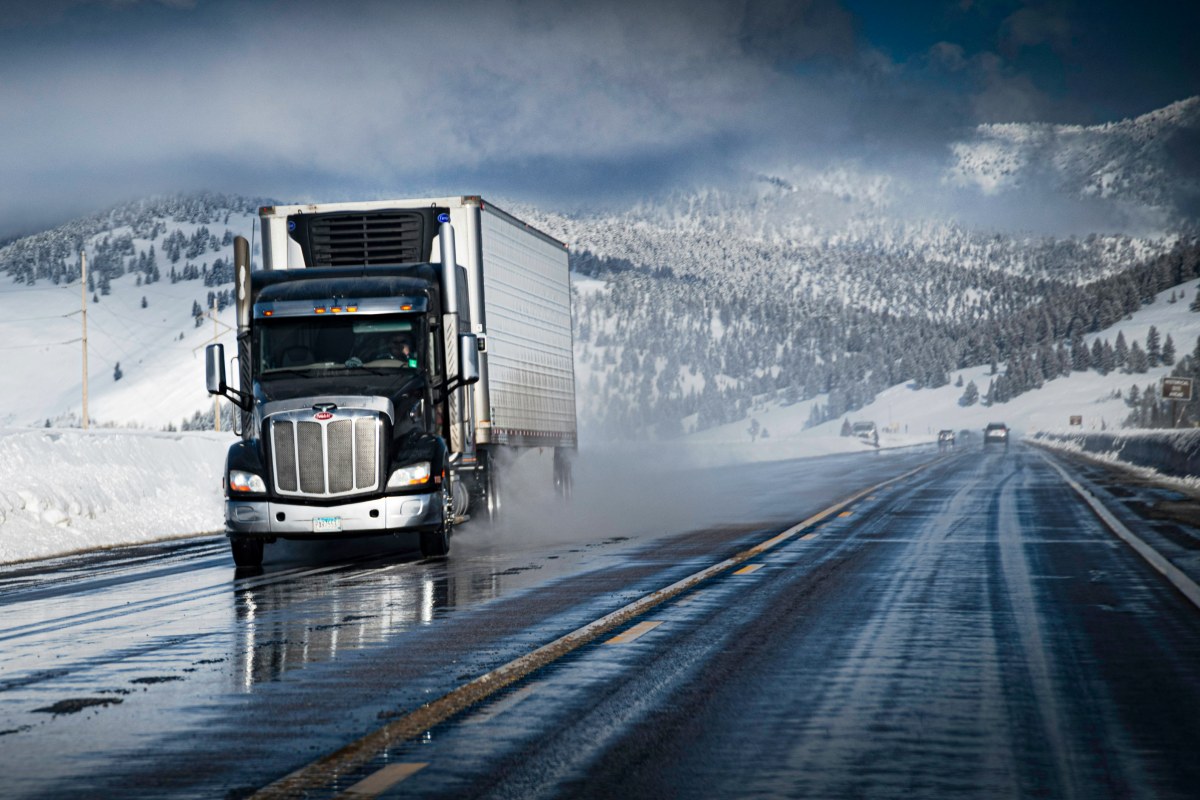
Freight transportation truck on the road in snow storm blizzard

2. Reduce Your Speed

Maintain slow and steady speeds to reduce the risk of skidding on ice or sliding through snow cover.

Smooth acceleration, controlled braking, and consistent speeds help reduce stress on the frozen surface while improving vehicle control. Sudden steering corrections or aggressive braking inputs can quickly destabilize a loaded truck.

3. Know the Route

Familiarize yourself with the ice road route before starting your journey.

Drivers should understand:

  • Planned checkpoints
  • Hazard zones
  • Fuel stops
  • Emergency procedures
  • Weather patterns
  • Dispatch communication protocols

Staying in contact with dispatchers and local route authorities can help drivers respond quickly if conditions change.

4. Safety Equipment

Drivers should always carry:

  • Backup communication devices
  • Recovery tools
  • Emergency lighting
  • Cold-weather gear
  • Extra food and water
  • First aid supplies

Some fleets also require backup GPS systems and emergency locator beacons because remote northern routes can leave drivers hundreds of feet from reliable infrastructure or nearby support.

5. Regular Maintenance

Keep your vehicle well-maintained, including checking tire pressure, ensuring all lights are working, and the brakes are in good condition.

Cold temperatures place additional strain on:

  • Batteries
  • Brake systems
  • Tires
  • Fuel systems
  • Electrical components
  • Air systems

Regular inspections and winterization procedures help reduce the risk of mechanical failures during remote operations.

Drivers should also inspect fuel additives, heaters, and fluid systems before every trip because freezing temperatures can create unexpected failures even in properly maintained trucks.

Many winter driving enthusiasts enjoy learning about ice roads because the conditions are unlike traditional highway freight operations. Still, commercial trucking on frozen roads involves far more planning and operational discipline than recreational driving on a small frozen pond or seasonal trail.

Conclusion

Ice road trucking requires preparation, experience, and a strong understanding of extreme winter operating conditions. Reliable trucks and properly maintained equipment make a major difference in these environments.

From winter-ready components to dependable braking systems, every part of the vehicle needs to perform under extreme stress.

Mission Financial Services helps owner-operators and fleet owners secure financing for dependable commercial trucks built to handle demanding conditions.

Whether you’re repairing equipment or purchasing your next semi-truck, our team can help you explore financing solutions that support long-term reliability and operational performance. Start your credit application today.

Semi-Truck Driver Tool Kit Essentials 

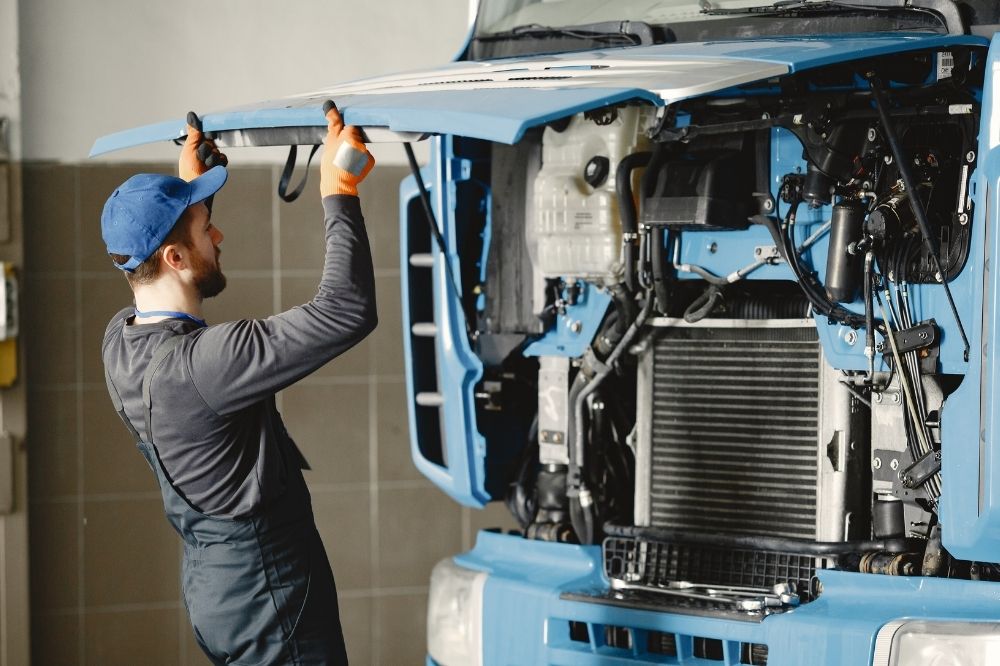
Having semi-truck driver tool kit essentials as a trucker is crucial. If your vehicle breaks down, the right tools can help you handle minor repairs quickly, minimizing downtime so you can keep moving. 

Without a curated truck driver toolkit, you risk interrupting your trip schedule for too long, ultimately reducing your income because repair shop mechanics can take hours to arrive for simple 10-minute light repairs. 

Here’s the thing, though – there are so many tools for truck drivers. What are the most essential tools you should carry? Read on to learn more and assemble the ultimate trucker tool kit to match your needs.

What to consider when purchasing driver tools

To purchase truck driver tools that work well and offer great value for money, keep the following factors in mind: 

Quality and Brand 

Brands differ in terms of the quality of products they offer. You want to find high-quality tools that don’t need replacement often. The best way to identify such tools is by reading product and brand reviews.

You could also ask other truck drivers to recommend their best products. For this, pose your questions on different trucker groups online to get solid recommendations from truck drivers who’ve used the products they’ll recommend. You’ll get honest opinions to help you pick the best brands to work with.

Job Type

Why do you need a specific tool? What will you use it for? Understanding the answers to these questions will help you purchase the correct tools for the job. Some truck driver tools serve niche purposes. You don’t want to buy a tool made for flatbed truck drivers if you’re not a flatbed truck driver.

Price

 Price is a key factor when buying semi-truck driver tools. However, cheaper isn’t always better. You may save money at the time of purchase but end up spending more due to frequent replacements. Similarly, the more expensive option may not be better either. Try to strike a balance between price and quality so you can find affordable, high-quality tools that will serve you well for a long time. 

17 essential tools for truck drivers

 Some essential tools nearly all owner-operators carry and find helpful during their trips include:

Toolbox

A toolbox will help you keep all your tools in one place, so they’re easy to find when required. Get one that is effective yet compact. You want it to fit inside your truck without taking up too much space while providing enough room to accommodate almost all the other tools you need. 

Also, look for a toolbox with several compartments, or consider purchasing a truck toolbox organizer. It will help you organize your tools according to their use, making it easier to get the right tool for a specific job when needed.

Standard Hand Tools

Standard hand tools, like screwdrivers, bolts, and nuts, are necessary for various truck repairs. Because you can never tell which issues may come up at a time, it’s best to keep a set of these essential tools close. You can purchase a 200-piece multipurpose set of bolts, screwdrivers, and nuts at a decent price, and they’ll last you a while.

Vice Grips

Vice grips are the go-to trucker tool for several truckers because of their versatility. Well-designed vice grips can help you remove or tighten nuts and bolts, bend wires, remove broken screws, cinch leaky tubes, and keep things in place. Include straight-jaw and curved vice grips of different sizes in your toolkit. You’ll be well-prepared for any repairs that may come your way.

Sledgehammer

Sledgehammers are perfect for identifying tire problems beforehand. You can perform quick tire pressure checks by hitting each tire and listening to the sound they produce. If your tires produce unfamiliar sounds, you’ll know there’s a problem and can handle it before it gets out of hand. 

In addition, purchase a regular medium to large hammer. You’ll need it to perform various tasks, like releasing stuck 5th wheels and frozen brakes or knocking ice off frozen padlocks and latches.

A Metal Dowel Rod

Metal dowel rods are must-have truck driver tools if you haul loads during winter. When your brakes freeze or get stuck, a dowel rod can help you break the ice and get back on the road faster. Ensure you’re keen not to hit your brake lining when using them. You don’t want to crack it and deal with more costly repairs.

Wrenches

Truckers should have wrenches to help loosen or tighten nuts and bolts when necessary. Preferably, get 6-, 8- and 10-inch adjustable wrenches, commonly known as crescent wrenches. They offer more coverage if you have to handle odd-shaped nuts and bolts.

A 4-inch crescent wrench may also be helpful if you need to work on the smaller, hard-to-reach sections of your truck, and a 12 or 14-inch is perfect for work on your trailer.

Crowbar

A crowbar is a multipurpose tool that can help you remove nails from the trailer bed before loading, break down wooden pallets, or pry open crates. With this tool, you can create more space at the back of your truck to carry more cargo or keep your load light.

Flashlight

Flashlights are essential for driving at night. You want to include a small and large flashlight in your toolkit. You can use the small flashlight to confirm if your 5th wheel is coupled to your trailer correctly. The large flashlight will be helpful when conducting pre- and post-trip vehicle inspections late at night or early in the morning. 

Gloves

Gloves keep your hands warm and protect you from injuries when fixing your truck. Different gloves help with various tasks. For example, canvas gloves are multipurpose and perfect for all sorts of handy work. They’ll help you get a tight grip on different tools, making your job easier.

You may also consider leather gloves for refueling, checking oil and belts, or windshield washing.

Duct Tape

Duct tape is a staple in most truckers’ toolkits because of its strength and durability. Specifically, clear and gorilla duct tape helps with quick fixes in and around your truck. Say you find damaged wires during your routine inspections. You can use clear duct tape to fix the problem temporarily until you get to a shop for repairs.

Wire Cutters

As an owner-operator, you’re likely to encounter various situations that require you to use wire cutters. Having them at hand will prevent frustrations.

A Tire Depth Gauge

Having a tire depth gauge in your toolkit helps with proper tire maintenance. You can perform routine checks to see how much time you still have with your tires, so you know when it’s time to replace them.

Tire Air Pressure Gauge

The internal pressure of your tires changes as the air heats up and expands. You need this tool to confirm if your tires have enough air at least once each day.

Final Thoughts

All these tools will help you save time and money while keeping you safe on the road. But remember, these are physical tools to help with mechanical truck repairs and maintenance. Other digital tools can help you increase the efficiency of your trucking operations.

If you’re an independent owner-operator, consider using trip planning plus load profitability apps to keep your fuel costs low and profit margins high. Or use real-time load trucking apps to connect with more well-paying trucking jobs.

For more recommendations of tools that can promote your health and make your trucking lifestyle more comfortable, visit our blog. Specifically, check out our detailed guides about top gifts for semi-truck drivers and the best semi-truck seat cushions.


Archives

Sign Me Up!

Stay up to date with the latest news in the commercial trucking industry.

Contact Us
close slider